Practice Management Portal Development
Develop HIPAA-compliant practice management portals that coordinate scheduling, patient intake, staff workflows, billing activities, and day-to-day clinic operations.
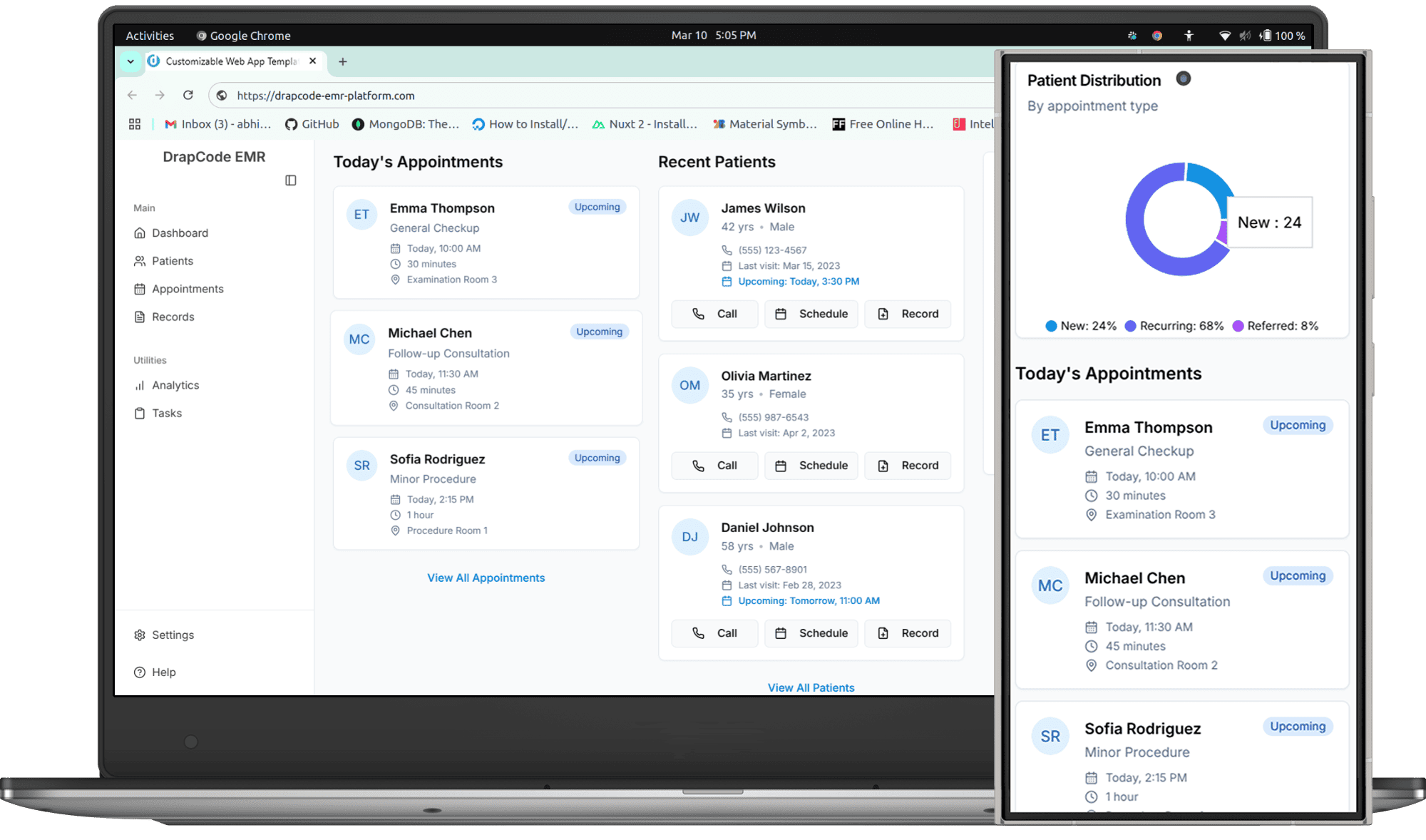
Run the Practice From One Place
A healthcare practice has dozens of operational activities happening between patient visits. Front-desk teams manage appointments, staff coordinate schedules, administrators monitor patient flow, and billing teams follow up on financial tasks. A practice management portal brings these activities into a shared operational environment. Instead of relying on separate spreadsheets, messages, and disconnected systems, teams can work from consistent information and clearly defined processes.
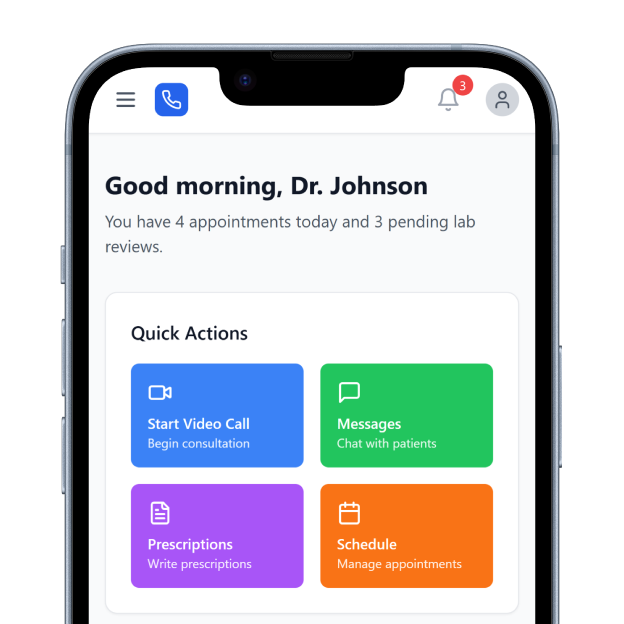
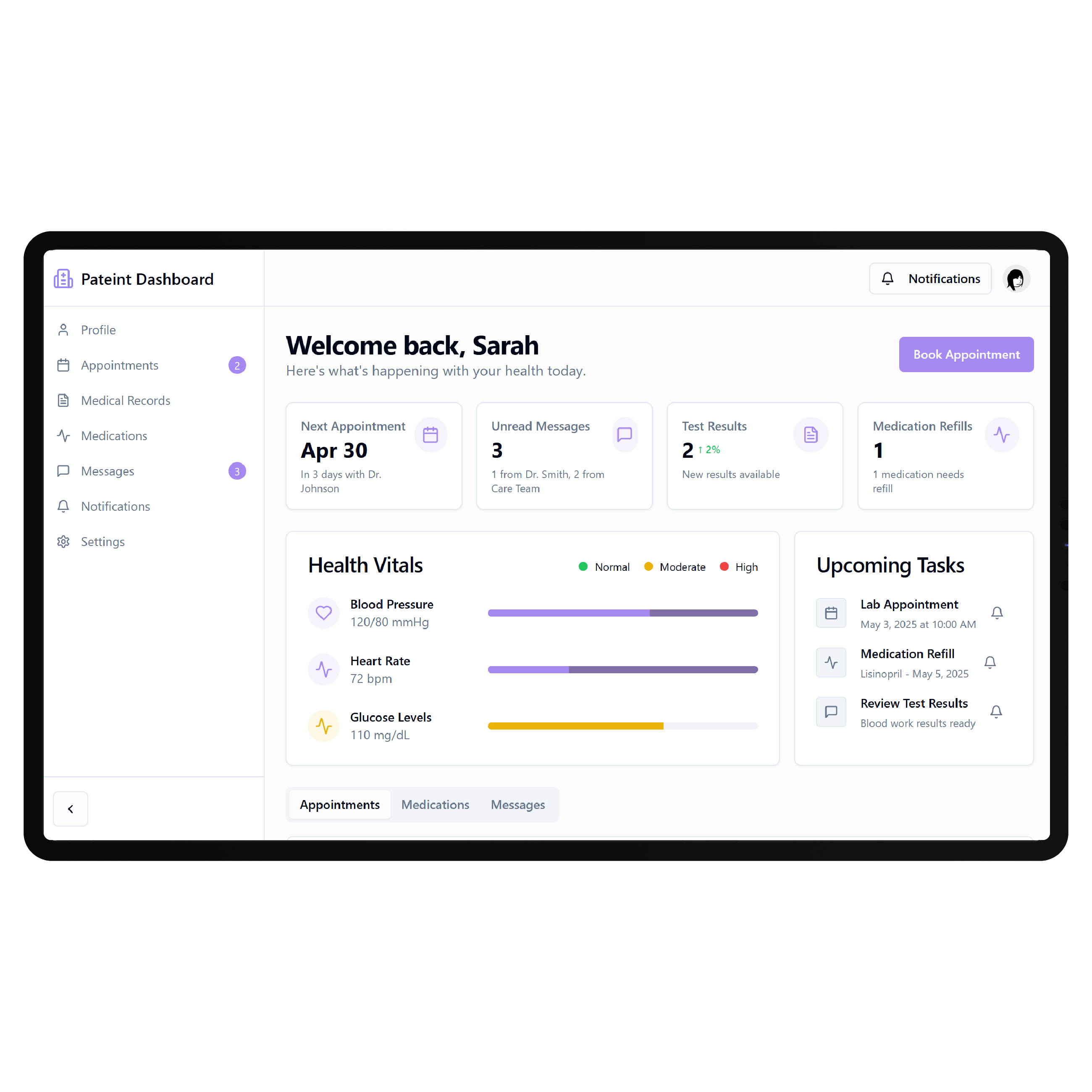
Keep Staff, Schedules, and Patients Moving
Operational delays often begin with small gaps: an appointment is missed, an intake form is incomplete, a provider schedule changes, or a billing task remains unresolved. These issues can quickly affect the patient experience and staff workload. DrapCode helps healthcare organizations build practice management applications around the way their teams actually work. The portal can connect administrative activity with a Patient Portal , creating a smoother flow between patient-facing requests and internal practice operations.
Core Practice Operations
Give administrators and staff the tools needed to coordinate appointments, patient flow, tasks, records, and financial activities.

Appointment Coordination
Manage provider calendars, appointment requests, availability, rescheduling, cancellations, and reminders across the practice.

Patient Intake
Collect registration details, insurance information, forms, consents, and other requirements before patient visits.

Staff Task Management
Assign operational tasks, track outstanding work, manage follow-ups, and maintain accountability across teams.
Patient Flow Tracking
Monitor arrivals, appointments, waiting activity, provider assignments, and visit status throughout daily operations.

Billing Coordination
Connect services, appointments, patient information, and administrative activity with downstream billing workflows.

Operational Reporting
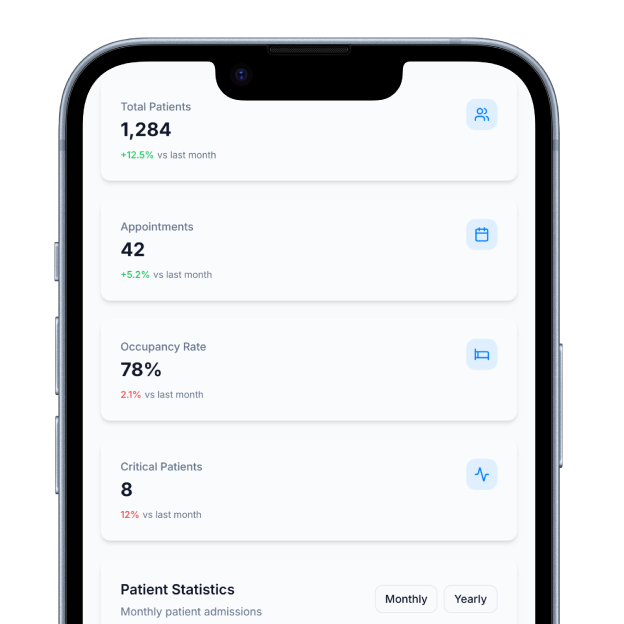
Give administrators visibility into scheduling, patient volumes, staff workloads, cancellations, and practice performance.


We partnered with DrapCode to develop our new Automated CRM using their low-code platform. Outstanding quality at half the price, unmatched speed, and excellent customer service.
Cal Goggans
Founder - A Custom Fit iNMotion



DrapCode stands out as the best. Flexible, scalable, and supported by an expert team. After 3 years on another tool, DrapCode is simply superior.
Cory Nation
President - Embark EMR

DrapCode is an easy-to-use no-code platform with a drag-and-drop interface, making it accessible for non-developers. The support team is highly responsive and dedicated to user success.
Joseph Young
President - Renew Hope And Healing
A Connected Operational Foundation
Build practice software that connects administrative workflows with clinical, financial, communication, and healthcare systems.

Provider Scheduling
Maintain provider availability, working hours, appointment types, locations, and scheduling rules in one environment.

System Connectivity
Connect practice workflows with EHRs, billing applications, laboratories, payment services, and other healthcare technologies.

Role-Based Access
Give administrators, providers, front-desk teams, billing staff, and other users appropriate system access.
Operational Data
Centralize practice information so teams can work from consistent records across departments and locations.
Practice operations can connect directly with a Medical Billing & Payment System , allowing appointment and service information to flow into financial workflows without unnecessary manual entry.
Where Practice Management Makes a Difference

Multi-Provider Clinics
Coordinate schedules, rooms, patient appointments, staff responsibilities, and daily activity when multiple providers share a practice.
Growing Practices
Standardize intake, scheduling, task management, and administrative processes as the organization adds providers, locations, and services.
Specialty Practices
Adapt workflows around specialty-specific appointments, forms, provider responsibilities, patient requirements, and operational procedures.
How It Comes Together
Shape the portal around your practice structure, daily workflows, staff responsibilities, integrations, and operational priorities.
 Efficient patient flow
- Coordinated staff operations
- Consistent practice data
- Secure healthcare workflows
Map Daily Operations
Document scheduling, intake, patient movement, staff tasks, billing coordination, reporting, and administrative processes.
Define Roles & Responsibilities
Establish what administrators, providers, coordinators, front-desk teams, and billing staff need to manage.
Connect Existing Systems
Integrate clinical records, billing, payments, communication tools, and other systems already used by your practice.
Put Operations Into Production
Deploy the portal with controlled access, monitoring, audit trails, security policies, and healthcare-ready infrastructure.
Protecting Practice Operations
Practice management systems can contain patient demographics, insurance information, appointment details, staff information, and financial data. Access needs to be carefully controlled because different teams require different levels of information to perform their responsibilities. DrapCode supports HIPAA-compliant healthcare application development with encrypted data management, role-based permissions, authentication, and audit logging. For practices that need deeper clinical functionality, operational workflows can also connect with a .
Why DrapCode for Practice Management
Every practice has its own combination of providers, locations, appointment types, administrative responsibilities, and operational rules. DrapCode provides a healthcare application development platform that allows organizations to build practice management software around those specific requirements. The result can go beyond scheduling and basic administration. Practices can bring patient intake, staff coordination, operational reporting, billing connections, and patient-facing services into a connected healthcare environment that can evolve with the organization.
Frequently Asked Questions
What is a practice management portal?
What can a practice management portal manage?
Can practice management software support multiple providers?
Can a practice management portal integrate with billing software?
Can DrapCode build a HIPAA-compliant practice management portal?
Make Practice Operations Easier to Manage
Build a secure practice management portal that connects your people, processes, schedules, and patient operations in one healthcare application.