Hospital EMR Software Development
Develop HIPAA-compliant hospital EMR software that connects patient records, clinical departments, care teams, orders, results, and hospital workflows.
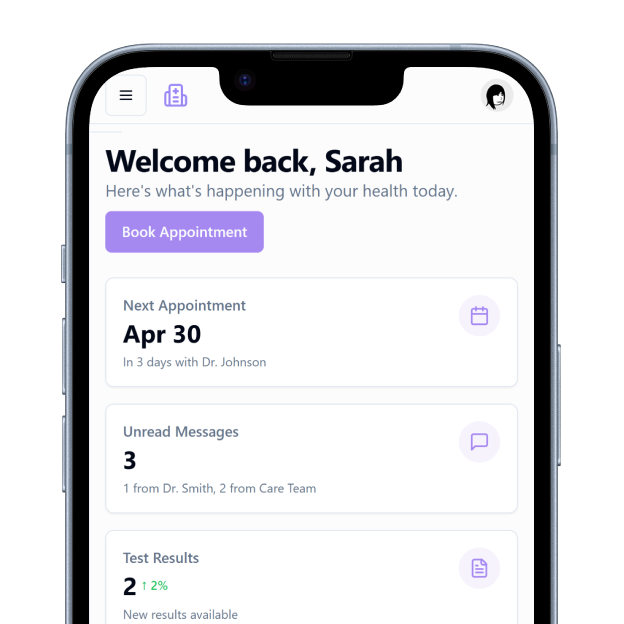
Unify Hospital Care
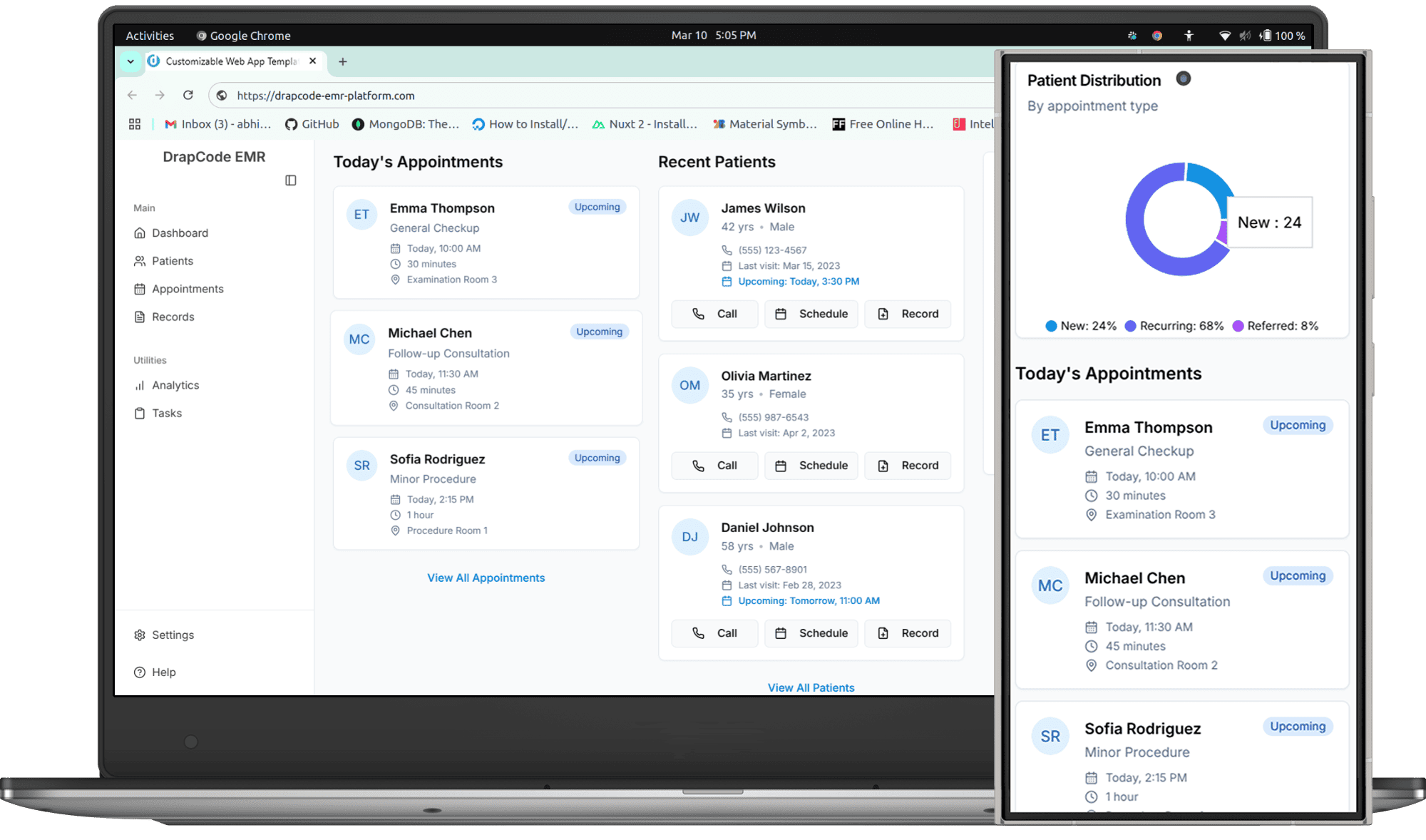
Hospitals generate clinical information across admissions, consultations, nursing care, diagnostics, procedures, medication management, and discharge. Without a connected clinical record, information can become fragmented between departments and care teams. Hospital EMR software creates a shared clinical environment where authorized professionals can access relevant patient information throughout an episode of care. This supports continuity between departments while giving clinicians a more complete picture of each patient's condition and treatment.
Coordinate Care Across Departments
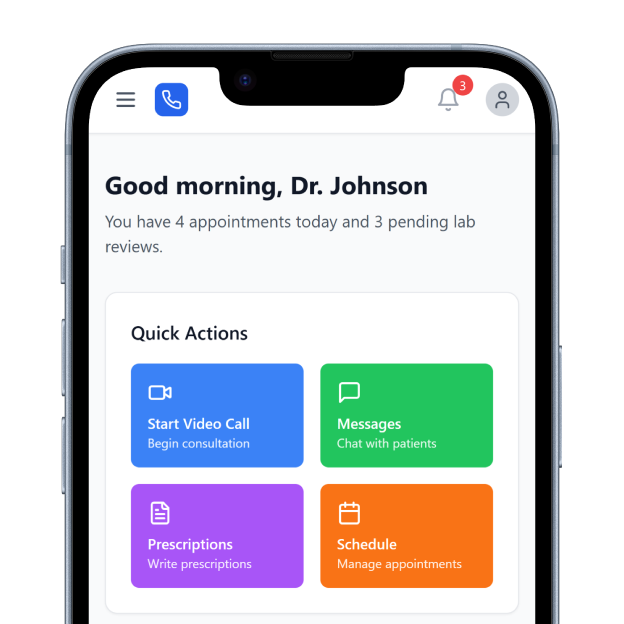
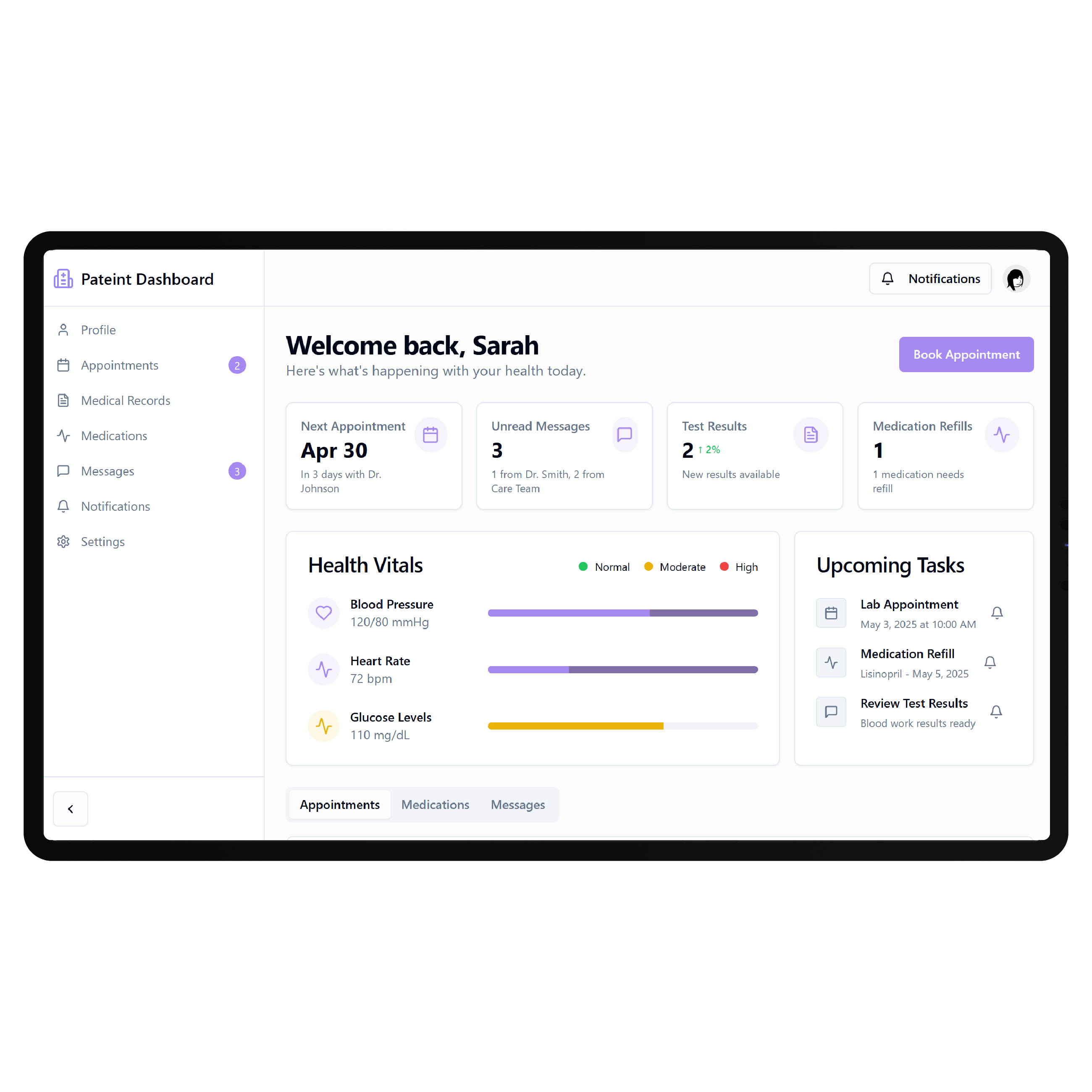
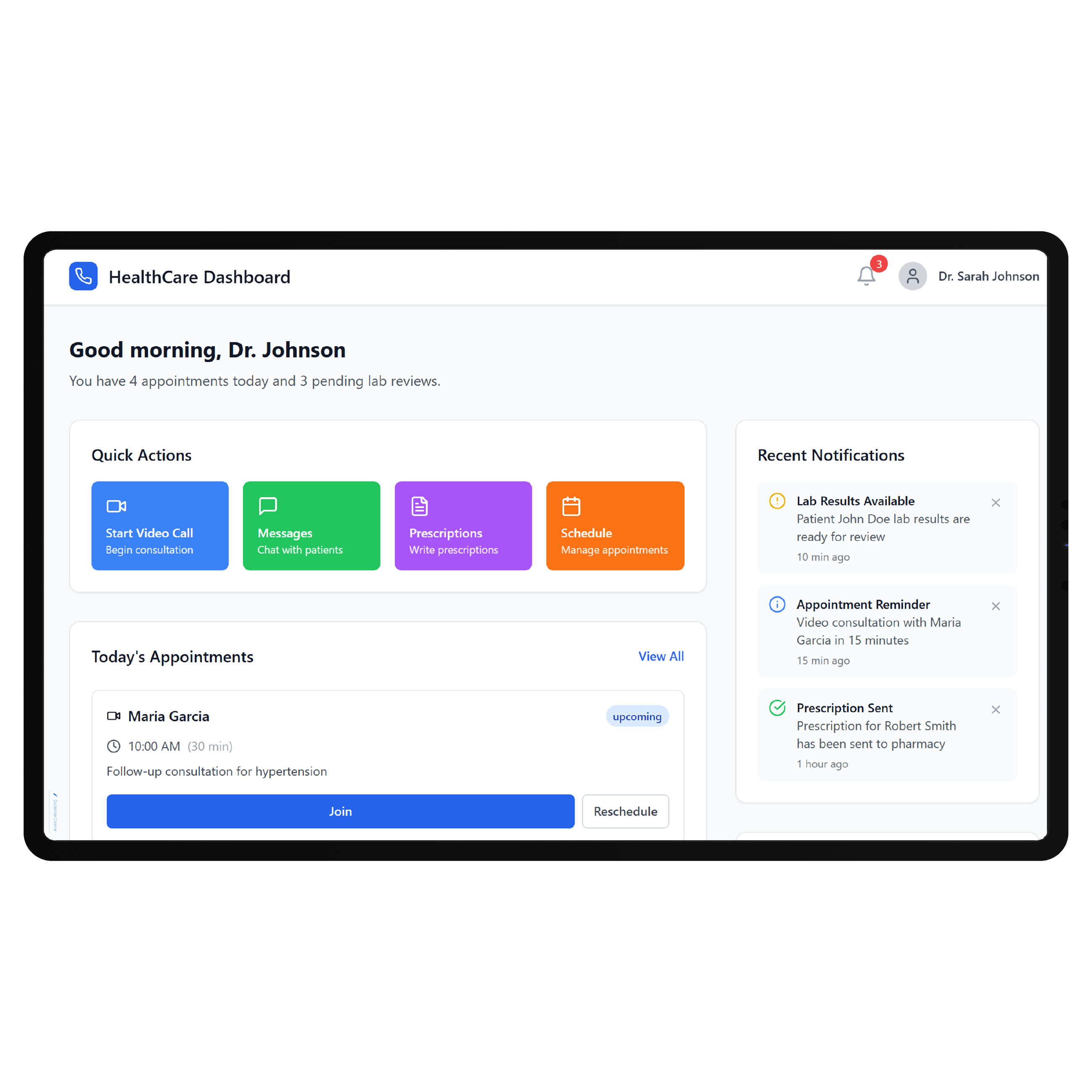
Hospital care depends on collaboration between physicians, nurses, laboratory teams, radiology departments, pharmacists, specialists, and administrative staff. Each team contributes information that may affect decisions made elsewhere in the organization. A hospital EMR can connect these activities through shared patient records and coordinated workflows. It can also work alongside a Practice Management Portal when hospitals need to connect clinical operations with scheduling, registration, and administrative processes.
Clinical Workflows for Hospitals
Support complex hospital encounters with structured records, orders, documentation, coordination, and clinical visibility.

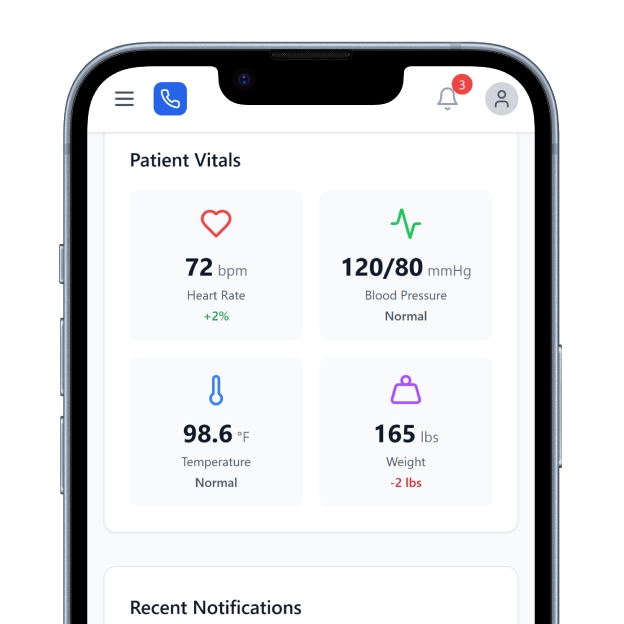
Inpatient Records
Maintain patient information across admissions, daily encounters, diagnoses, treatments, observations, and discharge activities.
Clinical Order Management
Create and track physician orders for laboratory tests, imaging, procedures, medications, and other clinical services.

Nursing Documentation
Record observations, assessments, care activities, medication administration, and nursing notes within patient workflows.

Care Team Coordination
Keep physicians, nurses, specialists, and supporting teams aligned around current patient information and care plans.

Discharge Management
Coordinate discharge summaries, instructions, medications, follow-up requirements, referrals, and other transition-of-care information.

Clinical Alerts
Surface relevant notifications, abnormal results, care tasks, and important patient information to authorized teams.


We partnered with DrapCode to develop our new Automated CRM using their low-code platform. Outstanding quality at half the price, unmatched speed, and excellent customer service.
Cal Goggans
Founder - A Custom Fit iNMotion



DrapCode stands out as the best. Flexible, scalable, and supported by an expert team. After 3 years on another tool, DrapCode is simply superior.
Cory Nation
President - Embark EMR

DrapCode is an easy-to-use no-code platform with a drag-and-drop interface, making it accessible for non-developers. The support team is highly responsive and dedicated to user success.
Joseph Young
President - Renew Hope And Healing
Technology Foundation for Hospital EMRs
Build a secure hospital technology foundation that supports interoperability, departmental connectivity, access governance, and scale.

Interoperable Data
Exchange structured clinical information with laboratories, imaging systems, pharmacies, and other connected healthcare applications.

Departmental Integration
Connect information across clinical departments while maintaining appropriate workflows and access boundaries for different teams.

Identity & Access
Manage authentication and permissions according to clinical roles, departments, responsibilities, and organizational policies.
Audit & Monitoring
Track important system activity, record access, information changes, and other events across hospital workflows.
Hospital EMRs can also connect with a Clinical Decision Support Platform to bring relevant clinical information and decision-support workflows closer to the point of care.
Hospital Use Cases

Inpatient Care
Manage admission records, physician documentation, nursing observations, orders, treatment information, and discharge activities throughout the patient's stay.
Diagnostics & Results
Coordinate laboratory and imaging orders with result delivery so authorized clinicians can review diagnostic information within relevant patient workflows.
Multidisciplinary Care
Give different clinical teams access to shared patient information while maintaining role-specific workflows for physicians, nurses, specialists, and supporting departments.
How It Comes Together
Build the hospital EMR around patient journeys, departmental responsibilities, clinical workflows, integrations, and governance requirements.
 Continuity across departments
- Structured clinical information
- Coordinated care delivery
- Controlled access and accountability
Map Hospital Workflows
Define admission, assessment, orders, diagnostics, treatment, nursing, consultation, and discharge processes across departments.
Organize Clinical Information
Structure patients, encounters, orders, results, medications, documentation, care plans, and other hospital data.
Connect Hospital Systems
Integrate laboratories, imaging, pharmacy, scheduling, billing, patient-facing applications, and other healthcare technologies.
Establish Production Governance
Deploy the EMR with authentication, permissions, monitoring, auditability, security policies, and controlled system administration.
Protect Hospital Clinical Data
Hospital EMRs contain extensive protected health information across multiple departments and care settings. Access must therefore be carefully governed so clinicians can obtain the information they need without exposing records beyond their authorized responsibilities. DrapCode supports HIPAA-compliant healthcare application development with encrypted data management, role-based access, authentication, and audit logging. Hospitals can also connect their EMR with a Healthcare Analytics Platform to analyze clinical activity, utilization, outcomes, and operational performance.
Why Build Hospital EMR Software With DrapCode
Hospital environments require software that can accommodate complex clinical pathways rather than forcing every department into the same workflow. DrapCode provides a healthcare application development platform for organizations building hospital software around their specific clinical, operational, and interoperability requirements. The platform provides a foundation for connecting patient records, clinical documentation, orders, diagnostics, care teams, and hospital systems within one production-ready environment. As services and departments expand, the application can evolve with the organization's changing requirements.
Frequently Asked Questions
What is hospital EMR software?
What features should hospital EMR software include?
Can hospital EMRs integrate with laboratory and imaging systems?
Can hospital EMR software support multiple departments?
Can DrapCode build HIPAA-compliant hospital EMR software?
Build a Connected Hospital EMR
Create hospital EMR software that brings clinical information, departmental workflows, and care teams together while supporting secure, connected hospital operations.