Telemedicine Platform Development
Develop HIPAA-compliant telemedicine platforms that connect patients, providers, appointments, consultations, and clinical workflows within one secure application.
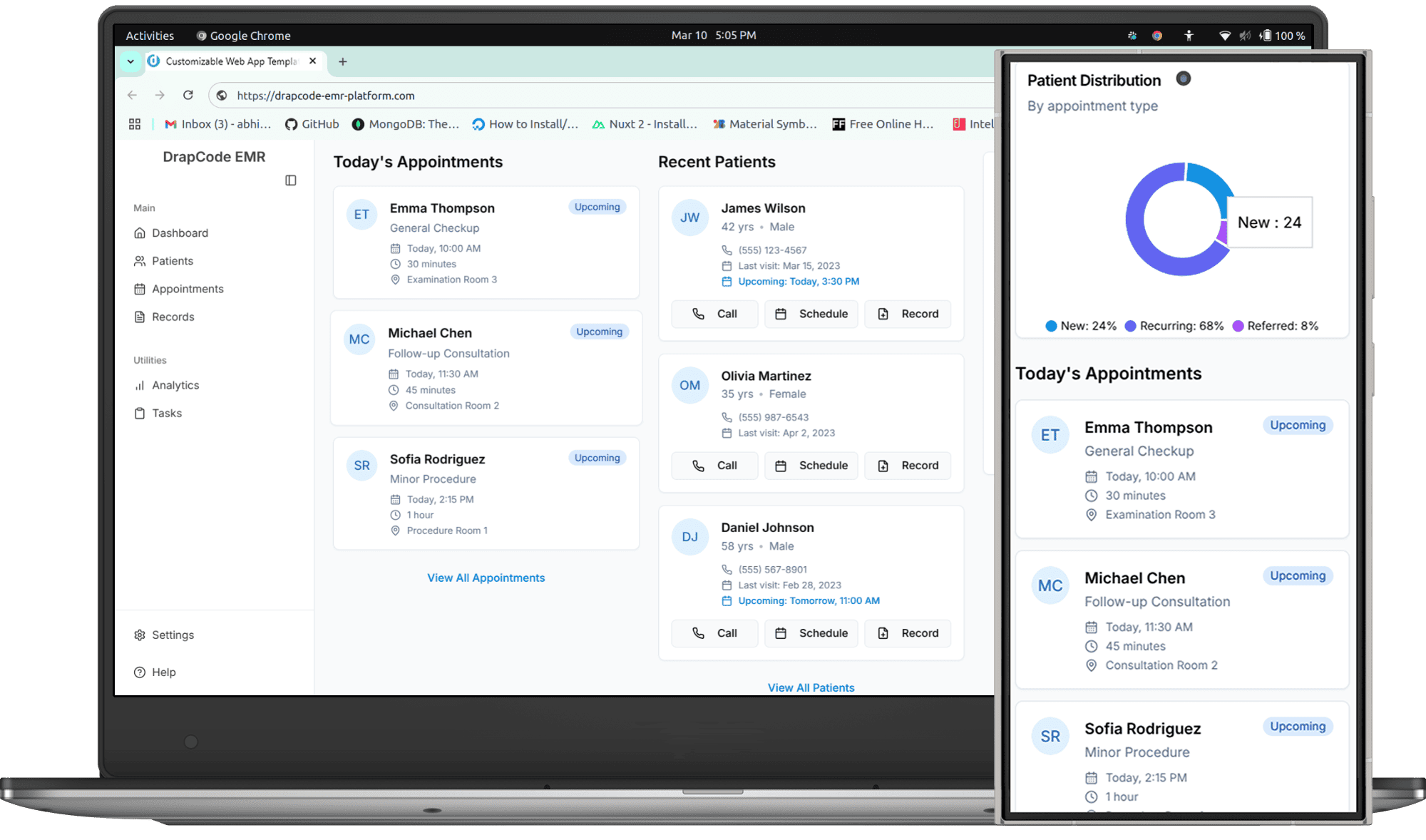
Make Virtual Care Easier to Deliver
Virtual care requires more than video consultations. Healthcare providers need to manage patient intake, appointments, clinical information, communication, follow-ups, and documentation throughout each remote encounter. A dedicated telemedicine platform brings these activities together in one connected environment. It helps providers deliver consistent virtual care while giving patients convenient access to consultations and ongoing healthcare services.
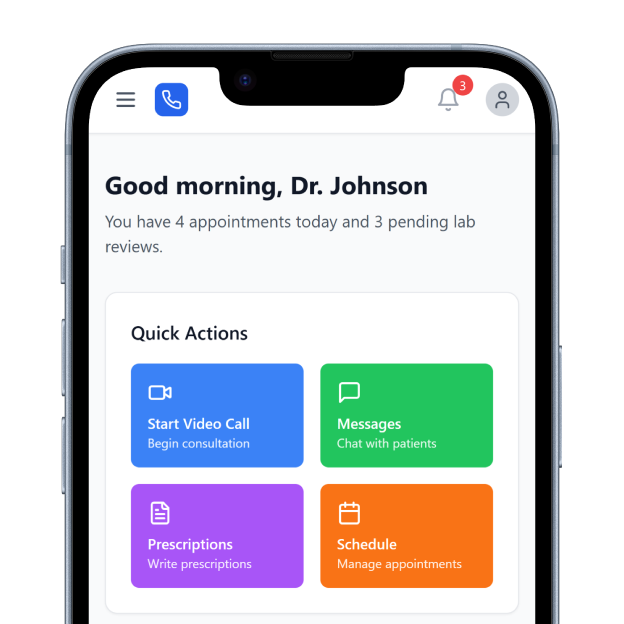
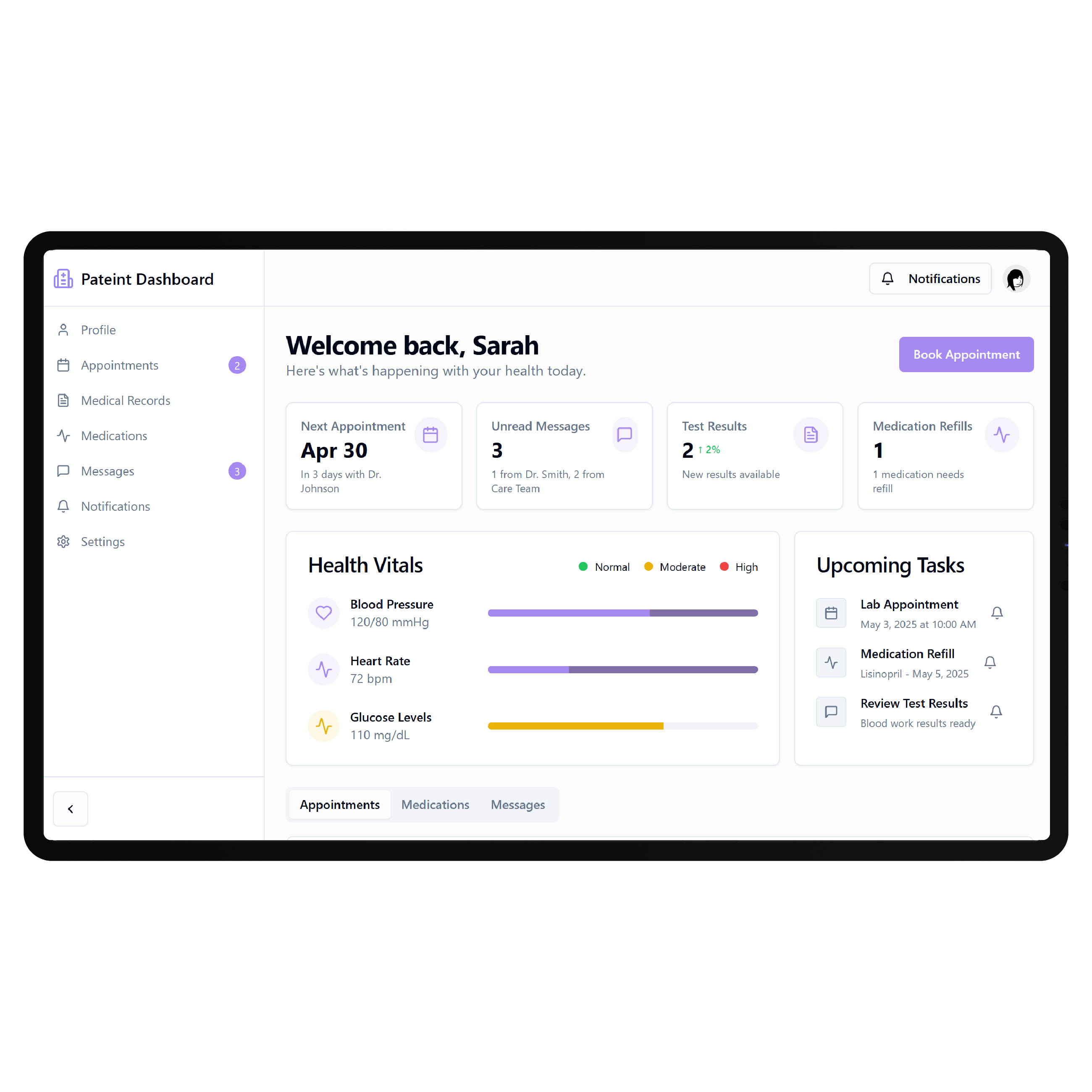
Connect Patients With Their Care Teams
A successful virtual care experience should feel like an extension of in-person healthcare. Patients need simple ways to schedule visits, complete forms, communicate with providers, and receive follow-up instructions without navigating disconnected systems. DrapCode helps healthcare organizations develop telemedicine applications around their care delivery models. Virtual visits can connect with a Patient Portal , allowing patients to manage appointments, access relevant information, and stay engaged throughout their care journey.
Capabilities for Virtual Care Delivery
Support secure virtual consultations with tools for patient access, provider workflows, clinical documentation, and follow-up care.

Patient Intake
Collect patient information, consent forms, medical history, and pre-visit details through secure digital workflows.
Virtual Appointments
Manage appointment requests, provider availability, confirmations, reminders, and virtual visit scheduling efficiently.

Video Consultations
Connect patients and providers through secure video workflows designed for remote healthcare encounters.
Clinical Documentation
Record consultation notes, assessments, diagnoses, treatment plans, and follow-up instructions within patient records.

Provider Workspaces
Give healthcare professionals centralized access to schedules, patient information, consultations, tasks, and care activities.
Post-Visit Follow-Up
Coordinate prescriptions, referrals, follow-up appointments, care instructions, and patient communications after virtual consultations.


We partnered with DrapCode to develop our new Automated CRM using their low-code platform. Outstanding quality at half the price, unmatched speed, and excellent customer service.
Cal Goggans
Founder - A Custom Fit iNMotion



DrapCode stands out as the best. Flexible, scalable, and supported by an expert team. After 3 years on another tool, DrapCode is simply superior.
Cory Nation
President - Embark EMR

DrapCode is an easy-to-use no-code platform with a drag-and-drop interface, making it accessible for non-developers. The support team is highly responsive and dedicated to user success.
Joseph Young
President - Renew Hope And Healing
Technology Behind Connected Virtual Care
Create a secure technology foundation that connects virtual consultations with clinical systems and patient-facing healthcare services.

Healthcare Integrations
Connect telemedicine workflows with EHRs, EMRs, scheduling systems, and communication services.

Secure Communication
Protect patient-provider interactions with authentication, controlled access, encrypted information, and monitored workflows.

Clinical Data Exchange
Exchange relevant patient information between telemedicine applications and connected healthcare systems.
Scalable Infrastructure
Support growing consultation volumes, provider networks, patient populations, and virtual care services with scalable infrastructure.
Telemedicine platforms can also connect with a Remote Patient Monitoring Software solution to extend virtual care beyond scheduled consultations and support continuous patient monitoring.
Virtual Care Across Healthcare Settings

Primary Care
Enable remote consultations, follow-ups, medication reviews, care instructions, and routine healthcare interactions without requiring every encounter to happen in person.
Specialty Care
Support specialist consultations, referrals, follow-ups, second opinions, and ongoing treatment coordination across geographic locations and healthcare organizations.

Chronic Care
Combine virtual consultations with ongoing monitoring and care coordination to help providers manage patients who require regular follow-up and long-term support.
How It Works
Develop your telemedicine platform around patient journeys, clinical workflows, integrations, security, and the needs of virtual care teams.
 Patient-centered access
- Connected clinical workflows
- Secure virtual interactions
- Interoperable healthcare systems
Define Virtual Care Journeys
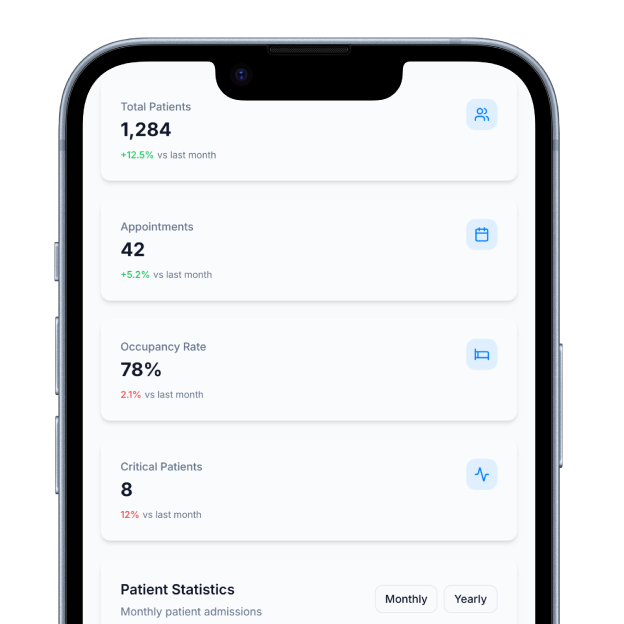
Identify patient intake, appointment, consultation, documentation, communication, follow-up, and provider workflows for each care model.
Build Care Experiences
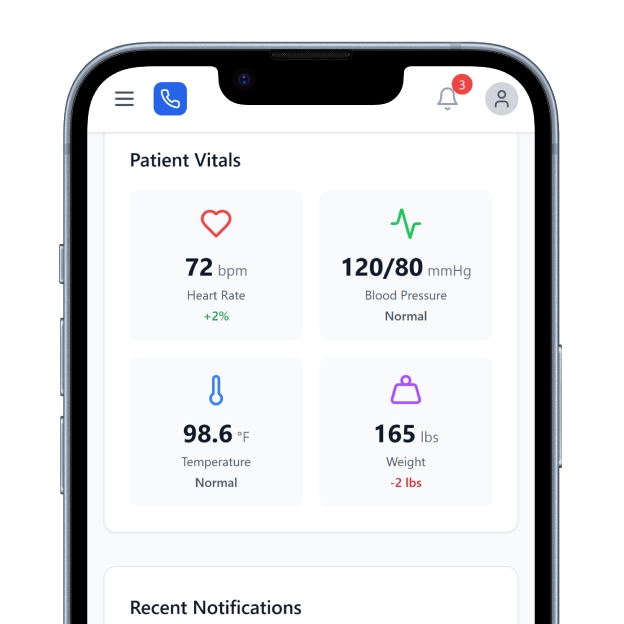
Create patient and provider interfaces for scheduling, virtual visits, clinical documentation, messaging, and ongoing care activities.
Connect Healthcare Systems
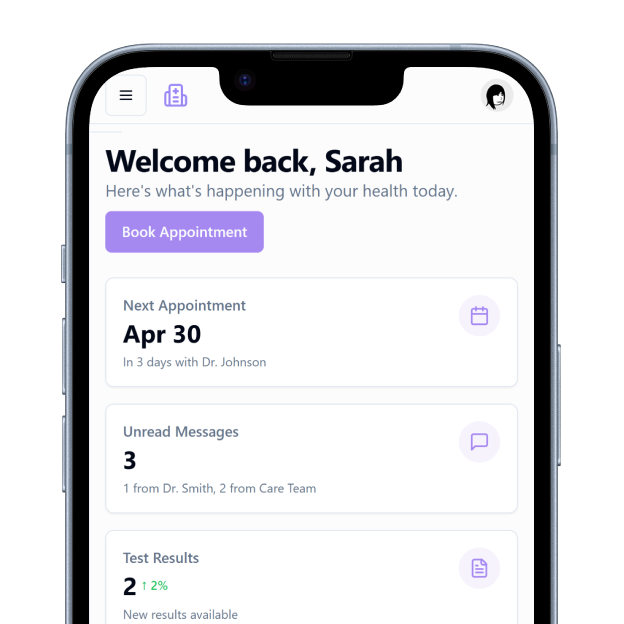
Integrate clinical records, scheduling services, communication tools, patient applications, and other healthcare technologies through secure APIs.
Deploy Securely
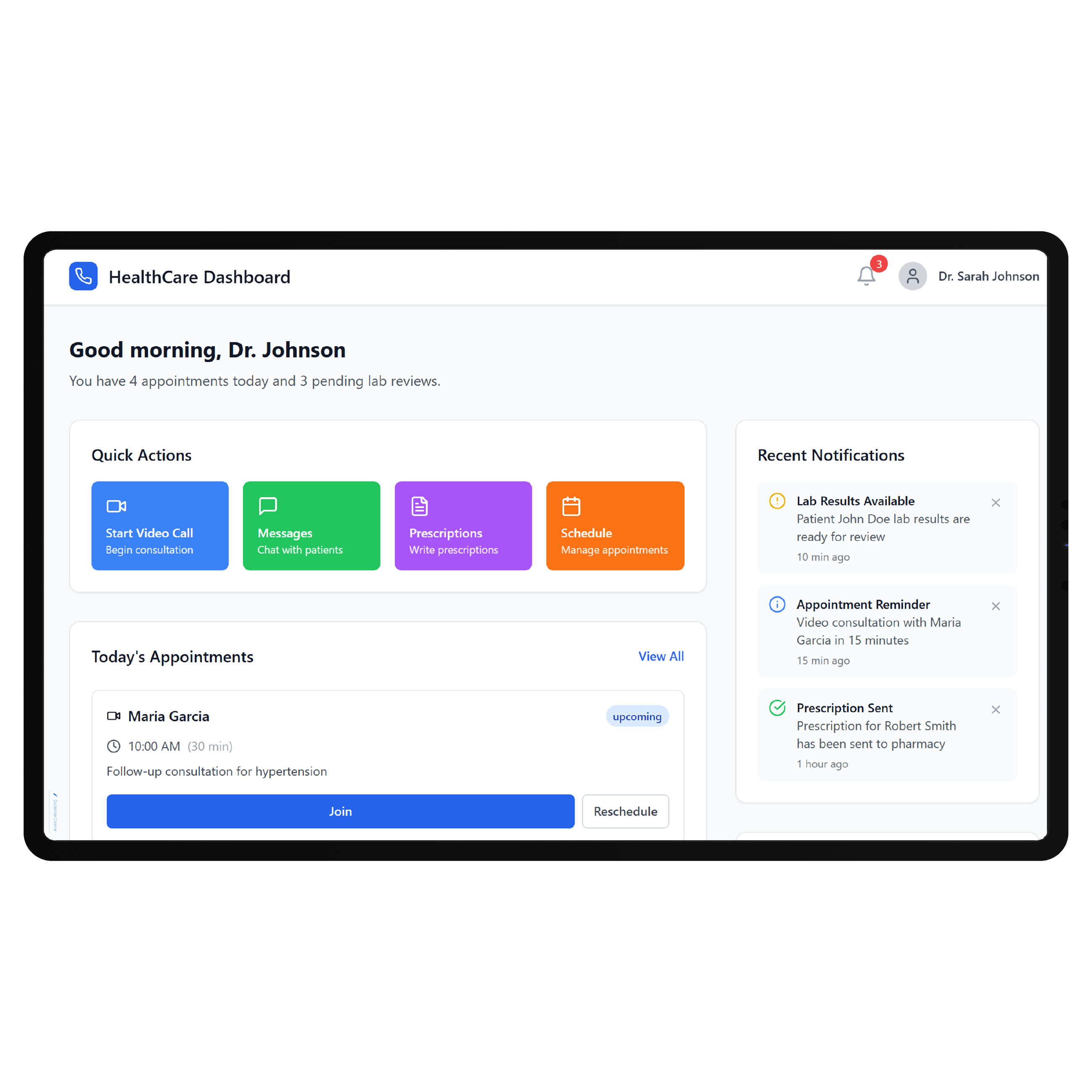
Launch the telemedicine application with appropriate permissions, authentication, monitoring, auditability, and healthcare-focused infrastructure.
Protecting Virtual Care Information
Telemedicine platforms handle protected health information across patient registration, consultations, clinical documentation, communications, and follow-up activities. Security therefore needs to be built into every interaction between patients, providers, and connected healthcare systems. DrapCode supports HIPAA-compliant healthcare application development with encrypted data management, role-based permissions, authentication, and audit logging. Telemedicine applications can also exchange structured information with connected clinical systems to support continuity of care.
Why Build With DrapCode
Virtual care requires an application foundation that can accommodate different provider workflows, patient experiences, clinical requirements, and healthcare integrations. DrapCode provides a healthcare application development platform designed for organizations building production-ready healthcare software. From patient onboarding and virtual consultations to clinical documentation and follow-up care, DrapCode helps organizations create connected telemedicine applications. The platform can also support broader digital care environments as providers expand virtual services and connected healthcare programs.
Frequently Asked Questions
What is a telemedicine platform?
What should a telemedicine platform include?
Can telemedicine platforms integrate with EHR and EMR systems?
Can telemedicine support chronic care?
Can DrapCode build HIPAA-compliant telemedicine platforms?
Build Your Virtual Care Platform
Create a secure telemedicine platform that connects patients and providers while supporting consultations, clinical workflows, and continuous digital care.