From Patient Portals to Insurance Dashboards: No-Code Use Cases in Healthcare
The healthcare industry is evolving rapidly, driven by rising patient expectations, increasing demand for digital access, and the urgency for data interoperability. However, legacy systems, compliance hurdles, and a shortage of skilled developers often slow down innovation. This is where no-code development enters the picture—empowering healthcare providers to create HIPAA-compliant apps faster and more cost-effectively.
Whether you're looking to build digital patient engagement tools, streamline back-office operations, or launch innovative healthcare apps, no-code platforms provide a flexible and secure way to do it—all without writing code. In this blog, we’ll explore some powerful no-code use cases in healthcare, from patient-facing applications to operational dashboards.
The Rise of No-Code in Healthcare
Healthcare organizations are under constant pressure to innovate, yet many still rely on outdated systems and manual workflows. Hiring dedicated software developers to build and maintain custom tools is expensive and time-consuming. No-code platforms solve this challenge by offering visual development environments where users can drag, drop, and configure features with minimal technical expertise.
These platforms are also evolving to support complex integrations with EHR systems, FHIR servers, and insurance APIs, making them suitable for mission-critical use cases. More importantly, leading no-code solutions are now equipped with HIPAA compliance frameworks—ensuring patient data is secure and private.
1. Patient Portals and Digital Front Doors
One of the most widely adopted digital healthcare solutions is the patient portal. These tools allow patients to view medical records, schedule appointments, communicate with doctors, and access lab results. Traditionally, building a secure portal required custom development. Today, a HIPAA-compliant no-code app builder can be used to create fully customized patient portals in a fraction of the time.
These portals can be integrated with EHR platforms like Cerner, or Athenahealth, ensuring real-time data access and updates. Adding features like multi-language support, patient education libraries, and chatbot assistance becomes significantly easier using visual tools.
2. Digital Patient Engagement Tools
Patient engagement is no longer a nice-to-have—it’s a necessity. Engaged patients are more likely to adhere to treatment plans, attend follow-ups, and manage chronic conditions effectively. This has led to a surge in demand for digital patient engagement tools, ranging from appointment reminders and medication trackers to mental health check-ins and wellness plans.
No-code platforms allow care teams to build these tools quickly and personalize them based on user needs. By using dynamic workflows, data-driven notifications, and secure messaging features, healthcare providers can offer better care while reducing administrative overhead.
3. Smart Dashboards for Insurance and Admin Workflows
Healthcare isn’t just about clinical care—it also involves a significant amount of administrative tasks. Managing insurance claims, billing cycles, prior authorizations, and patient onboarding often involves multiple disconnected systems. No-code platforms make it easy to build insurance claim dashboards and internal tools that connect these workflows in one place.
Using drag-and-drop components, healthcare providers can build dashboards to track claim statuses, identify bottlenecks, and automate approvals. These dashboards can be integrated with payer systems, hospital databases, and external APIs to ensure real-time processing and reporting.
4. Telemedicine and Virtual Care Platforms
The pandemic proved that virtual care is here to stay. Building a telemedicine app from scratch typically requires months of development and rigorous testing. A no-code approach makes it possible to launch telehealth platforms with features like video conferencing, patient authentication, prescription modules, and clinical workflows—within weeks.
Add-ons such as virtual triage bots, e-consent forms, and insurance verification tools can be easily configured based on your organization’s workflow. With a HIPAA-compliant no-code app builder, you can maintain compliance and security while delivering high-quality virtual care.
5. Public Health Monitoring and Data Reporting Tools
Public health agencies and healthcare networks often need tools for outbreak monitoring, vaccination tracking, and health survey reporting. Building these tools through traditional development can delay timely interventions. No-code platforms allow agencies to build custom reporting tools, data dashboards, and public health notification systems tailored to their data needs.
These applications can pull data from EHR systems using FHIR integrations, aggregate metrics, and generate compliance-ready reports with visual analytics. No-code empowers non-technical teams like epidemiologists or program managers to configure these tools without waiting for IT departments.
6. Healthcare App Ideas for Startups
The no-code movement is a boon for healthcare startups looking to test ideas quickly. Whether it’s a mental wellness app, chronic care manager, or remote monitoring tool, startups can build MVPs, gather feedback, and scale without deep technical teams.
With healthcare-specific components such as secure form builders, role-based access controls, and audit trails, no-code platforms enable startups to launch confidently in a regulated space. If you're searching for fresh healthcare app ideas, no-code can help you iterate faster and gain early traction.
Why HIPAA Compliance Matters
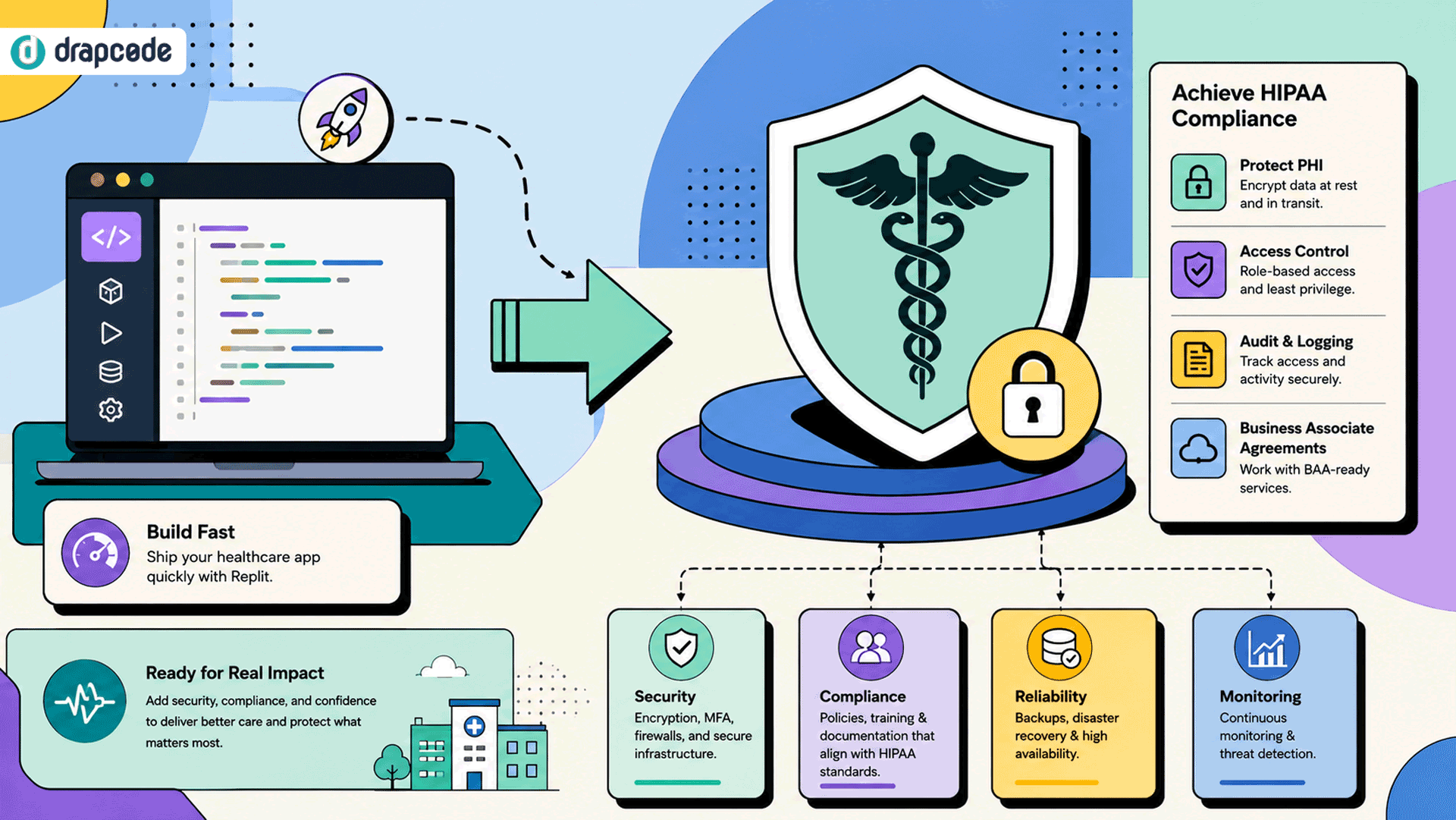
In healthcare, data privacy isn't optional—it’s mandated. The Health Insurance Portability and Accountability Act (HIPAA) sets the standard for protecting sensitive patient information. Choosing a HIPAA-compliant no-code app builder is essential to ensure your application meets all security, encryption, and access control standards.
Leading platforms offer features like audit logging, data encryption, user authentication, and secure hosting to meet HIPAA requirements. This makes it feasible to build apps that handle PHI (Protected Health Information) without compromising compliance.
Final Thoughts: Unlocking Innovation with No-Code
From enhancing patient access to streamlining internal operations, the possibilities of no-code in healthcare are vast. It enables faster deployment, encourages innovation, and allows healthcare teams to adapt to patient needs in real time.
Whether you’re a hospital looking to build a secure patient portal, a startup exploring new healthcare app ideas, or a payer managing complex insurance workflows—no-code is your launchpad.
At DrapCode, we’ve built a platform specifically designed to support healthcare innovators. With pre-built integrations for FHIR, EHR systems, and HIPAA-ready infrastructure, you can bring your healthcare solutions to life quickly and securely.