Build vs Buy Software: How to Make the Right Decision in 2026
Sep 12, 2023
Introduction
Every growing business eventually faces the same question:
Should we build custom software or buy an existing solution?
At first, buying an off-the-shelf application often seems like the fastest and least expensive option. You can deploy it quickly, avoid a lengthy development cycle, and start solving business problems immediately.
But as your business grows, those same tools may become limiting. You might need custom workflows, deeper integrations, role-specific permissions, or features that simply don't exist in a standard SaaS product.
On the other hand, building software from scratch has traditionally required significant investment, technical expertise, and ongoing maintenance.
Today, there's a third option: AI-assisted no-code development. It allows organizations to build tailored business applications without the cost and complexity of traditional software engineering, fundamentally changing the build-versus-buy equation.
This guide will help you evaluate each approach and choose the right strategy for your business.
What Does "Build vs Buy" Mean?
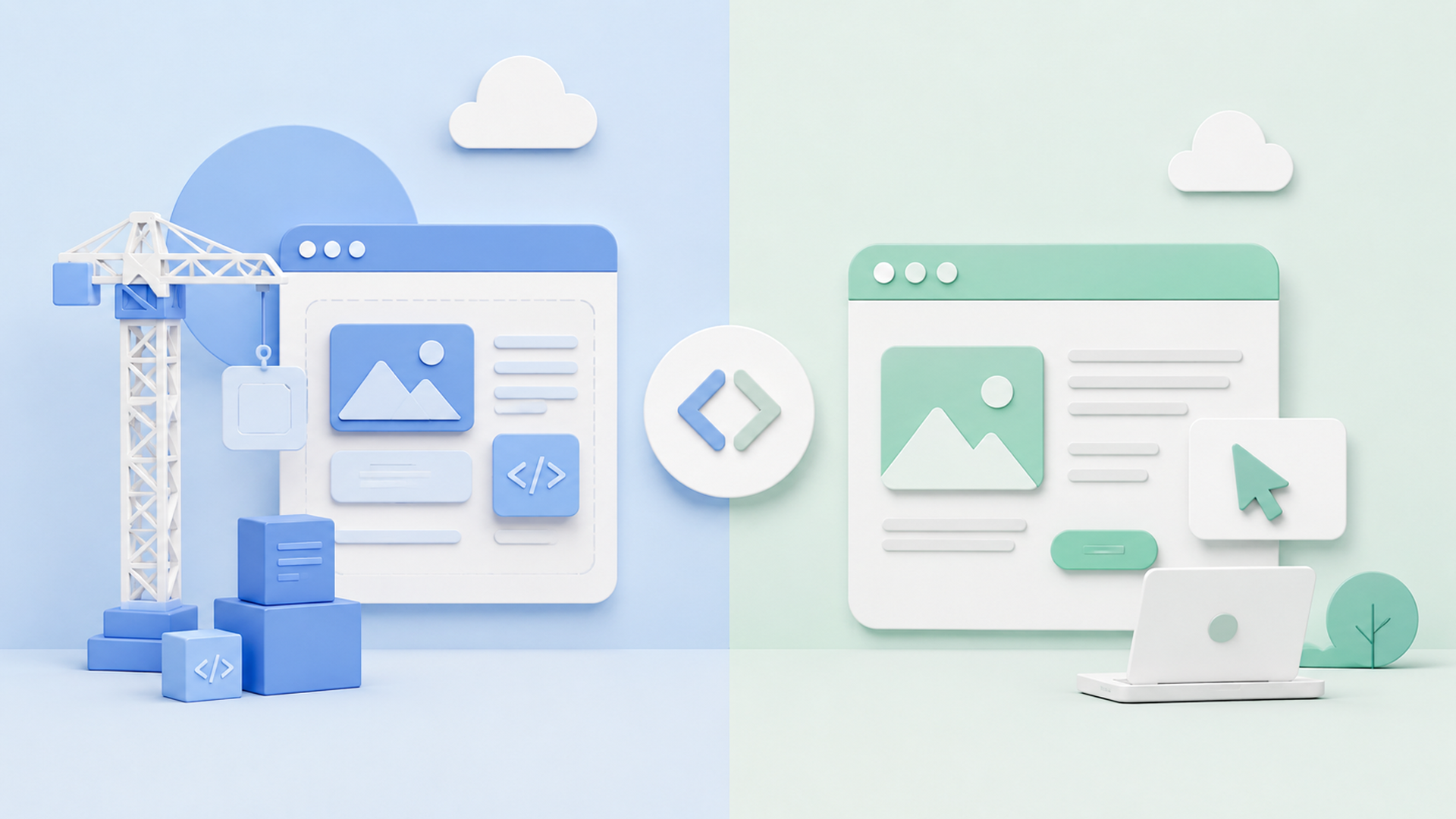
The build vs buy decision is the process of choosing between:
- Building a custom software solution
- Buying an existing SaaS product
- Using a no-code platform to create a tailored application
Each option offers different trade-offs in terms of cost, implementation time, flexibility, maintenance, and long-term value.
The right choice depends on your business goals, not simply on your budget.
When Buying Software Makes Sense
Purchasing an existing SaaS platform is often the right decision when your requirements are standard across the industry.
Examples include:
- Email marketing
- Video conferencing
- Accounting software
- Payroll systems
- Team communication
Advantages
- Faster implementation
- Lower upfront investment
- Vendor-managed updates
- Proven reliability
- Customer support
Limitations
- Limited customization
- Subscription costs increase over time
- Vendor lock-in
- Feature overload
- Integration challenges
When Building Software Makes Sense
Custom software becomes valuable when your processes create a competitive advantage.
Examples include:
- Industry-specific workflows
- Customer portals
- Internal approval systems
- Healthcare applications
- Financial platforms
- Vendor management systems
Building gives you complete control over how your software evolves alongside your business.
The Rise of AI-Assisted No-Code Development
A few years ago, building software meant hiring developers and committing to months of development.
Today, AI-assisted no-code platforms enable businesses to build secure, scalable applications using visual development tools while significantly reducing development time.
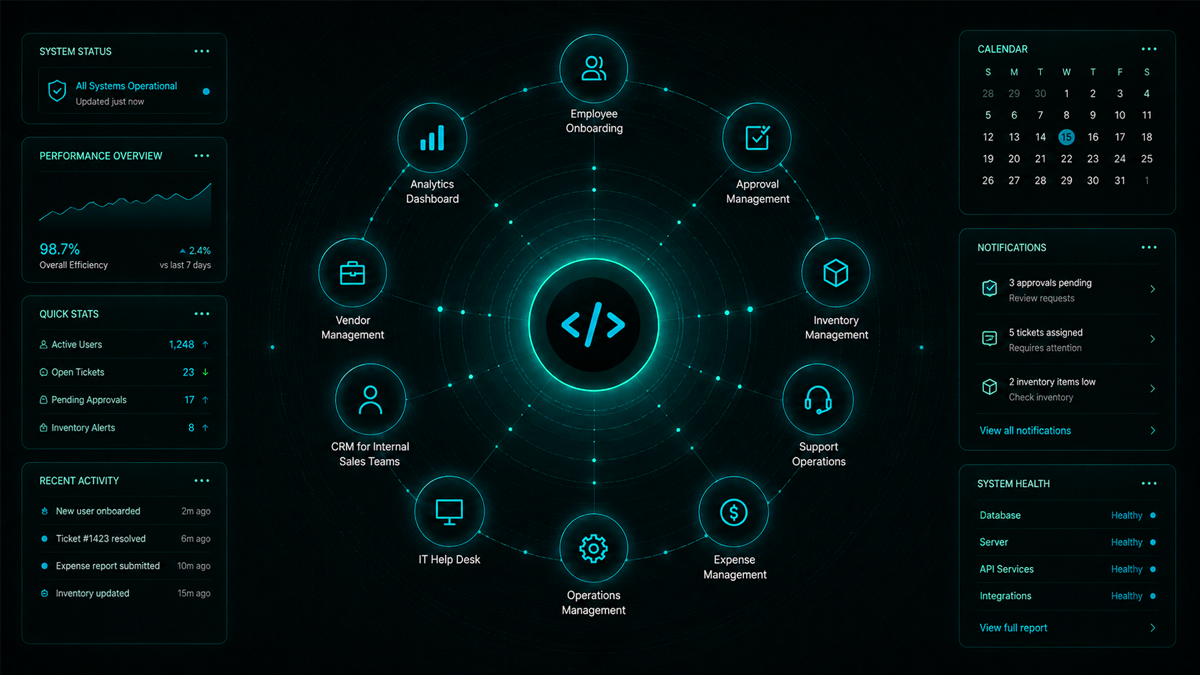
This approach is particularly valuable for organizations creating internal tools that support operations, HR, finance, sales, or customer service.
Key Factors to Consider Before You Decide
1. Time to Market
If speed is your priority, buying software is usually the quickest option.
However, if existing tools don't align with your workflows, AI-assisted no-code platforms can dramatically shorten custom development timelines while preserving flexibility.
2. Long-Term Cost
Buying software typically has lower upfront costs but recurring subscription fees.
Building requires a larger initial investment but can reduce long-term licensing costs, especially for mission-critical systems.
Don't just compare purchase prices; consider the total cost of ownership, including maintenance, integrations, and future changes.
3. Customization
Ask yourself:
Can your business adapt to the software?
Or should the software adapt to your business?
If your workflows are unique, custom applications often provide greater long-term value.
4. Scalability
Business requirements rarely stay the same.
Choose a solution that lets you scale features, users, and integrations without having to rebuild everything from scratch.
5. Competitive Advantage
Commodity processes should usually be bought.
Strategic capabilities that differentiate your business are often worth building.
Build vs Buy Comparison
|
Factor |
Buy Software |
Build with No-Code |
|
Time to launch |
Faster |
Fast |
|
Upfront cost |
Lower |
Moderate |
|
Monthly cost |
Recurring |
Platform-based |
|
Customization |
Limited |
High |
|
Ownership |
Vendor |
Your business |
|
Scalability |
Depends on the vendor |
Flexible |
|
Competitive differentiation |
Low |
High |
Real-World Examples
Buying software works well for:
- Accounting
- Payroll
- Video conferencing
- Email marketing
Building custom software makes sense for:
- Customer portals
- Operations platforms
- Healthcare workflows
- Vendor management
- Internal dashboards
Many businesses start with off-the-shelf tools before creating internal tool examples tailored to their operational needs.
Why More Businesses Are Choosing No-Code
The conversation has shifted from "build or buy" to "how can we build faster?"
Modern no-code platforms enable organizations to:
- Launch applications in weeks instead of months
- Reduce development costs
- Iterate quickly based on user feedback
- Maintain greater ownership of their processes
For businesses exploring AI-powered development, understanding what an AI application platform offers can help identify opportunities to automate and scale more effectively.
Why Choose DrapCode?
DrapCode is an AI-assisted full-stack no-code platform that helps businesses build secure, scalable, and production-ready applications without traditional coding.
Whether you're creating customer portals, internal systems, or workflow applications, DrapCode gives you the flexibility to build software around your business, not the other way around.
If you're evaluating modern development approaches, it's also worth comparing no-code vs low-code enterprise apps to determine which approach best fits your organization's technical capabilities and growth plans.
Final Thoughts
The best build-vs-buy decision isn't about choosing the cheapest or fastest option.
It's about selecting the approach that aligns with your business strategy, operational complexity, and long-term goals.
For standardized processes, buying software is often the right move.
For workflows that define how your business operates and competes, building a tailored solution, especially with an AI-assisted no-code platform, can deliver greater flexibility, ownership, and long-term value.
Frequently Asked Questions
1. What is the difference between building and buying software?
Building software means creating a custom solution tailored to your business processes, while buying software involves using an existing SaaS product with predefined features. Building offers greater flexibility and ownership, whereas buying is generally faster to implement and requires less upfront investment.
2. When should a business build custom software instead of buying it?
Businesses should consider building custom software when their workflows are unique, existing tools require significant workarounds, or they need features that provide a competitive advantage. Custom applications are often ideal for customer portals, internal operations, approval workflows, and industry-specific processes.
3. Is building software with a no-code platform better than traditional development?
For many business applications, yes. AI-assisted no-code platforms significantly reduce development time and costs while enabling teams to build secure, scalable, and production-ready applications. Traditional development may still be the better choice for highly specialized or extremely complex software requirements.
4. What factors should I consider when deciding between build vs buy?
The most important factors include:
-
Business requirements
-
Time to market
-
Total cost of ownership
-
Customization needs
-
Scalability
-
Integration capabilities
-
Long-term maintenance
-
Security and compliance requirements
Evaluating these factors helps determine whether an off-the-shelf solution or a custom-built application is the better investment.
5. Can I build enterprise software without coding?
Yes. Modern AI-assisted no-code platforms allow businesses to build enterprise-grade applications without traditional programming. Organizations can create internal tools, customer portals, workflow automation systems, CRMs, and business applications using visual development environments while maintaining scalability and security.
6. Is buying SaaS software always cheaper than building it?
Not necessarily. While SaaS products typically have lower upfront costs, recurring subscription fees, user-based pricing, and customization limitations can increase the total cost of ownership over time. For businesses with highly specific requirements, building a tailored solution may offer better long-term value.
7. Why are more businesses choosing AI-assisted no-code platforms?
AI-assisted no-code platforms help businesses develop applications faster, reduce reliance on engineering resources, and adapt software as business needs evolve. They provide a balance between the speed of buying software and the flexibility of building custom solutions, making them an attractive option for digital transformation initiatives.
Blogs & Insights
We'd love to share our knowledge with you. Get updates through our blogs & know what’s going on in the no-code world.