Is Bolt.new HIPAA Compliant?
No, Bolt.new is not HIPAA compliant for handling PHI by default. While Bolt offers HIPAA-ready capabilities for certain BYOK enterprise deployments, its standard hosted platform does not provide a published BAA for PHI.
AI-powered development tools are changing the way software gets built. Instead of spending weeks setting up projects, writing boilerplate code, and connecting databases, developers can now describe an idea and have a working application in minutes.
Bolt.new is one of the platforms leading this shift. Its AI-assisted workflow enables the rapid generation of full-stack applications, helping founders validate ideas, build MVPs, and iterate much faster than with traditional development.
For healthcare startups, that's an exciting opportunity.
Imagine building a patient scheduling platform over a weekend or creating a proof of concept for a remote patient monitoring solution before your next investor meeting. The speed is impressive, but healthcare isn't judged by how fast an application is built.
It's judged by how securely it protects patient information.
That's why one question continues to appear in conversations with healthcare founders and product teams:
Is Bolt.new HIPAA compliant?
The answer isn't a simple "yes" or "no."
Based on Bolt.new's publicly available documentation at the time of writing, the platform offers enterprise-grade security capabilities and deployment options. However, healthcare organizations should not assume that using an AI development platform automatically makes an application HIPAA compliant. Compliance depends on the complete application architecture, deployment environment, security controls, vendor agreements, and operational processes—not just the tool used to generate the code.
Before choosing Bolt.new for your next healthcare project, it's worth understanding where AI development ends, and healthcare compliance begins.
Building Software Is Faster Than Ever. Building Trust Still Takes Time.
Healthcare founders often start with one goal: get an idea into users' hands as quickly as possible.
AI development platforms make that easier than ever. You can generate interfaces, APIs, authentication flows, and databases in a fraction of the time required just a few years ago.
That's fantastic for innovation.
But healthcare software isn't evaluated the same way as an ecommerce store or a project management tool.
A hospital isn't simply buying features.
It's trusting your application with patient records, clinical workflows, and highly sensitive health information.
That's why healthcare buyers ask very different questions.
Can this platform integrate with our EHR?
How is patient information protected?
Can your system support audit logging?
Who has access to clinical data?
Will your vendors sign the necessary agreements?
These questions aren't about how quickly an application is built.
They're about whether healthcare organizations can confidently use it in production.
The Better Question Isn't "Is Bolt.new HIPAA Compliant?"
Many teams begin by asking whether a platform is HIPAA compliant.
A more useful question is:
Can Bolt.new be part of a HIPAA-compliant healthcare application?
There's an important difference.
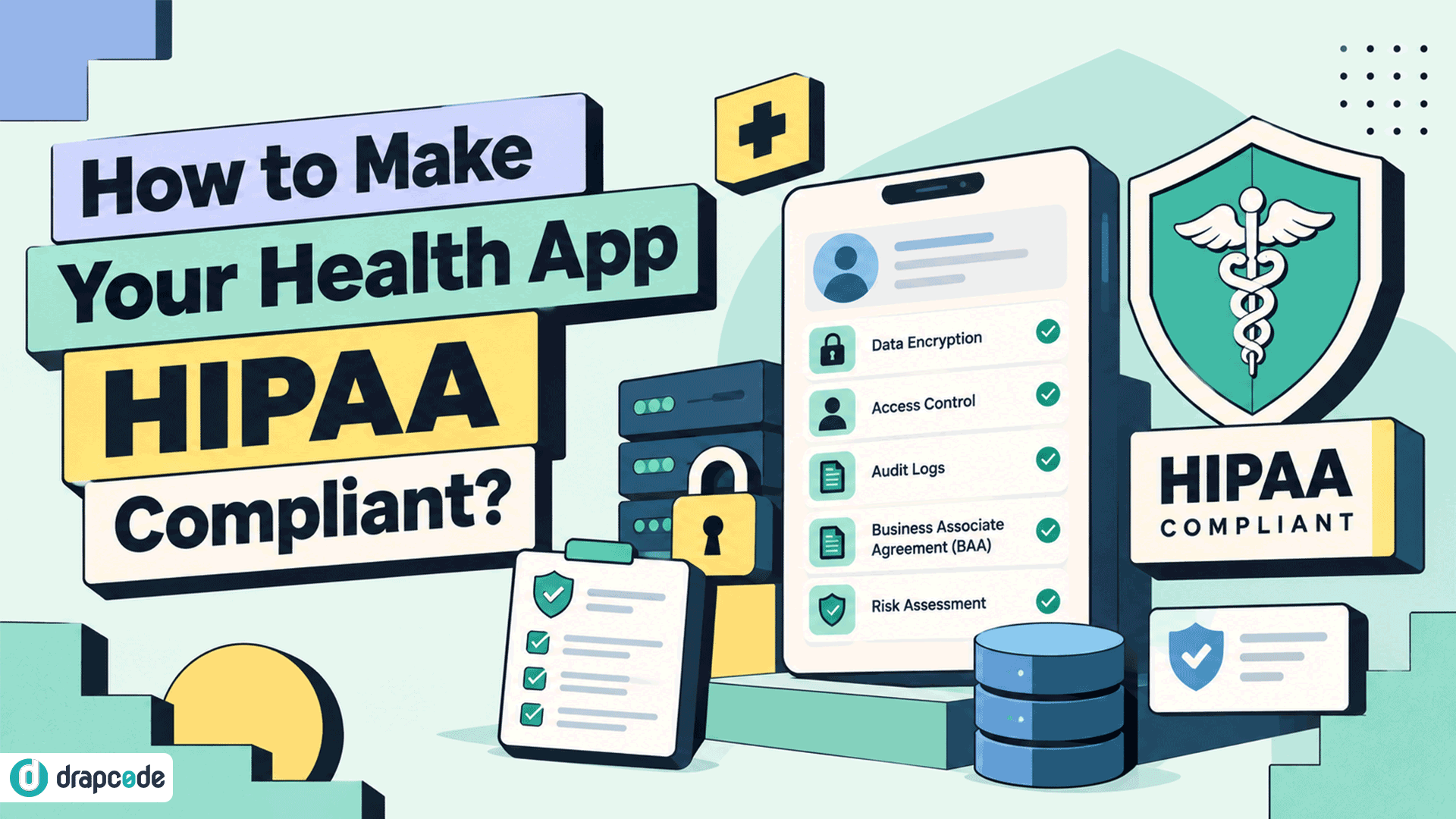
HIPAA compliance isn't something a development platform provides on its own. Instead, it's the result of multiple technical, administrative, and operational safeguards working together.
For example, a healthcare application may need:
- Secure authentication and role-based access controls
- Encryption for data at rest and in transit
- Audit logs that record user activity
- Secure cloud infrastructure
- Business Associate Agreements (BAAs), where applicable
- Risk assessments and security monitoring
- Backup and disaster recovery planning
- Policies governing access to Protected Health Information (PHI)
Some of these requirements relate to technology.
Many relate to people, processes, and governance.
That's why no AI development platform, including Bolt.new, can automatically make an application HIPAA compliant.
Where Bolt.new Fits in the Healthcare Development Journey
Bolt.new excels at helping teams move from idea to application.
Instead of manually building every component, developers can use AI to accelerate development and focus on refining the product.
For healthcare startups, that creates several valuable use cases.
Bolt.new can be an excellent choice for:
- Building investor demonstrations
- Validating new product ideas
- Creating internal workflow tools
- Designing user experiences
- Developing early-stage MVPs
These projects benefit from rapid iteration without immediately requiring production-grade healthcare infrastructure.
The challenge appears when those same applications begin handling real patient information.
At that point, development becomes only one part of the project.
Healthcare organizations must also think about security reviews, compliance documentation, vendor management, interoperability, deployment, monitoring, and long-term maintenance.
That's where many healthcare startups discover that building software and operating healthcare software are two very different challenges.
AI Can Generate Code. It Can't Generate Compliance.
One of the biggest misconceptions surrounding AI development tools is that faster development automatically reduces compliance work.
It doesn't.
AI can generate APIs.
It can create dashboards.
It can scaffold authentication.
It can even produce production-quality application code.
What it can't do is complete your compliance strategy.
Based on publicly available information at the time of writing, healthcare teams evaluating Bolt.new should independently verify factors such as deployment options, vendor agreements, security responsibilities, and operational controls before using the platform to build applications that handle PHI.
Ultimately, HIPAA compliance is achieved through the complete healthcare ecosystem, not the AI development platform itself.
That's why successful healthcare products combine rapid development with thoughtful security architecture, governance, and interoperability from the very beginning.
Can Bolt.new Be Part of a HIPAA-Compliant Healthcare Application?
The short answer is yes, but with important considerations.
Based on Bolt.new's publicly available information at the time of writing, healthcare teams should evaluate the platform as a component of their overall technology stack rather than as a complete compliance solution.
Think of Bolt.new as the engine that helps accelerate application development.
Everything around that engine still matters.
Before launching a healthcare application that handles Protected Health Information (PHI), organizations should carefully evaluate questions such as:
- Where will patient data be stored?
- Does the deployment environment meet your security requirements?
- Which vendors require a Business Associate Agreement (BAA)?
- How are user permissions managed?
- Can access to patient information be audited?
- How will the application integrate with Electronic Health Records (EHRs) and FHIR APIs?
- Who is responsible for ongoing security monitoring and compliance reviews?
The answers to these questions ultimately determine whether your application is suitable for production healthcare environments.
In other words, Bolt.new can certainly accelerate development, but your organization remains responsible for designing a secure, compliant healthcare platform.
When Bolt.new Makes Sense for Healthcare Teams
Every development platform has strengths, and Bolt.new is no exception.
For many healthcare startups, it can dramatically reduce the time required to move from an idea to a working application.
Bolt.new is particularly well suited for:
- Investor demonstrations
- Internal workflow tools
- Administrative dashboards
- MVP development
- Product validation
- User experience testing
- Rapid feature experimentation
These projects benefit from AI-assisted development, enabling teams to learn quickly before investing in a production-ready architecture.
However, healthcare organizations should think carefully before relying on a general AI development platform alone for applications such as:
- Patient portals
- Electronic Medical Records (EMRs)
- Telemedicine platforms
- Care management systems
- Clinical workflow applications
- Remote patient monitoring platforms
- Provider-facing healthcare software
These applications often require advanced interoperability, enterprise security, governance, and healthcare-specific workflows that extend well beyond application generation.
Bolt.new vs DrapCode: Choosing the Right Foundation
Bolt.new and DrapCode aren't direct competitors in the traditional sense; they solve different problems.
Bolt.new focuses on helping developers build applications faster using AI.
DrapCode is a healthcare application development company that helps healthcare organizations build secure, scalable software designed for real-world healthcare operations.
If you're deciding between the two, the comparison isn't really about which platform has more features.
It's about where your healthcare product is heading.
If Your Goal Is...
Bolt.new
DrapCode
Validate a healthcare idea quickly
✓ Excellent choice
✓ Excellent choice
Launch an MVP
✓ AI-assisted development
✓ AI-assisted development
Build a production-ready patient portal
Requires significant additional engineering
✓ Built for healthcare applications
Integrate FHIR APIs
Custom implementation
✓ Native healthcare integration support
Develop EMR or EHR applications
Custom development required
✓ Supported
Create care management platforms
Additional engineering effort
✓ Supported
Enterprise healthcare deployment
Depends on architecture and implementation
✓ Enterprise-ready
Healthcare-focused development
General AI application builder
✓ Healthcare application development company
The biggest difference isn't AI.
It's healthcare expertise.
Bolt.new helps teams generate software faster.
DrapCode helps healthcare organizations build applications that are designed around interoperability, healthcare workflows, security, and long-term scalability from the very beginning.
The Point Where Many Healthcare Startups Rethink Their Technology Stack
Nearly every healthcare startup follows a similar journey.
First comes the excitement of building an MVP.
Then comes customer validation.
Soon after, the first healthcare provider wants a pilot program.
That's when the questions start changing.
Instead of asking about features, potential customers begin asking about compliance, security, integrations, and governance.
Can you integrate with Epic?
Do you support FHIR?
Can your security team complete our vendor questionnaire?
How do you protect patient information?
Can administrators configure granular user permissions?
Do you maintain detailed audit logs?
These conversations mark an important shift.
Your product is no longer being evaluated as a startup project.
It's being evaluated as healthcare infrastructure.
For many teams, this is the point where a general AI application builder is no longer enough, and healthcare-specific development expertise becomes increasingly valuable.
Final Thoughts
Bolt.new is an impressive example of how AI is transforming software development.
For founders, product teams, and developers, it offers an opportunity to build applications faster than ever before.
But healthcare software is different.
Success isn't measured by how quickly you generate code.
It's measured by how much providers trust your platform, how well patient information is protected, and how well your application scales across increasingly complex healthcare environments.
Based on publicly available information at the time of writing, healthcare organizations should carefully evaluate Bolt.new's deployment options, security responsibilities, and vendor agreements before using it for applications that process Protected Health Information.
If your goal is simply to validate an idea, Bolt.new can be an excellent starting point.
If your goal is to build secure, interoperable healthcare software that providers and healthcare organizations can confidently adopt, partnering with a healthcare application development company like DrapCode provides a stronger foundation for long-term success.
Frequently Asked Questions
Q1. Is Bolt.new HIPAA compliant?
Based on publicly available information at the time of writing, Bolt.new should not be assumed to be HIPAA compliant out of the box. Healthcare organizations should independently evaluate deployment options, security controls, vendor agreements, and compliance responsibilities before handling Protected Health Information.
Q2. Can I use Bolt.new to build a healthcare application?
Yes. Bolt.new is well suited for healthcare MVPs, prototypes, internal tools, and product validation. Production healthcare applications require additional planning for security, compliance, and interoperability.
Q3. Does using Bolt.new make my application HIPAA compliant?
No. HIPAA compliance depends on the complete application architecture, deployment environment, operational processes, and security controls, not solely on the development platform.
Q4. What should healthcare teams evaluate before choosing an AI development platform?
Look beyond AI capabilities. Consider deployment flexibility, authentication, role-based access control, audit logging, FHIR interoperability, enterprise security, vendor agreements, scalability, and long-term maintainability.
Q5. When should I choose a healthcare-focused development company instead of a general AI builder?
If you're building patient portals, EMRs, telemedicine platforms, care management software, or other production healthcare applications, working with a healthcare application development company can simplify development while supporting interoperability, security, and enterprise-scale healthcare operations.
Build Healthcare Applications with Confidence
Building healthcare software requires more than fast development; it demands security, interoperability, and a deep understanding of healthcare workflows.
DrapCode helps healthcare organizations, providers, and digital health businesses build secure, scalable applications including patient portals, EMRs, care management platforms, telehealth solutions, and FHIR-enabled healthcare software using AI-assisted visual development.
Whether you're launching a new digital health product or modernizing existing healthcare systems, our team helps you move from idea to production with confidence.