Is Zapier Compliant with HIPAA? (No, but here's a substitute.)

If you're seeking to automate tasks within your healthcare practice, you might have considered using Zapier due to its powerful capabilities in connecting various apps and services to streamline workflows. However, in the healthcare sector, safeguarding patient data is of utmost importance. This raises a critical question: Is Zapier HIPAA compliant?
Let's delve into Zapier's security measures and introduce DrapCode as a robust HIPAA-compliant alternative for building healthcare tools.
Is Zapier HIPAA Compliant?
Zapier is not HIPAA compliant and should not be used to automate healthcare processes involving Protected Health Information (PHI). Despite implementing robust security measures, applications integrated with Zapier do not support HIPAA compliance.
Zapier's official stance on data privacy is explicit: it does not support the use of regulated healthcare and medical data, including PHI. On their Data Privacy webpage, Zapier states:
“The use of regulated healthcare and medical data including Protected Health Information (PHI) under HIPAA isn’t supported on Zapier. Zapier also can’t sign business associate agreements (BAAs) or equivalent agreements for handling PHI or other similar information.”
This indicates that, despite Zapier's strong commitment to data protection and privacy under frameworks like GDPR and CCPA, HIPAA compliance is explicitly excluded from their scope.
Zapier’s Security Measures
Zapier employs several high-level security measures to protect customer data, including:

- Account and access controls: Ensuring only authorized users have system access.
- Two-factor authentication: Adding an extra layer of security for user logins.
- 256-bit AES encryption: Protecting data both in transit and at rest.
- Audit controls and logs: Maintaining detailed records of all activities for accountability and security purposes.
However, for a platform to be HIPAA compliant, it must be willing to sign a Business Associate Agreement (BAA) with healthcare organizations. A BAA is a contract that outlines each party's responsibilities in handling PHI and ensures adherence to all HIPAA regulations.
Zapier explicitly states that it does not sign BAAs. Without a BAA, healthcare organizations cannot legally use Zapier to handle PHI. This is a critical barrier to HIPAA compliance because, even if Zapier’s security measures were otherwise sufficient, the legal requirements of HIPAA are not met.
The absence of BAAs means that healthcare providers must avoid using Zapier for any processes involving PHI. While Zapier can still be used for other purposes, it is imperative to ensure that no PHI is involved in any automated workflows set up through the platform.
These security measures are designed to protect the confidentiality, integrity, and availability of data. However, these features alone do not render a platform HIPAA compliant.
Challenges Preventing Zapier's HIPAA Compliance
Given that Zapier connects a multitude of apps, ensuring all of them meet HIPAA's stringent security standards presents a significant challenge. Let's explore the specific reasons why Zapier cannot guarantee HIPAA compliance:

- Integration Gap with HIPAA Requirements - A primary challenge is the incompatibility of many applications that Zapier integrates with concerning HIPAA standards. Applications like Calendly, HubSpot, PayPal, Wave, and Wix do not meet HIPAA requirements. Since Zapier’s core function is to automate workflows between different applications, this incompatibility poses a significant hurdle.
- Absence of Business Associate Agreements - For Zapier to achieve HIPAA compliance, it would need to remove all non-compliant applications from its platform. Additionally, Zapier would need to enter into Business Associate Agreements (BAAs) with all remaining applications that could handle PHI. This would ensure that all data shared through Zapier’s workflows is managed according to HIPAA standards.
- Uncertain Data Retention and Disposal Policies - Ensuring compliance with HIPAA's data retention and disposal requirements is another challenge. HIPAA mandates specific protocols for how long PHI should be retained and the methods for its secure disposal. Zapier would need to implement and enforce strict data retention and disposal policies across all integrated applications to comply with these regulations.
These challenges highlight the complexities involved in making a platform like Zapier HIPAA compliant. The diverse range of integrated applications and the necessity for comprehensive legal agreements and data management policies make it a daunting task.
DrapCode: A HIPAA-Compliant Zapier Alternative
DrapCode, unlike Zapier, provides a more secure and reliable platform for building HIPAA-compliant applications. DrapCode offers an automation platform that ensures healthcare organizations can create workflows that meet stringent HIPAA security and privacy standards. With DrapCode, you get an all-in-one platform that is designed to protect sensitive health data from the outset.
Whether you need to integrate healthcare systems, automate processes, or manage data securely, DrapCode has been built with compliance in mind, providing a robust solution for organizations in the healthcare sector. DrapCode’s security features ensure your data stays protected, making it a reliable alternative to Zapier for healthcare applications.
Features of DrapCode that Ensure HIPAA Compliance
DrapCode offers several features that help ensure your applications remain HIPAA-compliant:

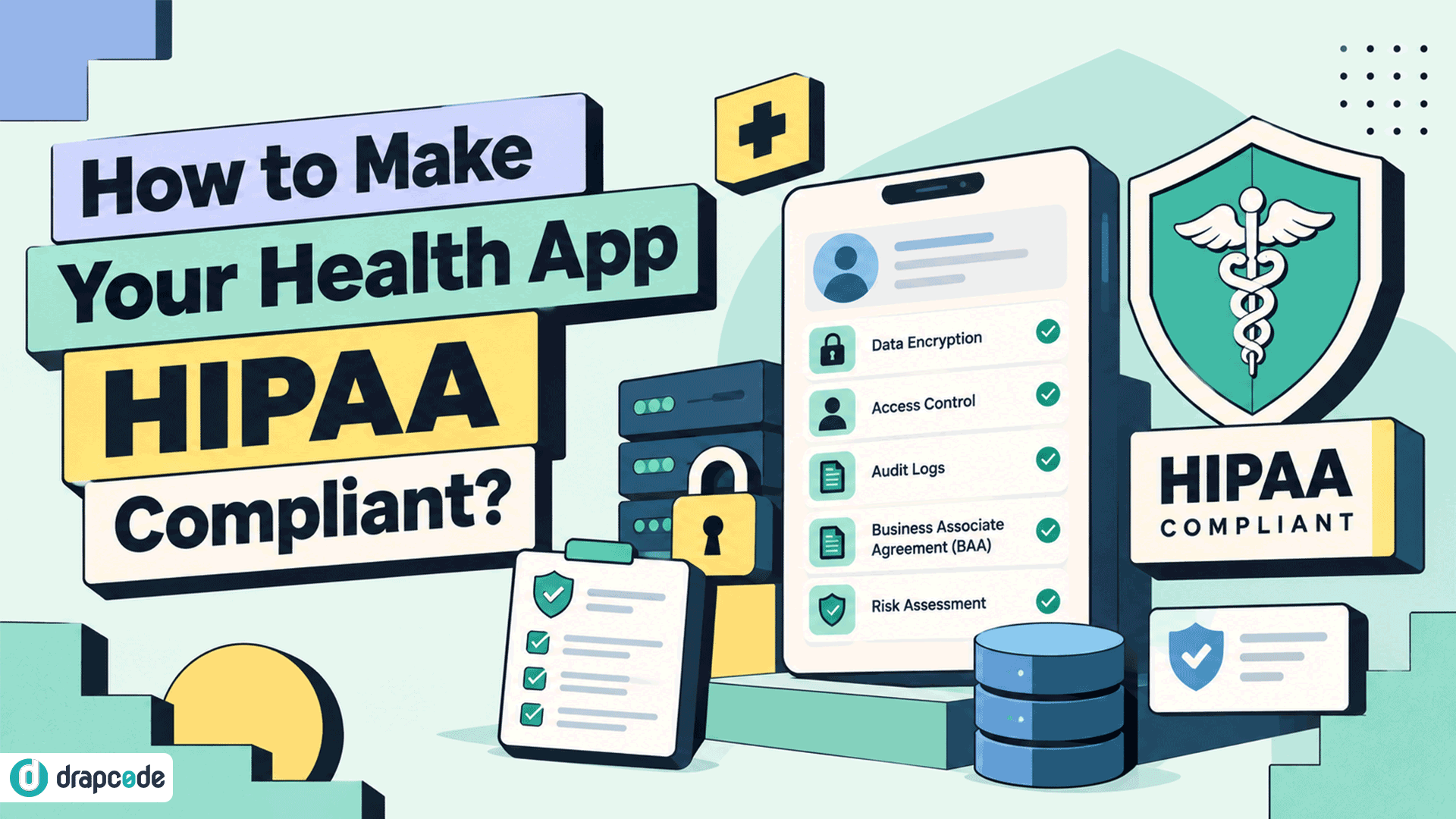
- End-to-End Data Encryption: All data transmitted via DrapCode is encrypted both in transit and at rest, protecting sensitive health data from unauthorized access.
- Business Associate Agreement (BAA): DrapCode offers a BAA, which is essential for healthcare organizations to stay compliant with HIPAA regulations when using third-party services.
- User Authentication and Access Control: DrapCode provides robust user authentication protocols and role-based access controls, ensuring that only authorized personnel have access to PHI.
- Audit Logs: Detailed audit logs allow you to monitor and track every action performed within your healthcare application, ensuring transparency and accountability.
- Data Segmentation and Storage Compliance: DrapCode ensures that healthcare data is stored in compliance with HIPAA’s regulations, including maintaining data in secure, segregated environments.
- Secure Integrations: DrapCode integrates with HIPAA-compliant systems, offering peace of mind when connecting with other healthcare applications and services.
- Regular Security Audits: DrapCode undergoes regular security audits to ensure that it meets the latest HIPAA requirements and best practices for data protection.
- Customizable Privacy Settings: DrapCode provides customizable privacy settings, allowing healthcare organizations to tailor data handling according to specific needs and regulations.
- Automated Compliance Updates: DrapCode’s platform automatically updates with the latest compliance standards, ensuring your application stays up-to-date with any changes to HIPAA regulations.
Benefits of Choosing DrapCode Over Zapier: HIPAA-Compliant Zapier Alternative
While Zapier is a useful tool for automation, it is not designed specifically with HIPAA compliance in mind. DrapCode, on the other hand, provides a comprehensive and secure platform that is tailored for healthcare applications, offering a variety of benefits for organizations that need to ensure HIPAA compliance:
- Full HIPAA Compliance Out-of-the-Box: DrapCode provides a built-in HIPAA-compliant framework, so healthcare organizations don’t have to worry about making adjustments or ensuring that every integration is compliant.
- Built for Healthcare Use: DrapCode is purpose-built for healthcare organizations, ensuring that every aspect of its platform is designed to protect sensitive health information.
- No Need for Complex Workarounds: With Zapier, achieving HIPAA compliance often requires complex workarounds and additional third-party applications. DrapCode eliminates the need for these workarounds by providing a secure, compliant platform from the start.
- Better Data Security: DrapCode offers more robust security features, including end-to-end encryption and user access controls, ensuring that PHI remains secure throughout its lifecycle.
- Scalability for Healthcare Applications: DrapCode is designed to scale with your healthcare application’s needs, ensuring that it can grow alongside your business while maintaining full compliance with HIPAA.
Use DrapCode to Build Secure, HIPAA-Compliant Healthcare Apps
If you're looking for a reliable, secure, and HIPAA-compliant alternative to Zapier for your healthcare applications, DrapCode is the solution. With its built-in compliance features and strong data protection measures, DrapCode enables healthcare organizations to automate processes and integrate systems without compromising on security or privacy.
By choosing DrapCode, you can rest assured that your healthcare application will be fully HIPAA-compliant, allowing you to focus on delivering high-quality care and improving patient outcomes.