How No Code is Helping Freelancers and Small Agencies/Businesses
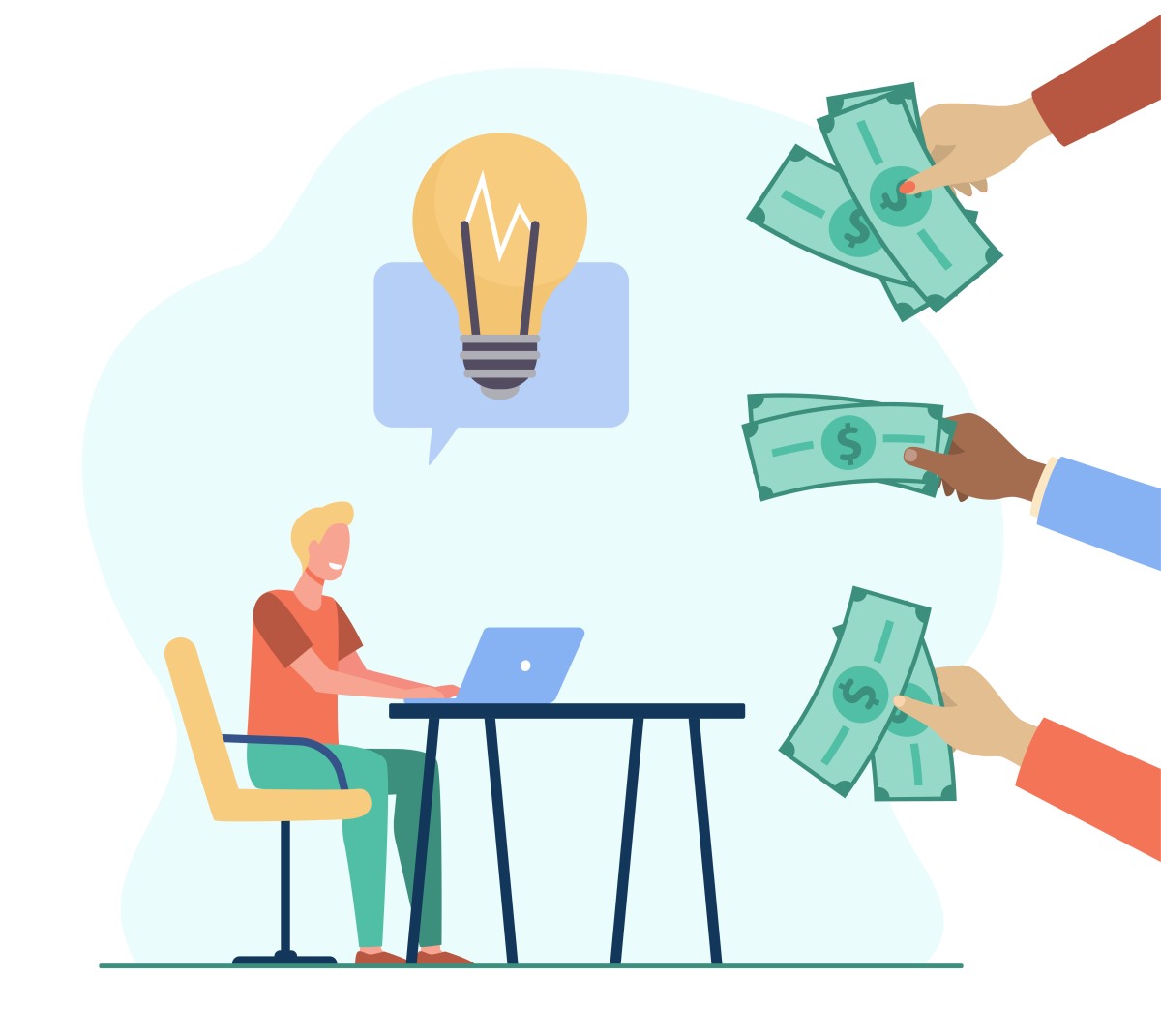
People who largely thrive from the no code movement are the startups, small business owners, and freelancers. In fact, no code brings them on equal grounds with large-scale businesses by making web/app development cheap and fast. The no code movement has truly advanced how businesses now do business with others and with one another. Let's try to dive into the benefits these small-scale entrepreneurs and workforce beasts get from the no code movement.
Definition of Terms
Before diving straight into the topic, let's first define what distinct characteristics each sector has. We can become more acquainted and knowledgeable of these sectors that benefit from the no code movement by this step.
What is a Small Business?
Small scale businesses, or simply small businesses or agencies, function on a small-scale level, hence, the term. These businesses involve fewer capital investments, less labor and force required, and fewer machines for operations.
Industries in the small-scale scene are those industry types involved in the goods and services produced on a small-scale level. These small businesses have essential roles in a country’s economic development. Small business owners invest once, often during the onset of their business. It includes machinery, plants, raw materials, etc. or take measures of leasing or hire purchases. These small-scale industries avoid investing in more than one crore. Some prominent examples of these small-scale industries include industries of paper, toothpick, bakeries, candles, local chocolate, the list goes on. These small industries mostly settle and find refuge in urban areas, becoming a separate unit.
Characteristics of Small Scale Businesses
- Single ownership – have only a single owner, also called a sole proprietorship.
- Controlled management – management works, and the owner controls everything about business operations.
- Limited reach – areas of operation are very restricted, either a local shop or an industry situated in one particular area.
- Intensive labor has a minimal dependency on technology because its reliance focuses on work and staffing.
- Flexible – open and very flexible to abrupt changes mainly because of their size.
- Resource-friendly – often utilizes local and readily available resources, utilizing natural resources and limited wastage.
Categories of Small Businesses
- Ancillary Small Industrial Unit
- Cottage Industries
- Export Oriented Units
- Micro Business Enterprises
- Small Scale Industry (Before 2006)
- Tiny Industrial Units
- Small Scale Industries Owned by Women
- Village Industries
- Small Scale Service and Business
What does Startup mean?
Startups solve problems with solutions that are not obvious, and success is not entirely guaranteed. Although correct, this statement defines only a portion and not the entire philosophy behind the ‘startup’ concept. Because of this reason, the following features let all startups share a common ground.
Characteristics of a Startup
- Innovative – has differentiator competitions to gain competitive advantages in the market and may be found in the products or business model they present and associate with their company.
- It is relatively new – still in its early stages of brand management, sales pitching, and employee hiring.
- Rapidly growing – grows and expands quickly, taking drastic proportions at times.
- Risky – strong presence is always associated with several uncertainties about success assurance of the business; risky investments with the potential high failure rate.
- Flexible – very dynamic and readily adapts to arising adversities, tailor-ready with products that will meet customer needs.
- Problem-solving – focuses on solving existing problems in the market, making a significant difference not only in the marketplace but also in people's lives through products or services.
- Scalable – in constant search of a business model, repeatable, and can grow without increasing resources, especially in human or financial form.
- Has teamwork – usually made up of very few people, with a working team of fewer than 100 people.
Categories of a Startup
- Lifestyle Startups
- Small Business Startups
- Scalable Startups
- Buyable Startups
- Large Company Startups
- Social Startups
Also Read : 10 No Code Tools to Launch a Startup
Who are Freelancers?
Quite different from the first two categories but somewhat similar, freelancers are independent laborers. They earn their wages usually on a per-job or per-task basis. Typically, freelancers only go for short-term work and have contracts and long-term commissions. Freelancers have the freedom of working from the comforts of their homes or a non-traditional workspace. Also, they follow a very flexible work schedule and have a better work-life balance.
Characteristics of Freelancers
- Possess excellent communication skills – this trait includes both equally important verbal and written communication, good listening. It needs to be adept at figuring out client wants and needs, even if the information is relayed differently.
- Very reliable – follow through on promises made and meet deadlines all the time.
- Curious with everything – asks many questions, gets a feel for what they do, what their mission is and why they are working, how important it is to the company and its customers, and gets to know the business they are working for.
- Has initiative and self-discipline – self-starters and can make themselves work and complete their tasks even without wanting to do them in the first place, doesn’t have a true boss or anyone around to keep them on track of things to do and how to move forward, all is on you.
- Exhibits organization and time management skills – has a no-fail organization system that encompasses everything from saving to managing files.
- Able to hustle - finds work and clients, promotes the business, takes on the right jobs, balances work and life, and of course, makes money.
Categories of Freelancers (The Most Common Ones)
- Freelance Writers
- Bookkeepers
- Freelance Photographers
- Graphic Designers
- Freelance Web Developers or Programmers
- Search Engine Optimizers (SEOs)
- Virtual Assistants
Must Read : How To Start Working as A No Code Freelancer
No Code to the Rescue!
In general, no code platforms have helped almost all aspects of our daily living. Without a doubt, this movement has indeed helped small businesses and agencies, startups, and freelancers with their business development. Let’s go in-depth and discuss each sector and how no code helps their business and development.
How No Code Helps Small Businesses/Agencies and Startups?
1. No code provides rapid prototyping and makes time-to-market faster.
Small businesses and startups follow timeliness, which is a pivotal factor in keeping their business thriving and staying relevant. Although no code tools require some learning time, they’re definitely more time-efficient than the traditional manual creation and development process.
Furthermore, large businesses can have the luxury of being more relaxed in terms of their new product development timelines. However, small companies and startups need to be more agile and faster with their turnaround times. Therefore, with no code, even non-technical founders can experiment to create prototypes and develop solutions to any problem within hours.
2. Lowers the cost and even helps in saving up.
With the help of no code, building your software without any programming skills has become a new normal. The revolutionary no code solution has made web/app development cheaper. Now you don’t have to bear the overhead costs to acquire expensive full-time developers. Most of the no code tools nowadays are free. Thus, it has become the best solution for startup and small business owners for creating uncomplicated business applications.
In addition, no code helps building apps much faster. Thus, help you save a lot of time and energy. If there is still a need for guidance, hire freelance developers available online. They will create softwares and apps for you using no code drag-and-drop tools. It’s usually very cost-effective. These no code tools aid developers to develop some beta-tests rapidly. If you have any feedback then they can implement it immediately. Therefore, building projects in a no code environment significantly reduces the overall time and cost.
3. Lowers commitment risks, resulting in less to no hiring and firing.
Hiring and firing related issues remain a constant aspect of the workforce. However, no code platforms significantly reduce all such issues, if not eliminate them completely.
Therefore, if you have a business idea, then try using a no code platform to make it a reality. You won’t be needing a team to create or test your app. Everything can be done easily by you single-handedly. You only have to find the suitable no code tools that are compatible with your business idea. The right kind of no code tools will help you verify the feasibility of any idea. Also they will be the most fruitful and spare you from the extraneous and tedious hiring and potential firing process.
4. Can be easily changed for more flexibility.
Traditional coding is already tricky for developers. Especially when a particular functionality or feature has to be changed or modified. It could easily take a lot of time and effort. However, with no code updating or changing features and functionalities become very easy without requiring substantial application downtime.
Therefore, no code development platforms are more flexible than the traditional way of developing apps/websites. This is why no code development is a great option for technology related startups as they require frequent changes.
5. Provides the freedom to focus on the business's growth.
By now you probably have some understanding of the benefits that no code technology provides. Be it about saving time, effort or money. No code in many ways has proven better than conventional software development. For example, app development through hand-coding would require a dedicated team of developers and web designers. And that obviously would cost more. Also, the conventional process is time taking. The process of writing the lengthy codes, debugging the codes and other routine maintenance tasks, such as applying updates, etc. is time-taking. Therefore, it means spending not just a lot of money but also time and effort.
Using a no code tool for tasks can become automated. Thus, leaving you with some spare time to focus on how to get more leads and thinking about the growth of your business.
Suppose one of your requirements is the quick creation of custom apps to optimize your startup's rising productivity; or fast-paced testing of the viability of a new idea you have for your small business or agency. In that case, no code platforms may be your best bet in accomplishing any of these feats.
How No Code Helps Freelancers?
1. Helps in streamlining all client efforts.
Freelancers face one of their biggest challenges: landing gigs and connecting with quality clients daily. Even before that struggle, balancing a lot of brands and projects can already be confusing enough. Also, each particular assignment requires its specific set of metrics and deliverables. Therefore, freelancers will find themselves exhausted in keeping track of all of them.
Fortunately, no code platforms allow freelancers to build programs that will enable monitoring their responsibilities and checking their progress simultaneously. It doesn’t matter how many clients you have – you can do all of these tasks with efficient monitoring! Personalize apps that cater to your work style. Everything can be as efficient as possible using no code.
In addition, no code also allows invoice plugins in your software. Thus, helping streamline how your clients pay you more seamlessly.
2. Helps in the creation of stellar web apps.
Freelancers are one of the most inventive minds out there. But they have become imperative in showcasing their creativity in their portfolios as well as reflecting it in their work. However, with no code, now they've the freedom to build websites and apps showcasing their creativity in a true sense. Also, it helps them articulate how skilled as an individual they are.
Moreover, no code allows freelancers to create powerful web apps easily single-handedly. And with freelancers calling the shots themselves, clients get the freedom to directly demand services they actually need from you. Therefore, as a freelancer, link all of your platforms on social media. It will allow your clients as well as prospective clients to directly contact you through one or the other.
3. Helps in building products for your clients and customers — job boards, project management apps, special services websites, etc.
No code tools, for sure, can help anyone build apps on their own. But imagine monetizing this essential skill set and letting everything also become working to your advantage? Well it’s no longer a secret how no code platforms have empowered millions and millions of citizen developers to create or deliver powerful apps. It also helped brands to realize that their digital identities can be enhanced to create a stronger online presence.
Final Thoughts
No matter what sector you belong to, all will benefit from no code. Be it small businesses and agencies, startups, freelancers or large-scale businesses. In the end, it all comes down to how much time and effort someone spends on learning this incredible innovation.
So, why are you still waiting? Innovate your small-scale business towards its development and innovation and become a success story yourself. Go ahead now!
Also Read : 10 Ways To Make Money Using No Code Platform