No-Code Platforms and Data Privacy: Building GDPR & HIPAA-Compliant Web Applications
As digital transformation accelerates across industries, the need for secure and privacy-conscious software development is more critical than ever. Healthcare providers, wellness startups, and data-driven organisations must comply with stringent regulations, such as HIPAA in the U.S. and GDPR in the EU. For developers and business teams using traditional coding approaches, meeting these regulatory standards often requires dedicated legal support, IT audits, and extensive development time.
Enter no-code platforms—tools designed to empower teams to build powerful applications without writing code. But as no-code grows in popularity, one question continues to emerge: Can you build a secure, compliant web application without writing a single line of code?
The answer is yes—with the right platform.
Modern no-code tools are evolving to include HIPAA-compliant web application features and built-in GDPR controls, making them a viable solution for sensitive industries like healthcare, insurance, and legal. In this blog, we’ll explore how no-code builders help teams create privacy-first applications and what to look for when choosing a platform.
Let’s also look at how DrapCode is enabling the healthcare ecosystem to develop secure digital solutions like EMR Software, Electronic Health Record Platforms, and Remote Patient Monitoring Tools with HIPAA-ready infrastructure—all without writing a line of code.
Why Data Privacy Compliance Matters in No-Code Development
If your application processes, stores, or transmits personal health information (PHI) or personally identifiable information (PII), it falls under the purview of data privacy regulations such as:
- HIPAA (Health Insurance Portability and Accountability Act)
- GDPR (General Data Protection Regulation)
Non-compliance can lead to financial penalties, reputational damage, and—especially in healthcare—danger to patients.
For platforms aiming to support medical, wellness, insurance, or patient engagement tools, building a HIPAA-compliant no-code app is not optional—it’s essential.
In this context, DrapCode offers purpose-built solutions for healthcare teams, including:
- Medical Billing EMR Tools
- Custom patient portals
- Remote patient monitoring software
Each solution is supported by built-in compliance features and secure infrastructure.
What Makes a Web Application HIPAA or GDPR Compliant?
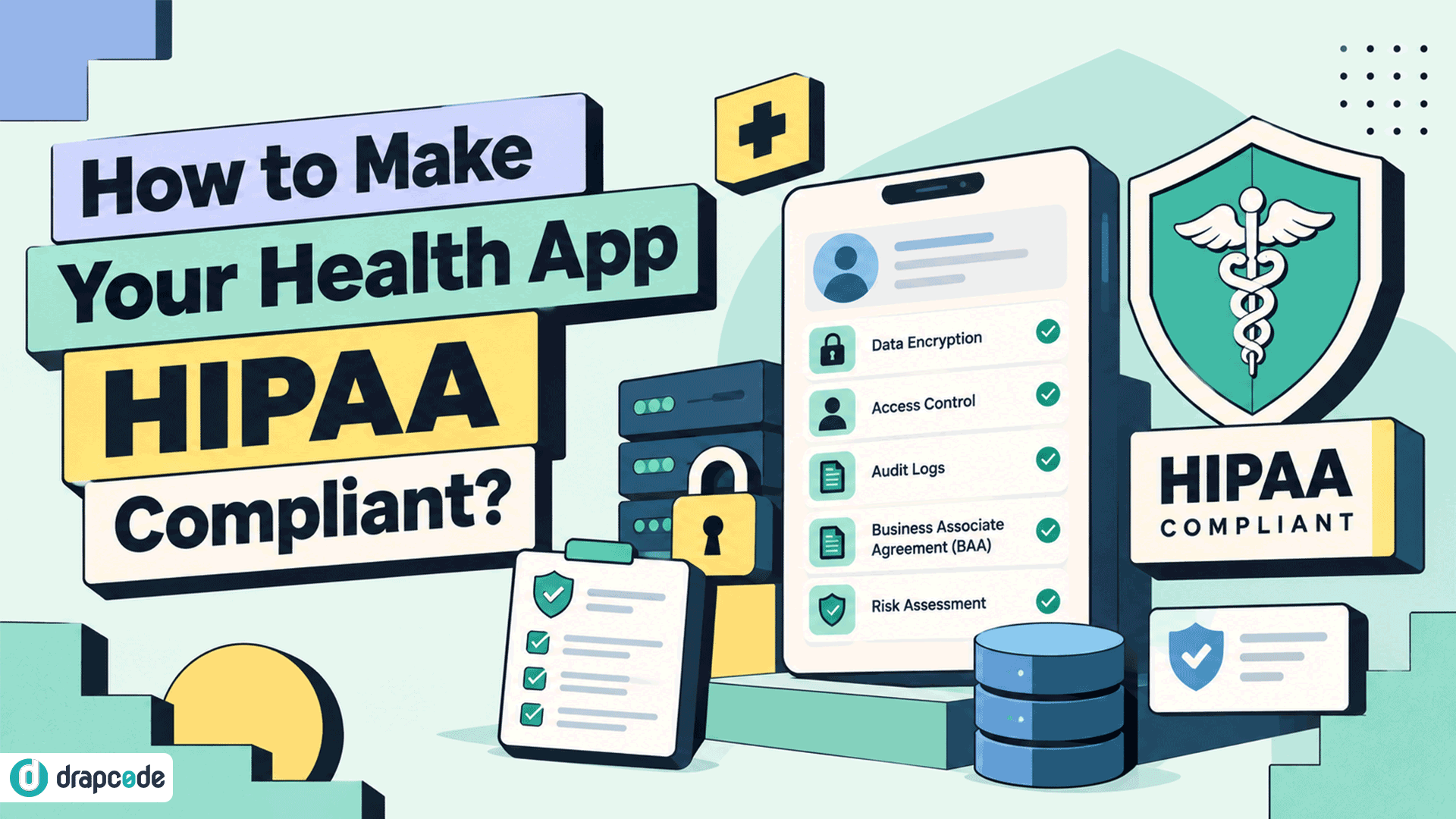
To develop a HIPAA-compliant web application, platforms must support features like:
- Access control and user authentication
- End-to-end encryption of data at rest and in transit
- Audit logging of all user activities
- Role-based permissions for user access
- Data backup and disaster recovery
- Business Associate Agreements (BAAs) with service providers
Similarly, GDPR compliance requires:
- Consent management
- Right to access and delete data
- Data minimization and purpose limitation
- Secure data processing and storage
- Cross-border data transfer restrictions
Traditionally, implementing these controls requires months of dev work, legal reviews, and infrastructure setups. But no-code platforms like DrapCode are bridging that gap with plug-and-play compliance settings.
The Rise of No-Code Platforms with Built-In Compliance Features
As demand grows, platforms are embedding privacy-centric capabilities into their core. Here’s how modern tools are transforming the landscape:
Built-In Security Layers
SSL encryption, firewalls, and secure deployment environments are now pre-integrated. DrapCode, for example, supports end-to-end encrypted data pipelines, ensuring sensitive information like health records and insurance claims remains protected.
Role-Based Access and User Permissions
With visual interfaces, platform admins can configure who accesses what, without engineering teams writing conditional access logic. This is key for regulated workflows like patient portals, where only authorized users can view certain documents.
Audit Trails and Activity Logs
For HIPAA, maintaining an audit trail is non-negotiable. DrapCode enables automatic logging of user actions, which can be exported or reviewed in case of audits or compliance reviews.
Consent and Data Request Management
Platforms now include GDPR-ready modules that handle cookie consent, data access requests, and deletion workflows, ensuring you respect user rights across borders.
How to Build HIPAA-Compliant Web Applications Using No-Code
Let’s walk through the process of how to build a HIPAA-compliant web application using a no-code tool like DrapCode:
- Start with a Secure Infrastructure
Choose a platform that offers HIPAA-ready cloud hosting, access control, and signed Business Associate Agreements (BAA). - Design Role-Based Logic Visually
Use the drag-and-drop builder to define roles such as doctor, nurse, admin, and patient, each with access to only their relevant data. - Enable Data Encryption
Ensure encryption settings are turned on by default and that backups are regularly scheduled. - Activate Logging and Alerts
Use platform tools to log user actions (e.g., patient record views, edits) and enable notifications for abnormal behavior. - Build Responsive UIs with Patient-Centric Design
Ensure the application is mobile-ready and user-friendly, especially if it includes features like appointment scheduling or real-time health monitoring. - Review Compliance Checklists Regularly
Most platforms offer prebuilt compliance checklists to help you verify configurations before deployment.
Looking to take it a step further? Explore a HIPAA-compliant telemedicine platform built with DrapCode to understand how visual development can support end-to-end clinical workflows.
No-Code and GDPR: A Match for Global Businesses
While HIPAA governs the U.S. healthcare sector, GDPR affects any business handling EU citizen data. Whether you’re building a wellness app, survey tool, or internal HR dashboard, GDPR compliance should be baked into your architecture.
DrapCode enables global teams to:
- Store data in EU-compliant data centers
- Offer user data access and deletion interfaces
- Configure consent-based user journeys
- Integrate third-party tools with GDPR-ready APIs
This makes it one of the few no-code platforms with built-in GDPR compliance, ready for global deployment.
The Future of Privacy-First App Development
As regulations evolve, businesses can no longer treat data privacy as an afterthought. Whether it's healthcare records, insurance claims, or even marketing data, security and transparency are now expected by users and regulators alike.
Fortunately, HIPAA-compliant no-code app builders are making it easier for organizations of all sizes to build applications that are both powerful and private.
With tools like DrapCode, you’re not just saving time and resources—you’re building trust with every interaction.
Final Thoughts
The rise of no-code platforms is not just about democratizing software development—it’s about enabling safe, secure, and compliant digital transformation at scale. For organizations handling sensitive data, platforms like DrapCode are delivering the tools needed to build HIPAA-compliant web applications and GDPR-ready systems, without writing code or hiring a full-stack development team.
From EMRs and medical billing platforms to remote monitoring tools, no-code is powering the future of privacy-first innovation. The tools are ready. The infrastructure is secure. Now it's up to businesses to leverage no-code development for data privacy and build trust into every interaction.