Build Your Own SaaS Product Without Coding: A Step-by-Step Guide (2026)
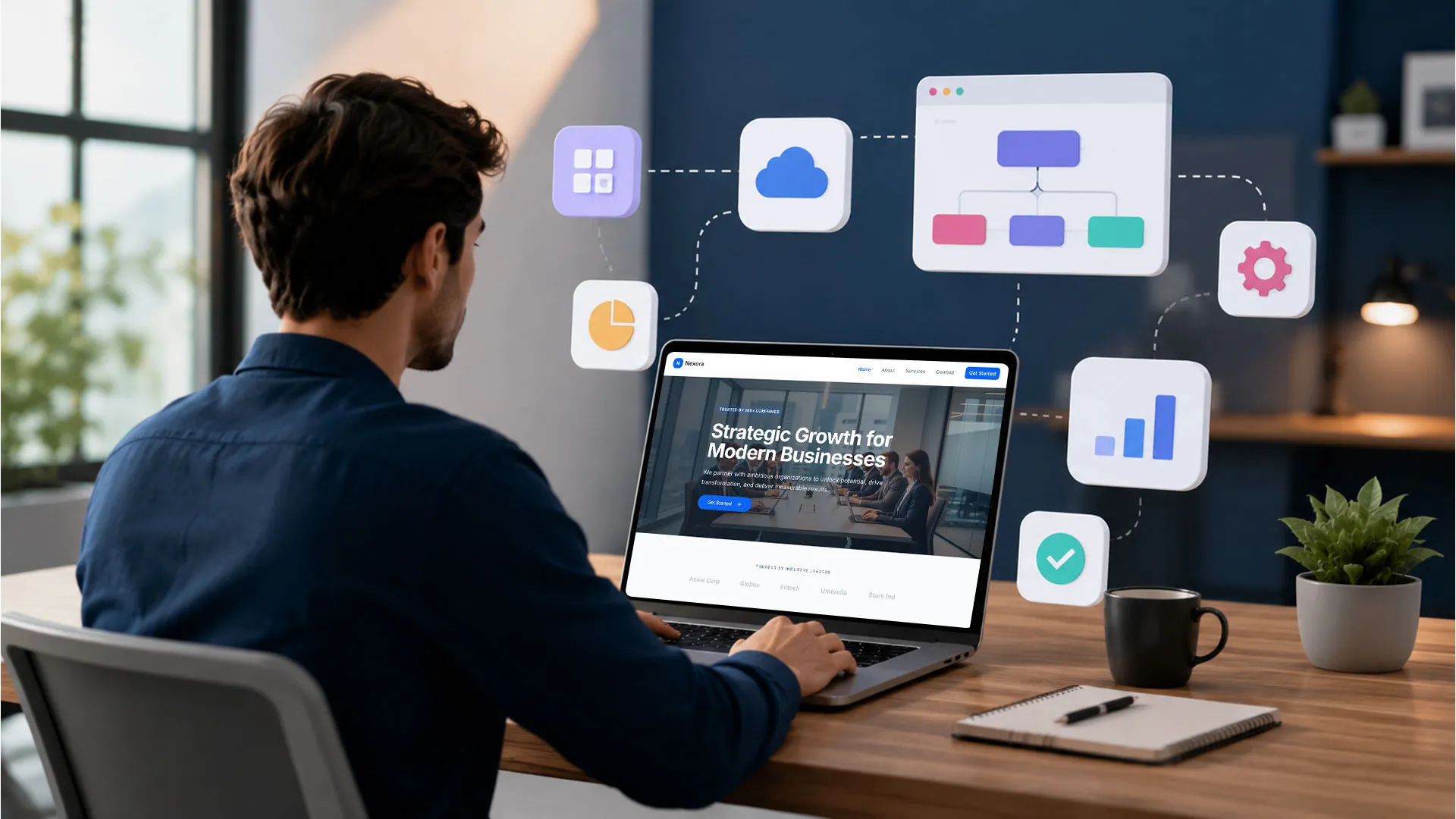
Building a Software-as-a-Service (SaaS) product once required a team of developers, months of engineering work, and a significant budget. Today, that's no longer the case.
Modern no-code and AI-assisted development platforms have enabled founders, startups, consultants, and businesses to launch production-ready SaaS applications without writing traditional code. Instead of spending months building infrastructure, teams can focus on validating ideas, solving customer problems, and getting to market faster.
Whether you're creating a customer portal, HR platform, CRM, scheduling software, or industry-specific application, this guide walks you through the complete process of building your own SaaS product without coding.
Can You Really Build a SaaS Product Without Coding?
Yes, but it's important to understand what "without coding" actually means.
No-code platforms don't remove the need for planning or product thinking. Instead, they replace manual programming with visual builders, workflow automation, database configuration, and reusable components.
Today, businesses use no-code platforms to build:
- CRM systems
- Client portals
- Booking platforms
- Healthcare applications
- Internal business software
- Vendor management systems
- Inventory platforms
- Membership websites
- Employee portals
Many successful SaaS products begin as simple solutions to a specific problem before expanding into larger platforms.
Step 1: Validate Your SaaS Idea
The biggest mistake founders make isn't choosing the wrong technology; it's building something customers don't need.
Before opening any no-code platform, answer these questions:
- Who is your target customer?
- What problem are you solving?
- How are people solving it today?
- Why would they switch?
- Would someone pay for your solution?
Talk to potential users, collect feedback, and validate demand before investing time in development.
Step 2: Define Your Minimum Viable Product (MVP)
Your MVP should solve one core problem exceptionally well.
Avoid trying to build every feature from day one.
For example:
Instead of creating an all-in-one project management platform, launch with:
- User registration
- Dashboard
- Task management
- Notifications
- Basic reporting
You can expand later based on customer feedback.
Step 3: Choose the Right No-Code Platform
Not every no-code platform is designed for SaaS development.
Look for features such as:
- User authentication
- Role-based permissions
- Database management
- API integrations
- Workflow automation
- Payment integrations
- Scalability
- Security controls
DrapCode combines these capabilities in an AI-assisted no-code platform, enabling businesses to build secure, scalable SaaS applications without traditional development.
Step 4: Design Your Database
Every SaaS application relies on structured data.
Typical database entities include:
- Users
- Organizations
- Projects
- Tasks
- Customers
- Payments
- Documents
A well-designed database makes your application easier to maintain as it grows.
Step 5: Build the User Experience
Good SaaS products prioritize usability.
Focus on creating:
- Simple navigation
- Clear dashboards
- Responsive layouts
- Fast-loading pages
- Consistent interfaces
Every screen should help users complete tasks with minimal effort.
Step 6: Add Business Logic and Workflows
This is where your SaaS begins to deliver value.
Examples include:
- User approvals
- Email notifications
- Subscription management
- Role-based access
- Task assignments
- Automated reminders
- Status updates
If your application supports business operations, you may also find inspiration in these internal tool examples, which demonstrate how companies build software tailored to their unique workflows.
Step 7: Connect External Services
Most SaaS products don't operate in isolation.
Common integrations include:
- Payment gateways
- CRM platforms
- Email providers
- Analytics tools
- Cloud storage
- Third-party APIs
Integrations help your application fit seamlessly into existing business processes.
Step 8: Test Before Launch
Before releasing your product, test:
- User registration
- Login and authentication
- User permissions
- Forms
- Workflows
- Notifications
- Mobile responsiveness
- Performance
Testing helps identify issues before customers encounter them.
Step 9: Launch Your SaaS
Don't wait until your product feels "perfect."
Launch with a functional MVP, onboard early users, and collect real feedback.
Focus on:
- Landing pages
- Product demos
- Documentation
- Customer onboarding
- Analytics
- Support channels
The goal is learning, not perfection.
Step 10: Improve Based on Customer Feedback
Your first version is only the beginning.
Track:
- Feature requests
- User behavior
- Customer retention
- Churn
- Support tickets
Use this information to prioritize future improvements.
As your product evolves, you'll likely introduce advanced workflows, automation, and AI-powered capabilities. Understanding what an AI application platform offers can help you identify opportunities to enhance your SaaS beyond traditional functionality.
Why Build a SaaS Product with DrapCode?
DrapCode is an AI-assisted full-stack no-code platform designed for businesses that need production-ready web applications, not just prototypes.
With DrapCode, you can:
- Build secure SaaS applications
- Create multi-user portals
- Manage role-based access
- Design custom workflows
- Connect external APIs
- Automate business processes
- Scale without rebuilding your application
Whether you're launching a startup or modernizing internal operations, DrapCode helps reduce development time while giving you the flexibility to build software around your business.
Common Mistakes to Avoid
Many first-time founders make similar mistakes.
Avoid:
- Building too many features before launch
- Ignoring customer validation
- Choosing tools that don't scale
- Overcomplicating workflows
- Delaying launch for perfection
- Neglecting security and user permissions
The most successful SaaS businesses solve one problem exceptionally well before expanding.
Final Thoughts
Building a SaaS product without coding is no longer limited to prototypes or simple websites.
With modern no-code platforms, businesses can launch secure, scalable, and feature-rich SaaS applications that support real customers and recurring revenue.
The key isn't simply choosing a no-code platform; it's choosing one that can grow with your business.
As your product becomes more sophisticated, it's also worth understanding the differences between no-code vs low-code enterprise apps to ensure your technology stack continues to meet your long-term goals.
FAQs
Q1. Can you build a real SaaS product without coding?
Yes. Modern no-code platforms support authentication, databases, workflows, integrations, and deployment, enabling the creation of production-ready SaaS applications.
Q2. How long does it take to build a SaaS MVP?
The timeline depends on complexity, but many founders can launch an MVP in weeks rather than months using AI-assisted no-code tools.
Q3. What features does every SaaS application need?
Most SaaS products require user authentication, databases, role-based permissions, billing, dashboards, workflows, and integrations.
Q4. Is no-code suitable for scalable SaaS products?
Yes, provided you choose a platform designed for production-ready applications that supports security, integrations, and scalability.
Q5. Should I validate my SaaS idea before building?
Absolutely. Customer validation is one of the most important steps in reducing development risk and improving product-market fit.