Digital Lending Platform Builder: Automate Lending Workflows
Digital lending has changed how banks, NBFCs, fintech companies, and alternative lenders manage credit. Borrowers now expect to apply online, submit documents digitally, receive application updates, and manage repayments without depending on lengthy branch-based processes.
Meeting these expectations requires more than an online application form. Lenders need connected systems for borrower onboarding, identity verification, credit assessment, approvals, disbursement, and loan servicing. A digital lending platform builder helps teams develop these applications around their lending model, rather than relying on disconnected tools or rigid software.
With AI-assisted development and visual configuration, businesses can build lending applications, customize workflows, and connect external financial services while retaining control over how their operations work.
Why Lenders Are Moving to Digital Platforms
Traditional lending operations often depend on spreadsheets, email communication, paper documents, and separate systems for different stages of the loan lifecycle. As application volumes increase, managing these processes becomes difficult.
Information may need to be entered more than once, verification can take longer, and borrowers may have limited visibility into application progress. Lending teams also face challenges when they need to update approval rules, introduce new loan products, or expand into another market.
A connected digital platform brings these activities into a shared application environment. Borrowers can submit information through online forms, while internal teams review applications, request documents, assign tasks, and track decisions from a central system.
This does not remove the need for credit judgment or regulatory oversight. Instead, it gives lenders a more structured way to manage operational steps and apply their own policies consistently.
What Is a Digital Lending Platform Builder?
A digital lending platform builder is a development environment used to create applications for managing lending operations. It provides tools to design user interfaces, organize application data, configure business logic, automate workflows, and connect external services.
Rather than purchasing separate applications for every lending activity, a business can develop a platform around its own products and processes. This may include a borrower-facing portal, an internal dashboard for credit officers, an underwriting workspace, and a loan servicing interface.
Modern builders combine visual development tools with AI-assisted capabilities. Teams can describe application requirements, generate supported components, and refine the result through visual configuration. They can also define how data moves between modules and how different users interact with the system.
For example, a lender could build a platform that allows borrowers to apply for credit, upload supporting documents, and follow application progress. Credit officers could review submissions, record assessments, and route applications to authorized approvers.
Essential Features of a Digital Lending Platform
The features required depend on the lending model, customer base, and operating region. However, most platforms need a common set of capabilities.
Borrower Registration & Onboarding
Digital onboarding allows applicants to create accounts, enter personal or business information, and submit loan requests online. Forms can be configured for different products, with fields and document requirements based on the lender's process.
Identity Verification & KYC
Lenders can connect identity verification and KYC providers through APIs. The application can send relevant information for verification, receive responses, and update the applicant's status. The exact checks depend on the lender's obligations and the markets in which it operates.
Credit Assessment & Underwriting
A lending application can collect financial information, retrieve data from connected credit services, and organize it for assessment. Configurable rules can help route applications based on lender-defined criteria, while complex or exceptional cases remain available for manual review.
Document Collection & Management
Applicants and internal teams need a reliable way to submit, review, and manage documents. A centralized document area can organize files by borrower and application, track missing information, and control access based on user roles.
Approval & Disbursement Workflows
Approval processes may involve several people, departments, or authorization levels. Workflow logic can assign applications to the right reviewers, record decisions, and trigger the next operational step after approval. Disbursement can be coordinated through supported banking or payment integrations.
Repayment & Loan Servicing
After disbursement, borrowers and servicing teams need access to repayment schedules, outstanding balances, payment records, and relevant account updates. These capabilities can be included in the same platform or connected to a dedicated servicing system.
How Lending Workflows Can Be Automated
Workflow automation connects the different stages of lending and defines what should happen when an event or condition occurs. Instead of relying on staff to manually move every application forward, lenders can configure rules for routine operational tasks.
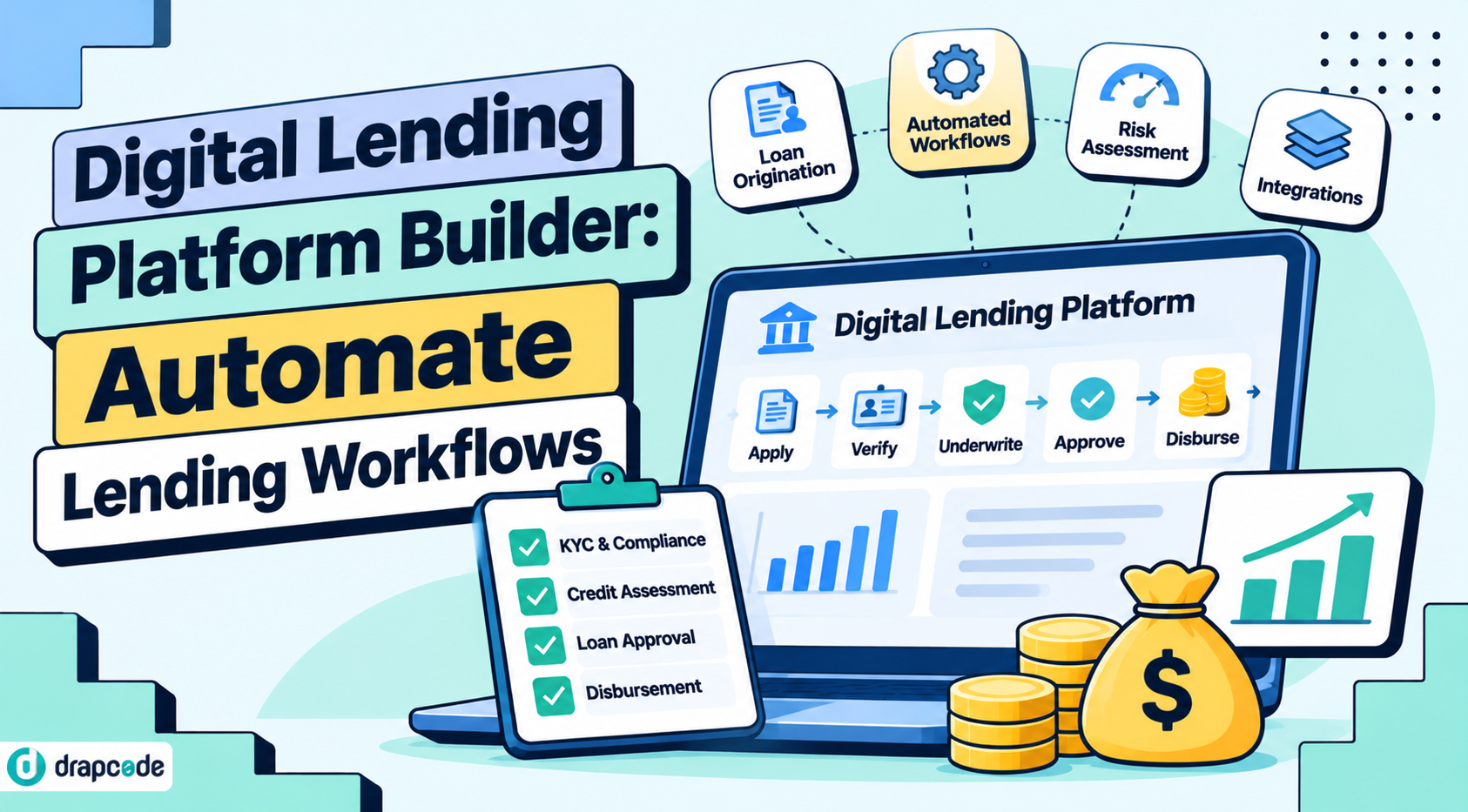
A typical workflow may include the following stages:
- Application submission: A borrower completes an online form and submits the required information.
- Initial validation: The system checks mandatory fields and identifies missing details.
- Identity and document checks: Connected services perform supported verification, while submitted documents are made available for review.
- Credit assessment: Relevant information is collected and routed through the lender's assessment process.
- Approval routing: Applications move to the appropriate credit officer or approval authority based on configured rules.
- Offer and agreement: Approved applicants receive the relevant loan terms and documentation for acceptance.
- Disbursement: The application coordinates the disbursement process through the lender's configured banking or payment services.
- Repayment tracking: The system records repayment activity and makes account information available to borrowers and servicing teams.
Not every lender will use the same sequence. Some may require additional checks, manual underwriting, collateral assessment, or multiple approval levels. A configurable platform makes it easier to represent these differences without forcing every product into one fixed workflow.
Building a Platform Around Your Lending Model
A useful lending application should reflect the way the business actually operates. A consumer lender, an SME finance provider, and an invoice financing company may all manage loans, but their data requirements and approval processes can be very different.
Start by defining the lending products, applicant types, eligibility requirements, and information each team needs. Then map the journey from the first application through approval, disbursement, and servicing.
The next step is to organize the application into modules. These might include borrower registration, application management, document handling, credit assessment, approval dashboards, and repayment tracking. Each module should have a clear purpose and defined access permissions.
Once the structure is in place, configure the business rules and workflow conditions. For example, an application with missing documents might be returned to the borrower, while a complete application could move to an assessment queue. Applications that exceed a defined approval threshold could be routed to a senior reviewer.
External integrations should be planned around the data each stage needs. Depending on the lender's requirements, these may include KYC providers, credit bureaus, banking services, payment gateways, e-signature tools, and notification services.
For a more detailed look at the application intake and underwriting stages, see how businesses approach Loan Origination Software. For the stages that follow disbursement, Loan Management Software covers repayment schedules, servicing, and ongoing loan administration.
What to Consider Before Choosing a Builder
Selecting a builder is not just about how quickly an application can be assembled. The development environment must support the operational and technical requirements of the lending business.
Workflow flexibility: Can the platform support different loan products, eligibility rules, approval levels, and exception paths?
Integration support: Can it connect with the external services your lending process depends on through APIs, webhooks, or supported integrations?
Data security: Does it provide appropriate controls such as encryption, role-based access, audit logging, and secure hosting options?
Application scalability: Can the architecture support growing borrower volumes, additional products, and more complex workflows?
Customization: Can teams update forms, dashboards, business rules, and user journeys as lending requirements change?
Ownership and extensibility: Understand whether you can extend the application, maintain it over time, and access or export its source code if required.
Security capabilities are important, but they do not automatically make a lending business compliant with every financial regulation. Lenders must assess the rules applicable to their business, geography, products, data practices, and third-party providers.
Building Digital Lending Applications with DrapCode
DrapCode helps fintech teams build digital lending applications using AI-assisted development and visual configuration. Teams can describe application requirements, generate supported functionality, and refine interfaces, data structures, workflows, and business logic through the development environment.
This makes it possible to create borrower portals, internal lending dashboards, application management modules, and connected workflows within an application designed around the lender's operations.
Teams can configure borrower journeys, set up role-based access, and connect external services such as verification providers, credit bureaus, and payment systems through supported integrations. Applications can also be extended as products, approval processes, or servicing requirements evolve.
For businesses planning a broader lending and financing portal, DrapCode provides a way to bring borrower interactions and internal lending operations into a connected application.
The right implementation still depends on careful requirements planning, integration testing, security configuration, and validation against the lender's regulatory obligations. DrapCode provides the development environment; the lending business remains responsible for its policies, decisions, and compliance processes.
Final Thoughts
A digital lending platform should do more than move paper forms online. It should connect borrower interactions, verification, credit assessment, approvals, disbursement, and servicing in a way that reflects the lender's actual business model.
Choosing a flexible digital lending platform builder gives teams room to develop these capabilities, integrate the services they rely on, and adjust workflows as requirements change. With AI-assisted development and visual configuration, businesses can shape lending applications without treating every change as a separate software development project.
The result is a more connected lending operation, with clearer processes for borrowers and better visibility for the teams managing each stage of the credit lifecycle.
Frequently Asked Questions
Q1. What is a digital lending platform builder?
It is a development tool used to create lending applications with features such as borrower onboarding, document collection, credit assessment, approval workflows, disbursement coordination, and repayment tracking.
Q2. What features should a digital lending platform include?
Common features include borrower registration, KYC integrations, document management, underwriting workflows, approval routing, payment integrations, borrower dashboards, and loan servicing capabilities.
Q3. Can lending workflows be automated?
Yes. Lenders can configure workflows to validate application data, route cases to reviewers, request missing documents, update application statuses, and coordinate actions with connected services. Credit decisions should follow the lender's approved policies and oversight requirements.
Q4. Can a digital lending platform connect with credit bureaus and payment gateways?
Yes. Platforms with API and integration capabilities can connect with supported credit bureaus, KYC providers, banking services, payment gateways, and other third-party systems. The available integration depends on the provider and the lender's technical requirements.
Q5. How is a digital lending platform different from loan origination software?
Loan origination software focuses mainly on application intake, verification, underwriting, and approval. A digital lending platform can cover a broader set of activities, including borrower portals, origination, disbursement coordination, repayment, servicing, and reporting.
Q6. Is a digital lending platform automatically compliant with financial regulations?
No. Compliance depends on the lender's jurisdiction, products, operating model, data handling, policies, and use of third-party providers. The platform should support appropriate security, access controls, and auditability, but the lender must assess and meet its own regulatory obligations.