No-Code vs AI-Generated Code: What Should Founders Pick in 2025?
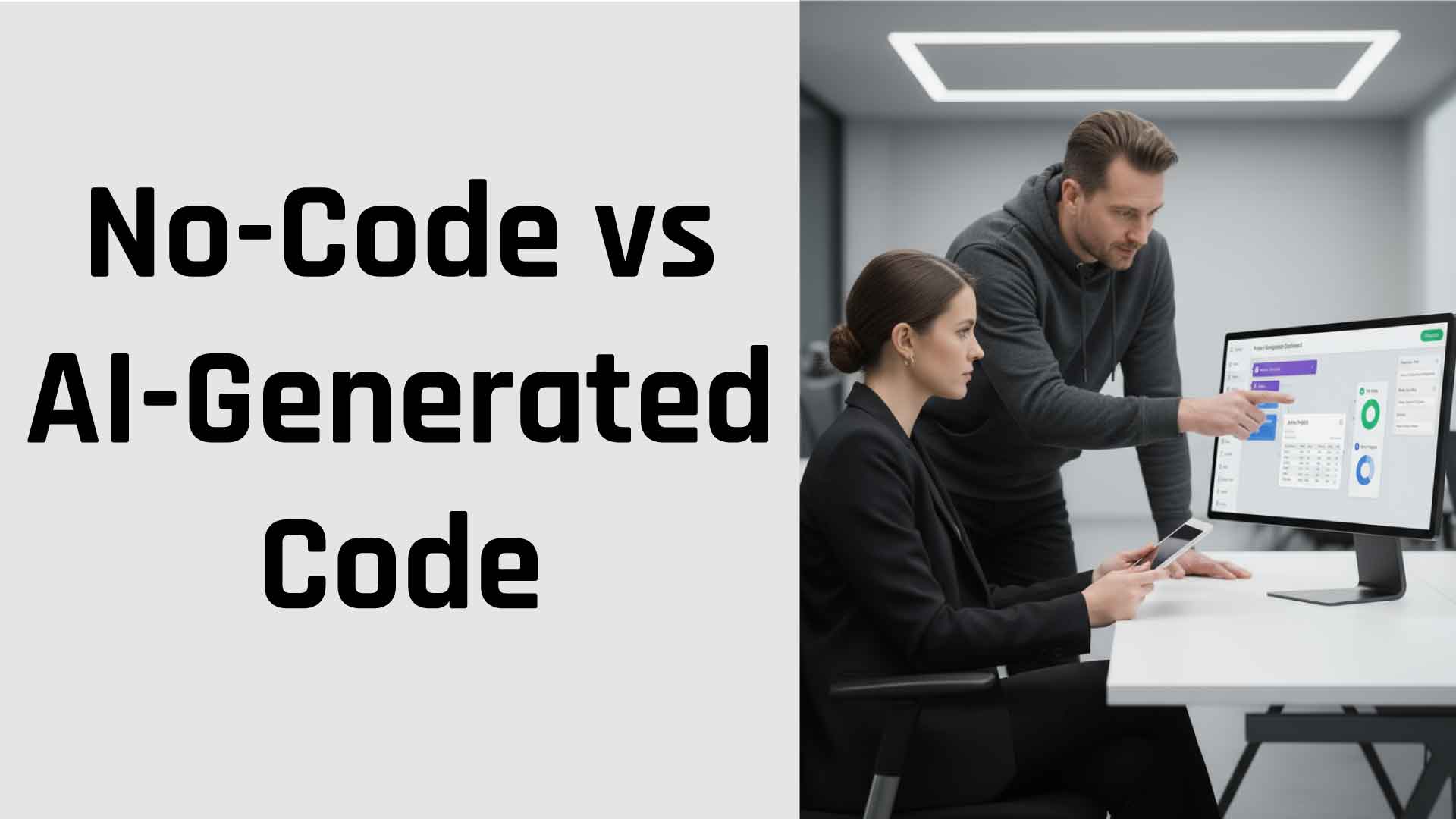
Technology is moving at an incredible pace, and founders today face a crucial question: when building their startup’s first product, should they choose no-code tools or lean into AI-generated code? In 2025, both approaches have matured significantly. No-code has become more powerful, while AI-driven code generation is increasingly reliable. But how do founders decide which path best fits their startup’s needs?
This blog examines the strengths and challenges of both options, providing guidance for founders as they navigate the decision-making process.
Understanding the Two Approaches
What Is No-Code?
No-code platforms let you build applications without writing traditional code. With drag-and-drop interfaces, reusable components, and integrations, they’re designed to speed up product development. For founders without technical expertise, no-code offers a way to launch and iterate quickly. Tools like DrapCode’s no-code builder make it possible to create web apps, dashboards, and enterprise tools without hiring a whole development team.
What Is AI-Generated Code?
AI-generated code uses advanced models to write software based on natural language prompts or specifications. With AI code generation tools, founders or developers describe what they want, and the system produces code snippets, components, or even complete applications. While it still requires oversight, this approach can significantly reduce development time for teams with some technical expertise.
Benefits of No-Code Platforms for Founders
- Speed to Market – Founders can turn ideas into MVPs within days, not months.
- Accessibility – No prior coding skills are required, empowering non-technical founders.
- Lower Costs – Reduces dependence on expensive developer resources.
- Built-In Scalability – Many no-code platforms now support enterprise-grade applications.
- Iteration Made Easy – Testing and modifying features is straightforward.
No-code is especially powerful for founders validating ideas. For example, healthcare startups can utilise no-code tools to quickly create patient portals or scheduling tools, addressing urgent needs without incurring heavy technical investment.
Benefits of AI-Generated Code
- Code Flexibility – AI-generated code gives more granular control compared to visual builders.
- Time Savings for Developers – Automates repetitive coding tasks.
- Custom Features – Enables building complex, unique functionality beyond template limitations.
- Integration with Existing Systems – Works seamlessly with legacy applications.
- Learning Accelerator – Founders with technical teams can move faster by offloading coding basics to AI.
For startups aiming to build something highly custom from the beginning, AI-generated code is appealing, provided there’s technical oversight.
Challenges with Each Approach
No-Code Limitations
- Limited flexibility for deeply custom use cases.
- Platform lock-in occurs if the chosen no-code tool doesn’t support exporting or scaling.
- Performance constraints in very complex applications.
AI-Generated Code Limitations
- Requires technical validation to ensure correctness.
- Risk of security vulnerabilities if the generated code isn’t reviewed.
- Harder for non-technical founders to manage without developer support.
Real-World Examples
- Healthcare: A small clinic uses DrapCode to build a patient appointment and billing portal in two weeks, avoiding heavy IT costs. In contrast, a health-tech startup building AI-powered diagnostics uses AI-generated code to integrate with imaging devices.
- Fintech: A founder launches a loan origination dashboard through no-code for quick MVP validation. Later, as the platform expands, developers utilise AI code generation to streamline compliance workflows and automate financial reporting.
- SaaS: Non-technical founders test product-market fit using DrapCode’s no-code workflows. Once traction is achieved, their technical team leverages AI-generated code for advanced custom analytics.
How to Pick Between No-Code Tools or AI-Generated Code for Product MVPs
Founders should consider:
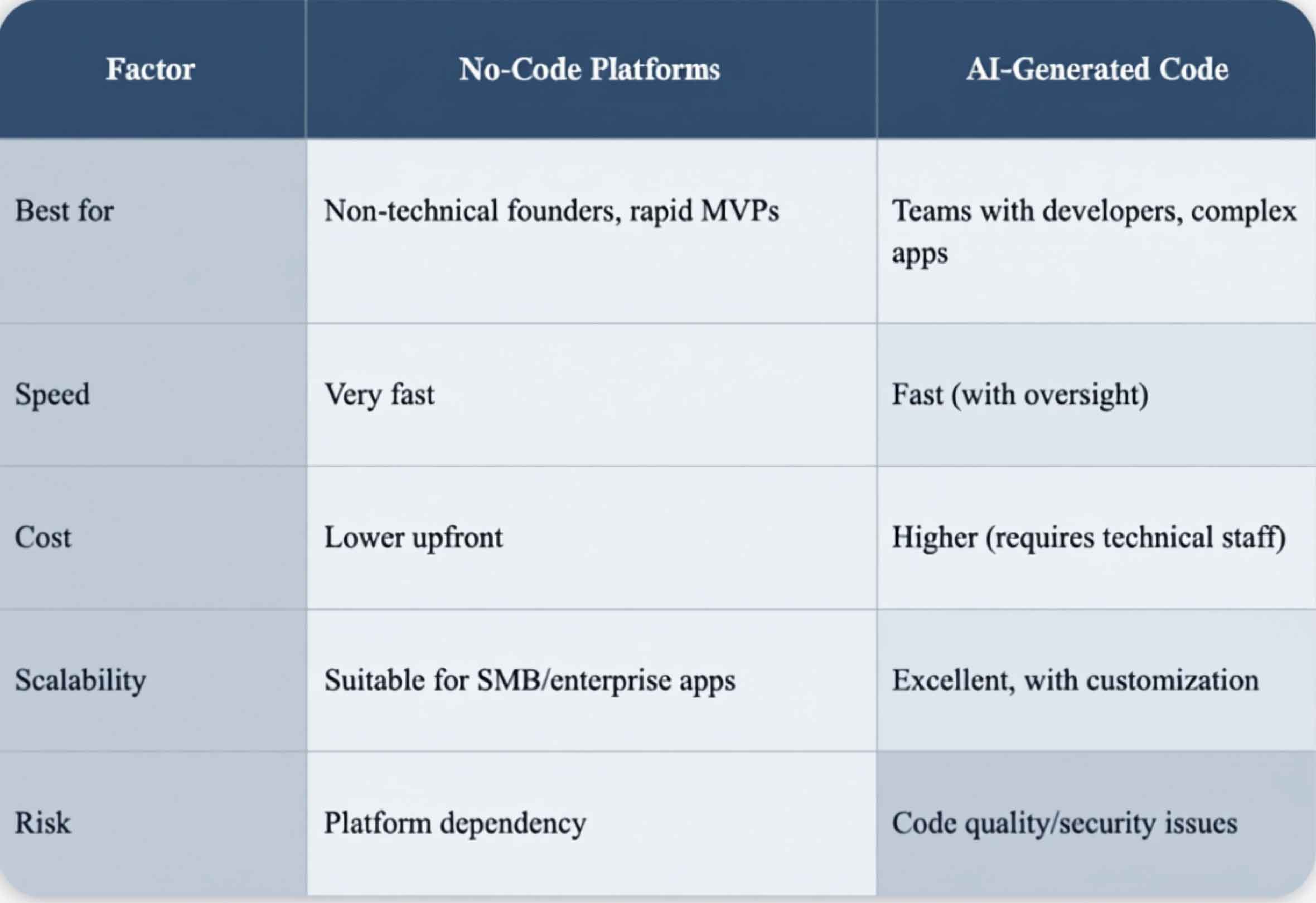
- Technical Expertise Available – If your team lacks coding skills, no-code is the safer bet. If you have developers, AI-generated code could speed up their work.
- Time to Launch – For rapid MVPs, no-code usually wins. If flexibility and future scalability matter most, AI-generated code may be better.
- Budget – No-code platforms are generally more affordable in the early stages.
- Complexity of Product – Simple to medium applications thrive on no-code, while highly complex or niche products may need AI-generated code.
The Human Side of the Decision
At its core, the choice isn’t only about technology, it’s about people. Founders must ask:
- Do I want to stay lean and focus on customers, or invest early in a technical foundation?
- Will my users care more about polished workflows now, or scalability later?
No-code solutions offer empowerment and speed, enabling non-technical founders to focus on solving real-world problems. AI-generated code gives more depth and flexibility but assumes you have the resources to manage technical complexity.
Future Trends: What 2025 and Beyond Holds
- Hybrid Models – Increasingly, founders won’t need to choose strictly. No-code platforms like DrapCode may embed AI code generation for custom logic, blending accessibility with flexibility.
- Security and Compliance – Both no-code and AI-generated code will evolve to address regulatory challenges, especially in healthcare and finance.
- Cost Efficiency – With rising competition, tools will become more affordable, empowering even micro-startups.
- Community Growth – Founders will benefit from larger ecosystems of pre-built modules, templates, and AI-trained code libraries.
Why DrapCode Can Be the Right Fit
For many founders in 2025, the first step is to test ideas and attract users. This is where DrapCode adds value. As a no-code platform for founders, DrapCode lets you:
- Build and iterate MVPs without technical bottlenecks.
- Connect with APIs and external services seamlessly.
- Scale from prototype to production-ready applications.
For example, if you’re working in healthcare, DrapCode enables you to digitize patient experiences quickly. If you’re in fintech, you can rapidly set up dashboards or loan origination workflows. DrapCode also provides flexibility to transition to custom code later, helping founders balance short-term speed with long-term vision.
Practical Framework: No-Code vs AI-Generated Code
Conclusion
In 2025, both no-code and AI-generated code have matured into viable paths for building digital products. The right choice depends on your team’s skills, product complexity, and growth plans. For most early-stage founders, starting with no-code offers the fastest, most cost-effective way to bring ideas to life, while leaving room to integrate AI-driven coding later.
Platforms like DrapCode make this journey smoother, enabling founders to test, iterate, and scale without unnecessary technical hurdles. Whether you’re building in healthcare, fintech, or enterprise SaaS, the future is about combining the speed of no-code with the power of AI.