How Telemedicine Platforms Are Transforming Patient Care

Telemedicine has rapidly evolved from a convenience-based service into a fundamental pillar of modern healthcare. Driven by rising patient expectations, provider shortages, and the increasing demand for remote access to care, telemedicine platforms are transforming the way health services are delivered, accessed, and managed.
Today, telemedicine isn’t just about video calls between doctors and patients; it’s an integrated care model that enhances patient engagement, reduces operational burden, and enables real-time data-driven care. This article explains how telemedicine platforms are transforming patient care, the features that make them successful, and how healthcare innovators can build scalable telemedicine solutions using DrapCode.
Why Telemedicine is Reshaping Healthcare
Telemedicine has expanded far beyond pandemic-driven adoption. It is now a core strategy for care delivery across outpatient, chronic care, mental health, home healthcare, and multi-specialty clinics.
Key Drivers Behind Telemedicine Growth
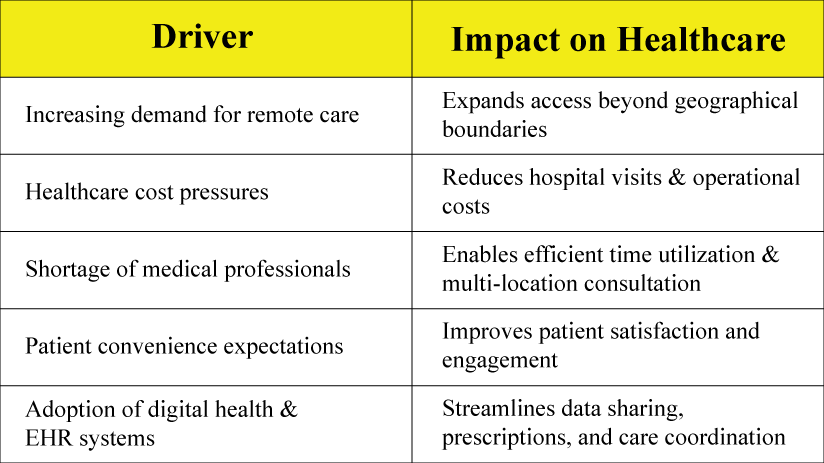
According to global data, telemedicine adoption has grown by more than 400% over the past five years and is expected to reach a market value of over $285 billion by 2030.
How Telemedicine Platforms Improve Patient Care
Telemedicine platforms have strengthened the patient–provider relationship by making healthcare more accessible, transparent, and collaborative.
1. Improved Access to Care
Patients no longer depend on physical visits. Telemedicine supports:
- Remote consultations
- Healthcare access for rural & underserved regions
- Specialist access without travel
- Timely treatment & reduced waiting time
2. Enhanced Patient Engagement & Continuity of Care
Patients actively participate in their healthcare journey through:
- Digital health records
- Appointment reminders
- Follow-up care plans
- Direct communication with providers
This continuous engagement significantly improves treatment adherence and outcomes.
3. Reduced Costs for Providers & Patients
Telemedicine platforms help reduce:
- Infrastructure and clinic overheads
- No-show rates
- Unnecessary emergency room visits
Patients save on travel and consultation costs, while providers optimize their time and resources.
4. Faster Diagnosis & Preventive Care
By analyzing patient data, telemedicine systems support:
- Early detection of symptoms
- Faster consultations
- Preventive healthcare insights
- Remote monitoring for chronic illnesses
5. Better Patient Privacy & Secure Data Sharing
With secure platforms, patient information is encrypted and shared responsibly, building patient trust and ensuring compliance.
Core Features of Modern Telemedicine Platforms
A successful telemedicine platform usually includes the following key modules:
Patient-Facing Features
- User onboarding & secure login
- Virtual consultations (video/voice/text)
- Appointment scheduling & follow-ups
- E-prescriptions & digital reports
- Payment & insurance processing
- Health records dashboard
- Mobile-responsive experience
Provider & Admin Features
- Provider dashboard
- Patient record management
- Case notes & consultation history
- Communication center with chat/video
- Automated reminders & workflows
- Role-based access control
- Analytics & patient insights
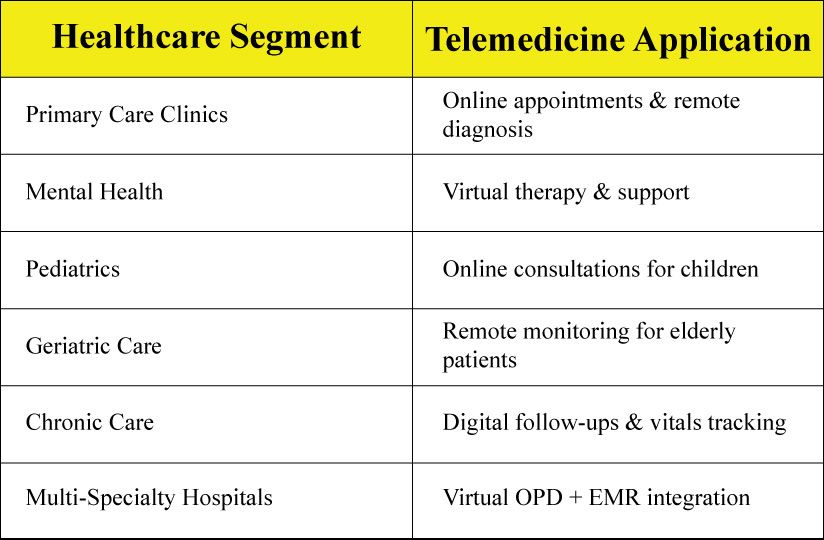
Example Use Cases of Telemedicine
How to Build a Telemedicine Platform Using DrapCode
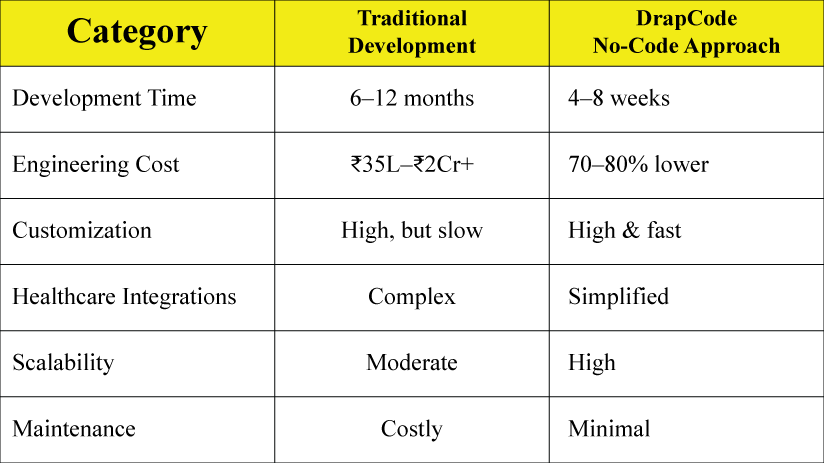
While traditional development requires months of engineering work, DrapCode enables healthcare businesses to launch telemedicine platforms four to six times faster using a no-code approach — without compromising on customization, scalability, or security.
Here’s how you can build a complete telemedicine system using DrapCode:
1. Design Patient & Doctor Dashboards
Create two interfaces:
- Patient Portal: appointments, records, prescriptions, chat
- Doctor Portal: schedule management, patient history, consultation notes
Drag-and-drop UI components enable the easy design of branded healthcare interfaces.
2. Set up Secure User Authentication & Access Roles
Assign role-based access:
- Patients
- Doctors
- Admin Staff
Control who can view, edit, or manage patient health data.
3. Enable Teleconsultation Features
Add modules for:
- Video/voice call integration
- In-app chat or messaging
- Prescription & report sharing
Third-party integration options, such as Twilio or WebRTC, make it seamless.
4. Integrate Digital Records & EHR/EMR Systems
DrapCode supports REST APIs to connect:
- EMRs/EHRs
- Lab systems
- Pharmacy services
- Insurance providers
5. Add Billing, Payments & Insurance
Enable secure online payments inside the portal, along with:
- Invoices
- Insurance claims
- Payment history dashboard
6. Use Automation to Improve Patient Care
Automation workflows can handle:
- Reminders & follow-ups
- Care plan sharing
- Prescription renewal alerts
- Patient engagement journeys
Build Telemedicine Platform: No-Code vs Traditional Development
Real-World Scenario: A Clinic Goes Online in 6 Weeks
A 3-center healthcare provider wanted to offer teleconsultations, lab result sharing, and patient follow-ups digitally. Traditional SaaS tools lacked customization, and development agencies estimated a 5–6 month timeframe.
Using DrapCode, they:
- Built patient + doctor portals in 4 weeks
- Integrated lab reports and prescription sharing by week 5
- Connected digital payments and reminders by week 6
Results achieved within 3 months:
- 52% higher patient engagement
- 37% reduction in no-show appointments
- 41% lower support calls
Want to Launch Your Telemedicine Platform Faster?
DrapCode enables healthcare businesses to design, build, and deploy secure telemedicine and patient-care solutions — without coding.