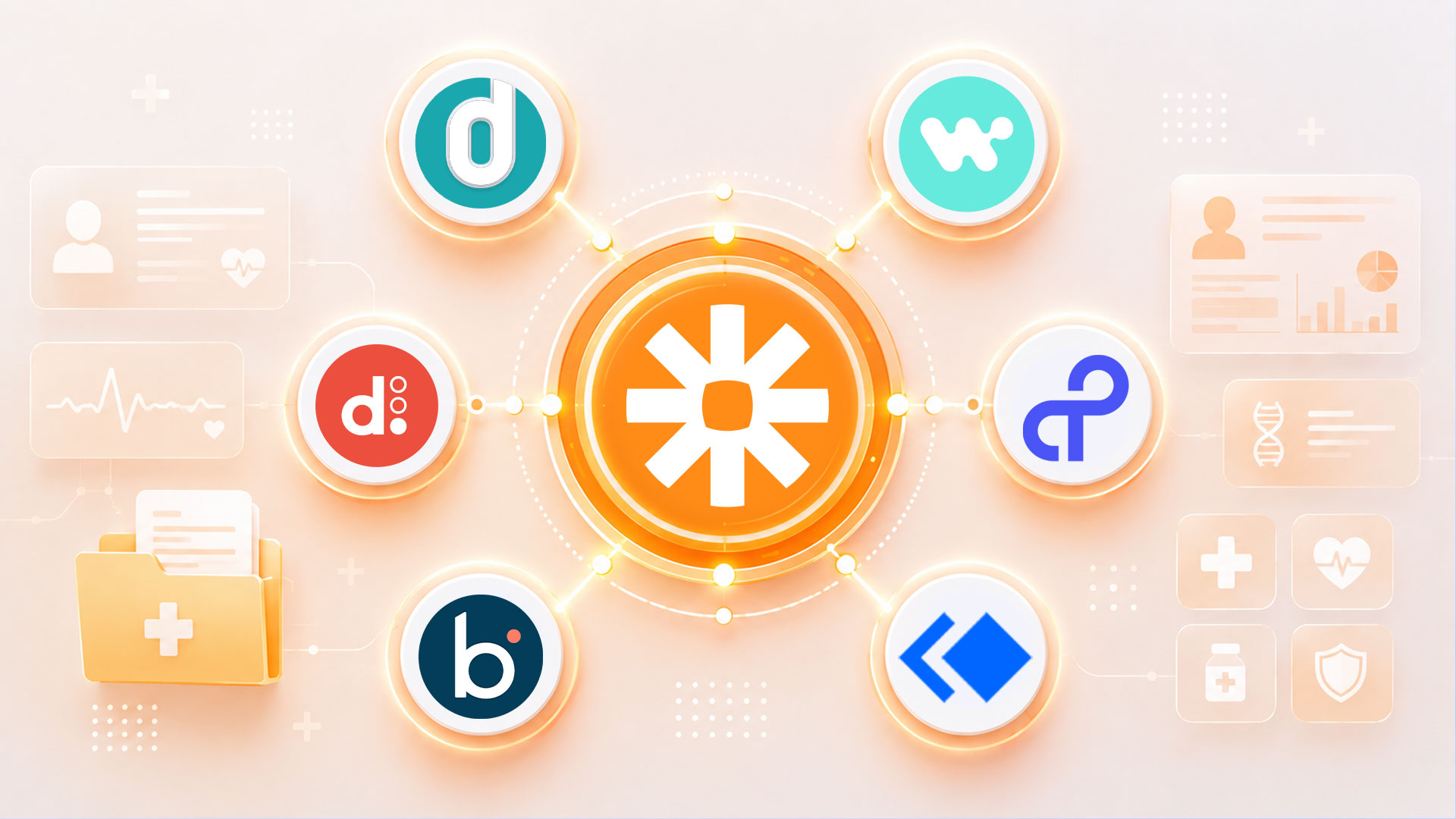
6 HIPAA-Compliant Zapier Alternatives for Healthcare Organizations
Healthcare teams rely on automation to reduce administrative work, connect systems, and improve patient experiences. From appointment reminders and intake forms to internal approvals and patient communication workflows, automation has become a critical part of modern healthcare operations.
Many organizations start with Zapier because it is easy to use and supports thousands of integrations. However, when protected health information (PHI) enters the picture, compliance requirements become significantly more important.
Healthcare providers must ensure that every platform handling patient information follows HIPAA requirements, supports secure data processing, and provides the controls necessary for audits and compliance reviews.
If you're evaluating whether Zapier is the right fit or searching for alternatives designed for healthcare, this guide compares six HIPAA-compliant options healthcare organizations use in 2026.
Why Healthcare Organizations Look Beyond Zapier
Zapier is an excellent general-purpose automation platform, but healthcare organizations often need additional compliance, security, and workflow capabilities.
When patient records, appointment information, insurance details, medical histories, or clinical communications are involved, organizations typically evaluate:
- Business Associate Agreement (BAA) availability
- PHI handling and storage practices
- Audit logging and activity tracking
- Access controls and permissions
- Data residency requirements
- Healthcare system integrations
- Workflow customization for healthcare operations
For many providers, the question is no longer whether automation is needed, but which platform can support automation while meeting compliance obligations.
What to Look for in a HIPAA-Compliant Automation Platform
Before selecting a solution, healthcare organizations should evaluate:
Security Controls
Look for encryption in transit and at rest, role-based access controls, audit trails, and secure authentication methods.
BAA Support
A vendor should clearly explain whether they offer a Business Associate Agreement and what services are covered.
Healthcare Integrations
The ability to connect with EHRs, EMRs, scheduling systems, patient portals, billing platforms, and communication tools can significantly reduce operational overhead.
Workflow Flexibility
Healthcare workflows are rarely simple. The platform should support approvals, multi-step processes, conditional logic, notifications, and cross-departmental integrations.
Scalability
The solution should support growth without requiring a complete rebuild of existing workflows.
1. DrapCode
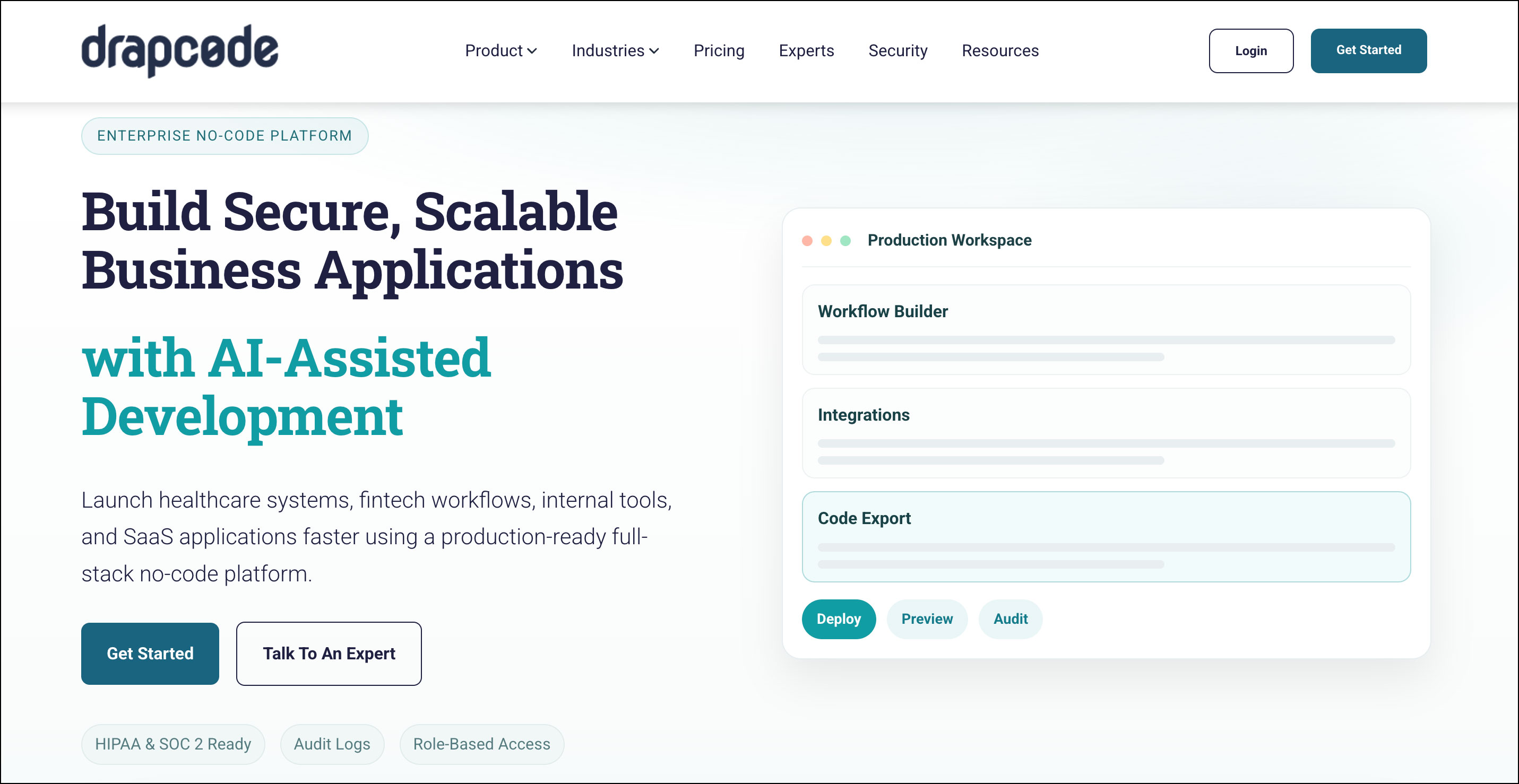
DrapCode is an AI-assisted no-code platform that enables healthcare organizations to build secure, production-ready healthcare applications, portals, workflow systems, and internal tools without traditional software development.
Unlike automation-only platforms, DrapCode enables organizations to build comprehensive healthcare solutions that integrate workflows, databases, permissions, integrations, and user-facing applications.
Best For
Healthcare providers who need more than simple automation and want to build HIPAA-compliant business applications.
Key Capabilities
- Custom patient portals
- Healthcare workflow applications
- Appointment management systems
- Internal staff dashboards
- Role-based permissions
- Secure document management
- API integrations with healthcare systems
- AI-assisted application development
Why Healthcare Teams Choose DrapCode
Many healthcare organizations eventually outgrow workflow automation and need purpose-built applications. DrapCode allows teams to create healthcare software without maintaining large engineering teams while retaining control over workflows, data, and security.
2. Workato
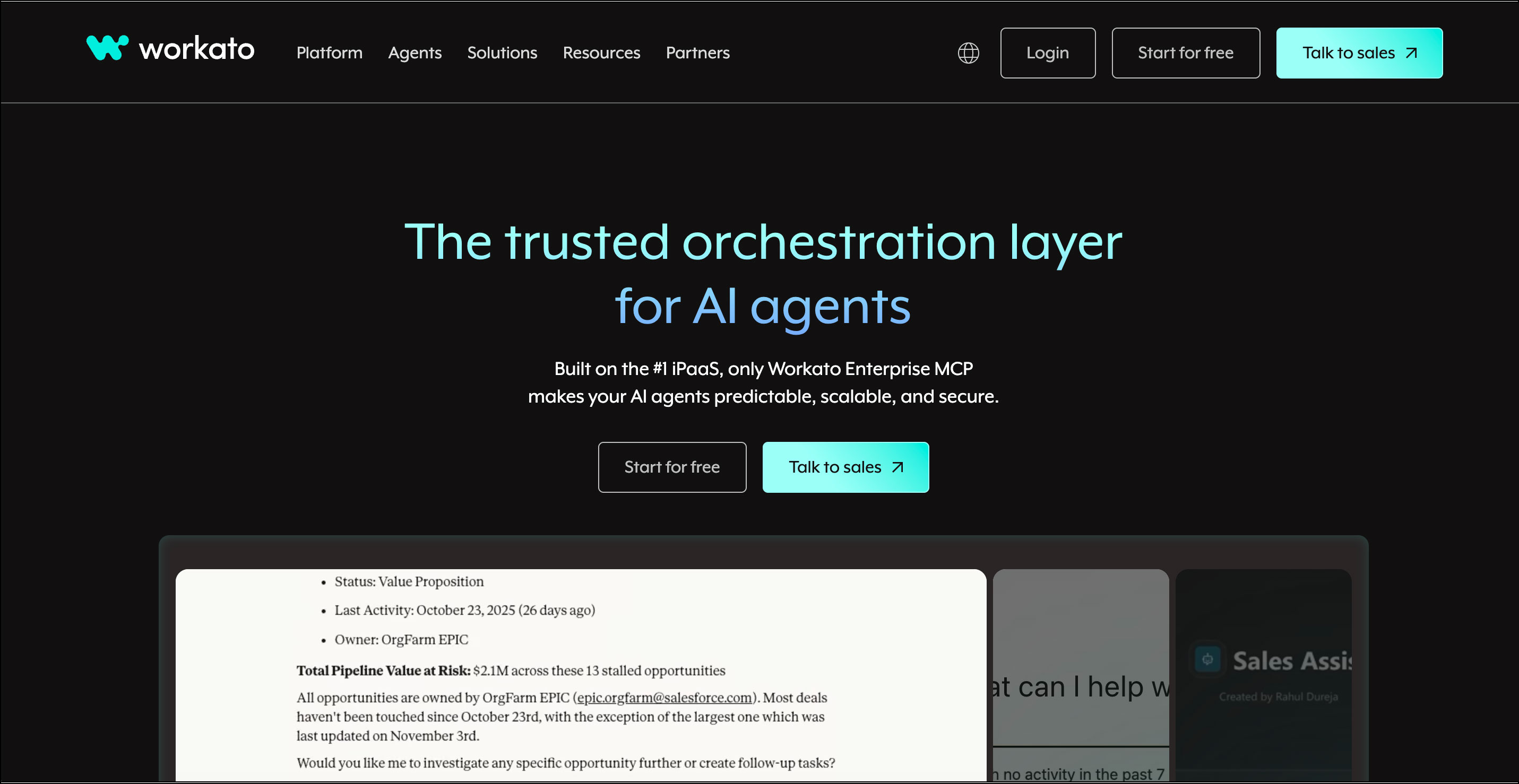
Workato is a powerful enterprise automation and integration platform widely used by large healthcare systems.
Its extensive connector ecosystem and advanced workflow capabilities make it suitable for organizations managing complex integrations across multiple departments and systems.
Best For
Large healthcare enterprises with sophisticated integration requirements.
Key Capabilities
- Enterprise workflow automation
- Advanced data transformation
- Healthcare system integrations
- Real-time process orchestration
- Governance and monitoring tools
Considerations
Workato is powerful but often requires dedicated technical resources for implementation and management.
3. Tray.ai
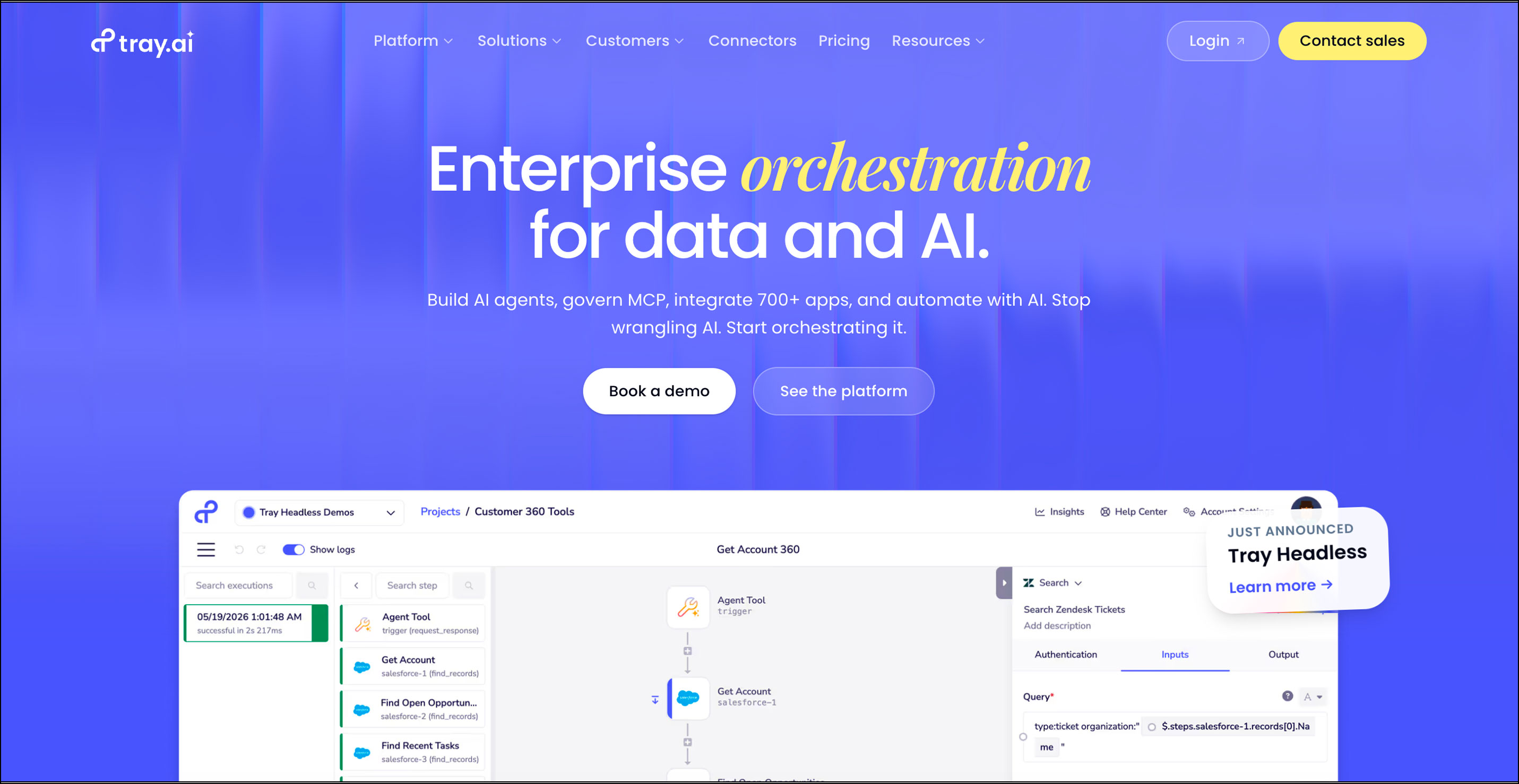
Tray.ai provides a low-code automation platform focused on flexible integrations and workflow customization.
Healthcare organizations use Tray.ai when they require more control over integrations than traditional no-code automation platforms provide.
Best For
Organizations with technical teams that need customizable workflows.
Key Capabilities
- Visual workflow builder
- API-first architecture
- Advanced automation logic
- Error handling and monitoring
- Extensive integration options
Considerations
The platform offers significant flexibility but may present a steeper learning curve for non-technical teams.
4. Keragon
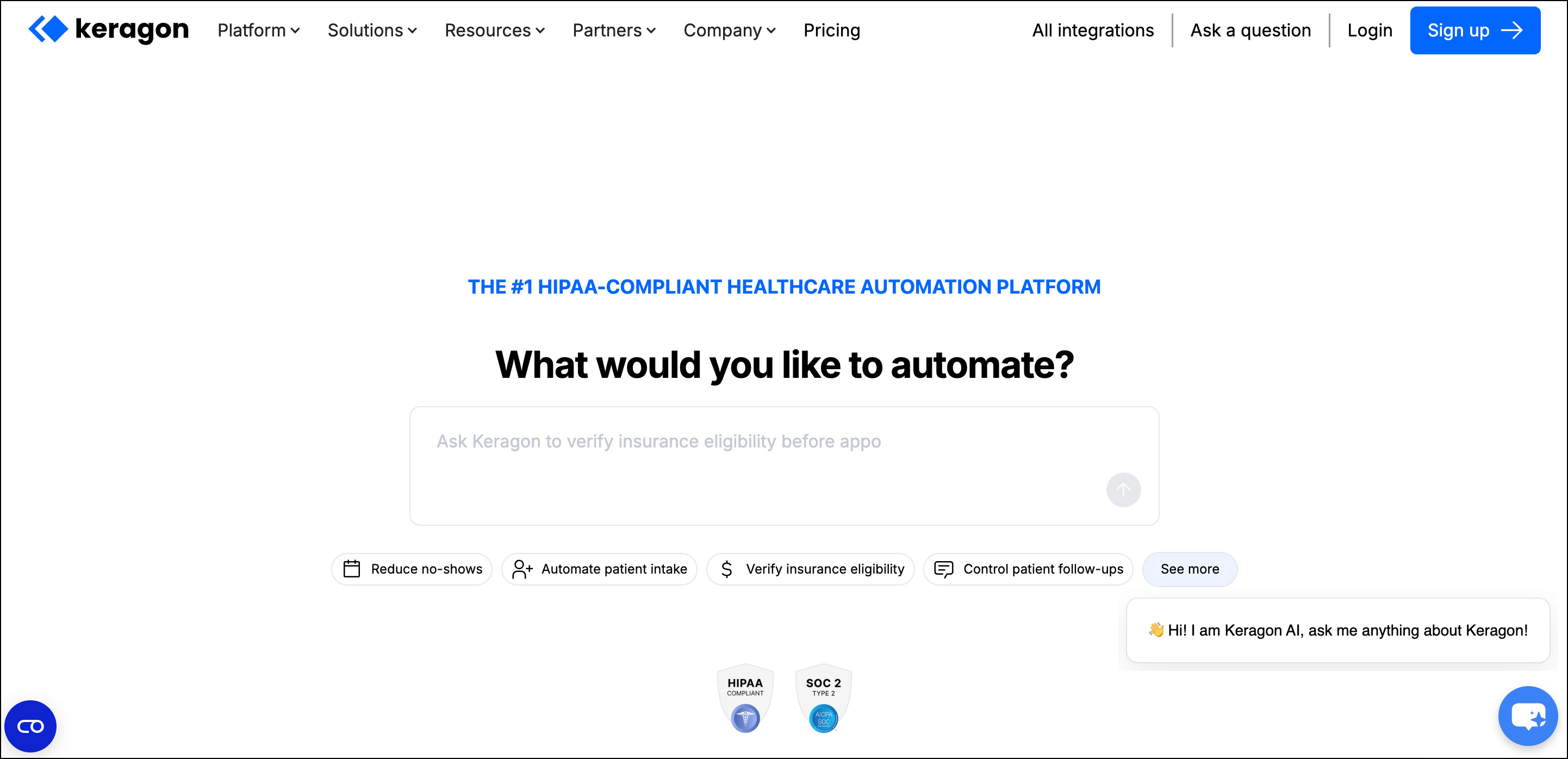
Keragon is one of the few platforms built specifically for healthcare automation and healthcare integrations.
Its healthcare-focused approach helps organizations connect systems while maintaining compliance requirements.
Best For
Healthcare providers seeking healthcare-specific workflow automation.
Key Capabilities
- EHR integrations
- HIPAA-focused workflows
- Healthcare API connectivity
- Secure automation processes
- Compliance-oriented controls
Considerations
Keragon's healthcare specialization makes it particularly attractive to organizations that prioritize healthcare-specific workflows over broader business automation.
5. Boomi
Boomi is a long-established integration platform used across highly regulated industries, including healthcare.
It focuses on large-scale data integration, application connectivity, and enterprise automation.
Best For
Hospital networks and healthcare enterprises with extensive integration requirements.
Key Capabilities
- Enterprise integration platform
- Cloud and on-premise connectivity
- Large-scale data synchronization
- Workflow automation
- Governance and monitoring
Considerations
Boomi is often best suited to organizations with dedicated IT and integration teams.
6. Dock Health
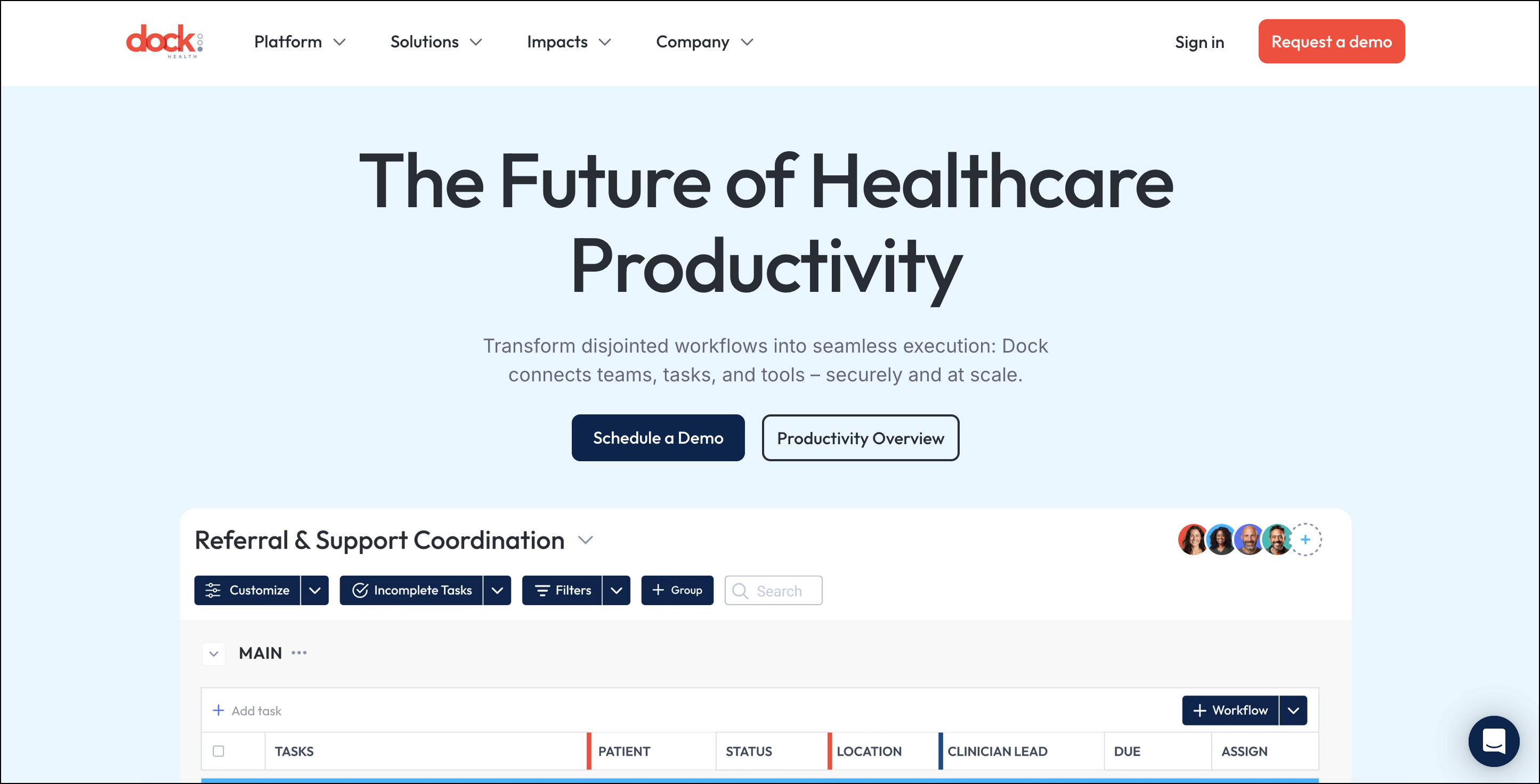
Dock Health combines workflow management, task coordination, and healthcare-focused collaboration tools.
Rather than focusing solely on integrations, Dock Health helps care teams manage operational workflows and patient-related processes.
Best For
Clinical and operational healthcare teams.
Key Capabilities
- Care coordination workflows
- Secure team collaboration
- Task management
- Workflow standardization
- Operational process tracking
Considerations
Dock Health is particularly useful for healthcare organizations looking to improve team execution and process visibility.
Which HIPAA-Compliant Zapier Alternative Is Right for You?
The right platform depends on what you're trying to accomplish.
|
Need |
Recommended Platform |
|
Build healthcare applications without developers |
DrapCode |
|
Enterprise workflow automation |
Workato |
|
Highly customizable integrations |
Tray.io |
|
Healthcare-focused automation |
Keragon |
|
Large-scale enterprise integrations |
Boomi |
|
Clinical workflow coordination |
Dock Health |
Organizations that only need automation may choose a dedicated integration platform. However, organizations looking to build patient-facing systems, internal healthcare applications, provider portals, or operational platforms often benefit from a solution that combines automation with application development.
Final Thoughts
Healthcare organizations face unique compliance requirements that extend beyond traditional business automation.
The right platform should help reduce administrative work while supporting security, governance, and regulatory obligations.
Whether you're automating appointment scheduling, connecting healthcare systems, managing patient communications, or building custom healthcare applications, selecting a HIPAA-conscious platform can help reduce risk and improve operational efficiency.
For organizations looking to move beyond simple workflow automation and build secure healthcare applications without traditional development, DrapCode offers a flexible foundation for creating production-ready healthcare solutions that can evolve with your organization.