Is FlutterFlow HIPAA Compliant?
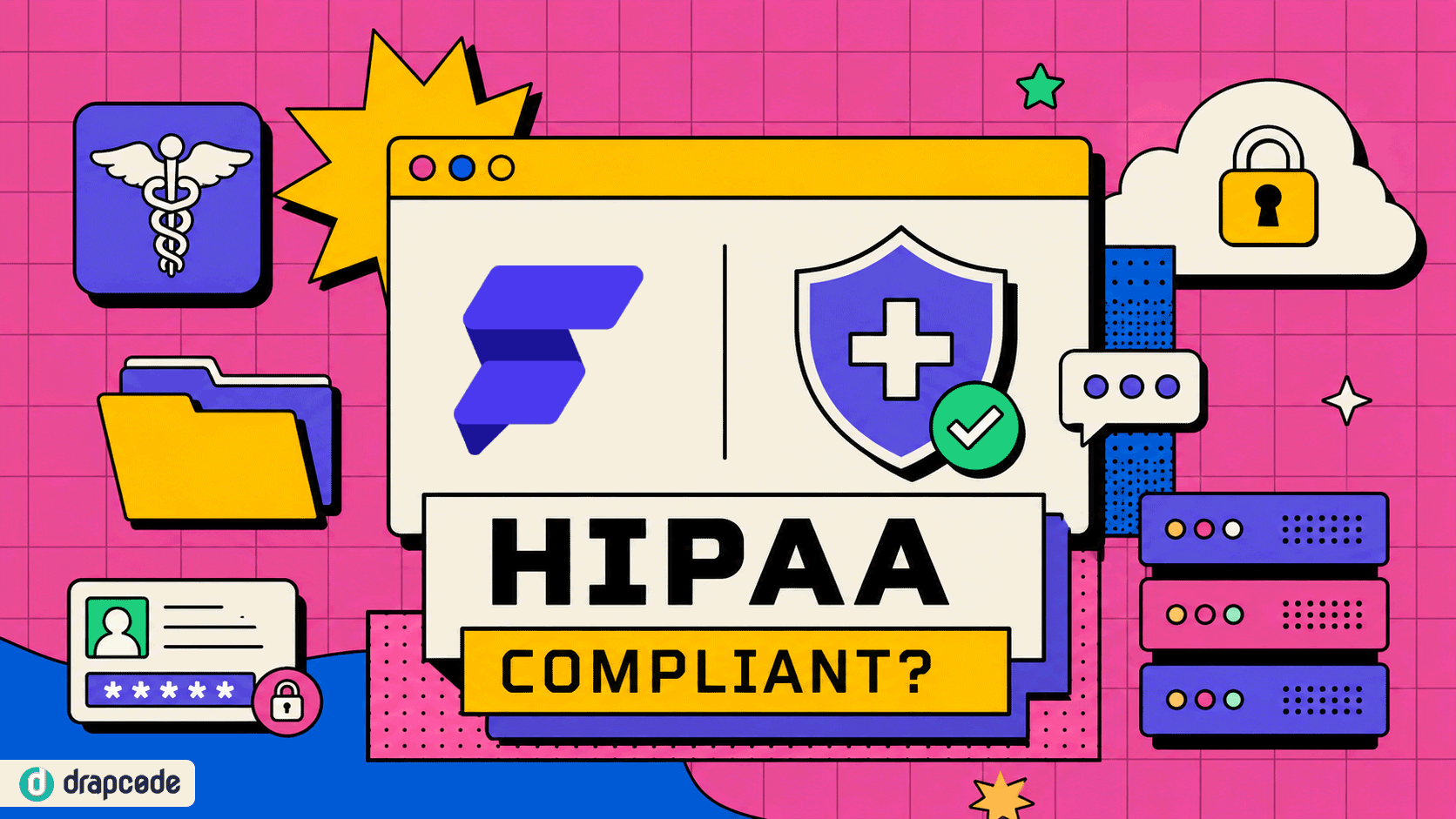
No, FlutterFlow is not HIPAA-compliant. Its Terms of Service explicitly state that the service is not intended for processing HIPAA-protected health information (PHI), so it should not be used to handle PHI.
Healthcare startups move fast.
A founder has an idea for a patient engagement app. A product team wants to launch a telehealth platform. A clinic needs a mobile application for appointment scheduling and patient communication.
The goal is always the same: build quickly without sacrificing quality.
That's one reason FlutterFlow has become increasingly popular. It enables teams to visually build Flutter applications, significantly reducing the time needed to design interfaces and create cross-platform mobile apps.
For healthcare innovators, that's an exciting proposition.
But as soon as the conversation turns to patient data, another question naturally follows:
Is FlutterFlow HIPAA compliant?
The answer isn't as straightforward as many people expect.
Based on FlutterFlow's publicly available documentation and how the platform is designed, FlutterFlow itself is a visual application builder. It doesn't determine whether your healthcare application is HIPAA-compliant.
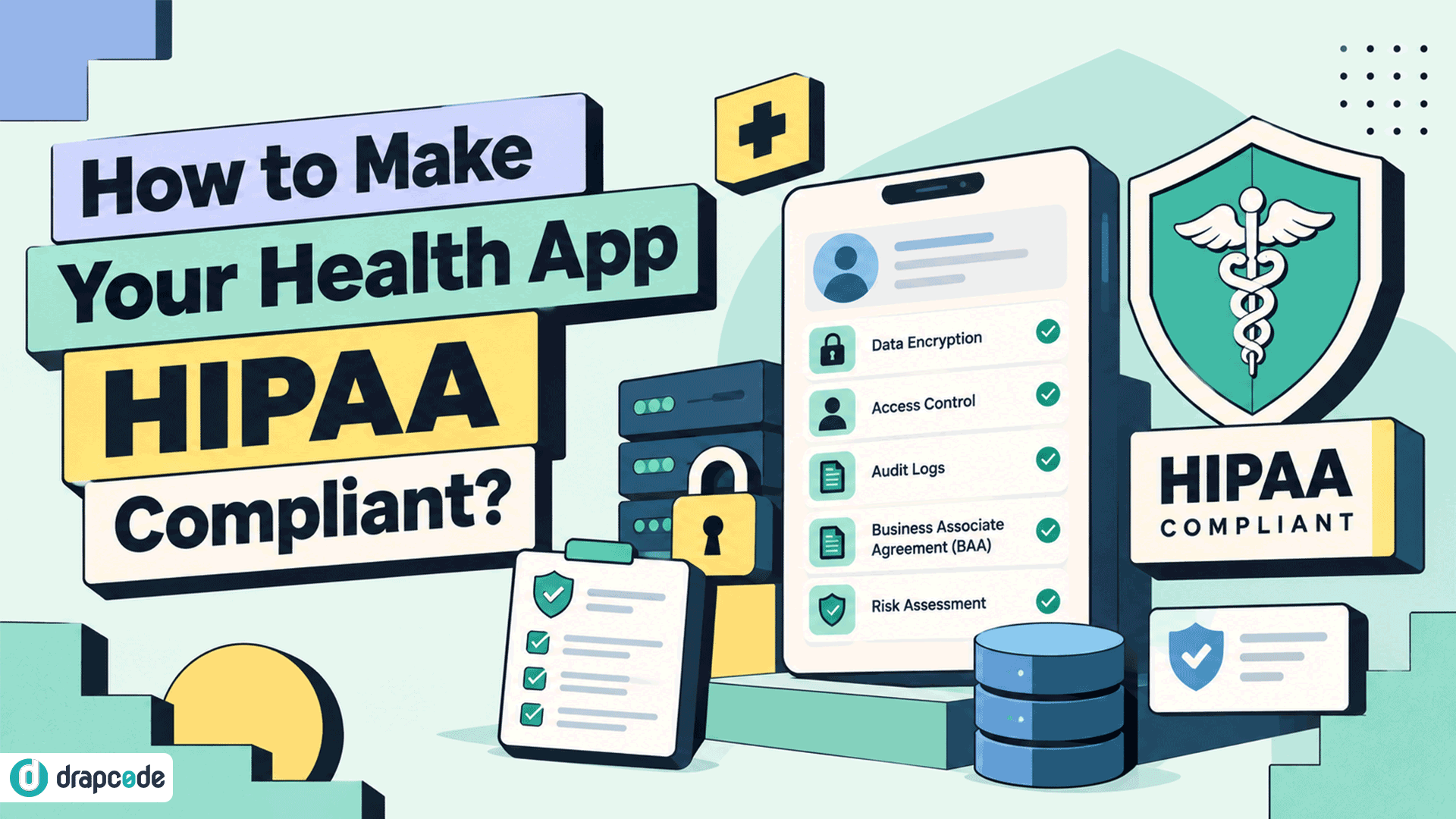
Instead, HIPAA compliance depends on the complete technology stack behind your application, including the backend, infrastructure, authentication, encryption, audit logging, operational controls, and how Protected Health Information (PHI) is handled.
That's an important distinction because many teams accidentally evaluate the frontend builder when they should be evaluating the entire application architecture.
Let's look at why that matters.
The Biggest Misunderstanding About FlutterFlow
Many healthcare founders ask the wrong question.
They ask,
"Is FlutterFlow HIPAA compliant?"
The more useful question is:
"Can a healthcare application built with FlutterFlow meet HIPAA requirements?"
Those aren't the same thing.
FlutterFlow helps you build the application your users interact with.
It creates screens, navigation, forms, workflows, and mobile experiences.
What it doesn't do is decide:
- Where patient data is stored
- How users are authenticated
- Whether information is encrypted
- Which systems process PHI
- How audit logs are maintained
- Which vendors require a Business Associate Agreement (BAA)
Those responsibilities belong to the application's architecture, not the visual builder.
That's why two healthcare apps built with FlutterFlow can have completely different security and compliance outcomes.
Your Frontend Doesn't Protect Patient Data
Think about the healthcare apps you use every day.
- Patients log in.
- Appointments appear instantly.
- Medical records load in seconds.
- Prescriptions can be reviewed.
- Messages are exchanged securely.
Everything feels simple.
But the interface isn't doing the heavy lifting.
Behind every screen are services responsible for:
- Authenticating users
- Verifying permissions
- Retrieving healthcare records
- Encrypting sensitive information
- Recording audit events
- Communicating with Electronic Health Record (EHR) systems
- Synchronizing healthcare data
- Monitoring application activity
The frontend simply presents the information.
The backend determines whether that information is protected appropriately.
That's why HIPAA discussions should focus on the complete application, not only the technology used to design the interface.
A Simple Analogy: Building the Reception Area Doesn't Secure the Hospital
Imagine you're designing a new hospital.
You invest in a welcoming reception area.
Comfortable seating.
Clear signs.
Modern interiors.
Friendly check-in kiosks.
Patients immediately have a positive first impression.
But does that reception area make the hospital secure?
Of course not.
Patient safety depends on secure medical records, controlled access to clinical areas, trained staff, emergency procedures, and operational governance.
Healthcare applications work the same way.
FlutterFlow helps you build the experience patients and clinicians see.
Security depends on everything happening behind those screens.
That's why choosing a frontend builder should never be confused with choosing a HIPAA compliance strategy.
Can You Build Healthcare Apps with FlutterFlow?
Absolutely.
In fact, FlutterFlow is well-suited for many healthcare use cases because it enables rapid development of modern mobile applications.
Healthcare teams can build:
- Patient engagement apps
- Appointment scheduling applications
- Medication reminder apps
- Telehealth interfaces
- Remote patient monitoring dashboards
- Provider mobile applications
- Internal clinical tools
Its visual approach allows founders and product teams to validate ideas much faster than traditional mobile development.
The important consideration is what happens after the interface has been built.
Healthcare applications rarely operate in isolation.
Most production systems need to exchange information with:
- Electronic Health Records (EHRs)
- Scheduling platforms
- Laboratory systems
- Billing solutions
- Identity providers
- FHIR APIs
- Notification services
The quality of those integrations often has a much greater impact on the success of the application than the frontend technology itself.
Where Healthcare Projects Usually Go Wrong
Very few healthcare applications fail because the interface wasn't attractive enough.
More often, problems appear because the underlying architecture wasn't planned carefully.
For example:
A beautifully designed patient portal may expose information if access permissions aren't configured correctly.
A telehealth application may authenticate users securely but fail to maintain adequate audit records.
A medication management app may work perfectly during testing but struggle once integrated with multiple clinical systems.
None of these challenges are unique to FlutterFlow.
They are architectural challenges that every healthcare development team must solve regardless of the frontend technology they choose.
That's why experienced healthcare organizations evaluate the entire application lifecycle from development and deployment to operations and long-term maintenance instead of focusing on a single platform.
Can FlutterFlow Be Part of a HIPAA-Compliant Healthcare Application?
Yes, it can.
But the important phrase is "part of."
Based on FlutterFlow's publicly available information at the time of writing, FlutterFlow is a visual application builder. Whether a healthcare application is HIPAA-compliant depends on the technologies and processes surrounding it, not the frontend builder itself.
A healthcare application built with FlutterFlow can support HIPAA requirements when it's combined with a secure, well-designed architecture.
That typically means considering areas such as:
- A backend capable of securely processing Protected Health Information (PHI)
- Strong authentication and identity management
- Role-based access controls
- Encryption for data in transit and at rest
- Audit logging
- Secure cloud infrastructure
- Appropriate vendor agreements, including Business Associate Agreements (BAAs) where applicable
- Operational policies for handling healthcare data
Think of FlutterFlow as one layer of the application.
It's an important layer because it shapes the user experience.
But it isn't the layer responsible for protecting patient information.
Before You Connect Your First Healthcare Database
Many healthcare teams are eager to move from prototype to production.
The temptation is to connect the app to a live database as soon as the interface looks complete.
That's usually when more careful planning is needed.
Before your application begins handling real patient data, ask questions such as:
- Where will PHI be stored?
- Who has access to production databases?
- How are user roles managed?
- Can access to patient records be audited?
- Which third-party services process healthcare information?
- Are backups encrypted?
- What happens if credentials are compromised?
- Does our technology stack support our compliance objectives?
These questions don't slow innovation.
They reduce the risk of expensive redesigns later in the product lifecycle.
For healthcare startups, answering them early is often much easier than retrofitting security controls after customers have already adopted the platform.
FlutterFlow vs DrapCode: Different Approaches to Healthcare Development
FlutterFlow and DrapCode both help organizations build applications faster, but they focus on different parts of the development journey.
FlutterFlow is a visual builder for creating Flutter applications with minimal manual coding.
DrapCode is a healthcare application development company that helps healthcare organizations build secure, scalable software using AI-assisted visual development, healthcare workflows, and interoperability.
Here's how they compare from a healthcare perspective.
Healthcare Requirement
FlutterFlow
DrapCode
Visual application development
✓ Core capability
✓ AI-assisted visual development
Cross-platform mobile apps
✓ Strong support
✓ Supported where required
HIPAA readiness
Depends on the complete architecture
Healthcare-focused development approach
Patient portals
✓ Can be built
✓ Supported
Provider applications
✓ Supported
✓ Supported
EMRs and EHR platforms
Custom implementation
✓ Supported
FHIR interoperability
Custom integration
✓ Native healthcare integration support
Healthcare workflow automation
Build separately
✓ Visual healthcare workflows
Healthcare development expertise
General-purpose platform
✓ Healthcare application development company
Neither platform replaces good healthcare engineering.
The difference lies in where they provide value.
FlutterFlow accelerates mobile application development.
DrapCode focuses on delivering complete healthcare applications with security, interoperability, and healthcare workflows in mind.
Great Healthcare Apps Are Built on Strong Architecture
When people evaluate development platforms, it's easy to focus on features.
How quickly can we build?
How modern does the interface look?
How much code do we have to write?
Those are useful questions.
But healthcare software succeeds because of architecture, not just productivity.
Consider two teams building similar patient engagement apps with FlutterFlow.
The first team invests in secure authentication, encrypted infrastructure, audit logging, FHIR integrations, and clear governance around patient data.
The second team focuses only on getting the application to market quickly.
Both applications may look almost identical.
Their security posture, however, could be completely different.
The lesson is simple.
The frontend influences the user experience.
The architecture determines whether healthcare organizations can trust the application.
Final Thoughts
FlutterFlow is an impressive visual development platform that helps teams build modern mobile applications much faster than traditional development approaches.
For healthcare innovators, that speed can make it easier to validate ideas, launch MVPs, and improve patient experiences.
At the same time, healthcare organizations should remember that HIPAA compliance is determined by the complete application architecture, not the frontend builder alone.
A secure backend, appropriate access controls, encryption, auditability, infrastructure, governance, and operational processes all contribute to protecting patient information.
If your goal is to accelerate mobile application development, FlutterFlow is a valuable tool.
If your goal is to build production-ready patient portals, EMRs, care management platforms, telehealth solutions, or FHIR-enabled healthcare applications, partnering with a healthcare application development company like DrapCode provides healthcare expertise that extends well beyond the user interface.
Frequently Asked Questions
Q1. Is FlutterFlow HIPAA compliant?
Based on publicly available information at the time of writing, FlutterFlow is a visual application builder. Whether a healthcare application is HIPAA compliant depends on the backend services, infrastructure, security controls, operational processes, and how Protected Health Information (PHI) is handled.
Q2. Can I build a healthcare app using FlutterFlow?
Yes. FlutterFlow can be used to build patient-facing and provider-facing healthcare applications, including appointment scheduling, patient engagement, telehealth interfaces, and internal healthcare tools.
Q3. Does FlutterFlow store Protected Health Information?
FlutterFlow itself is primarily used to design and build application interfaces. Whether PHI is stored or processed depends on the backend services and architecture used by the application.
Q4. What makes a FlutterFlow healthcare app HIPAA compliant?
HIPAA compliance depends on factors such as secure backend infrastructure, authentication, encryption, role-based access controls, audit logging, operational safeguards, and appropriate vendor agreements where required.
Q5. When should healthcare organizations work with a healthcare-focused development company?
If you're building production-ready healthcare software with complex workflows, interoperability requirements, or enterprise-scale deployments, a healthcare-focused development company can help simplify implementation while supporting long-term growth.
Build Healthcare Apps on a Strong Foundation
A modern interface creates a great first impression, but healthcare software earns trust through security, interoperability, and reliable workflows.
DrapCode is a healthcare application development company that helps healthcare organizations build patient portals, EMRs, telehealth platforms, care management systems, provider applications, and FHIR-enabled software using AI-assisted visual development.
Whether you're launching a new digital health product or expanding an existing platform, DrapCode helps you build healthcare applications designed for production, not just prototypes.