Top FHIR Use Cases Transforming Healthcare Data Management
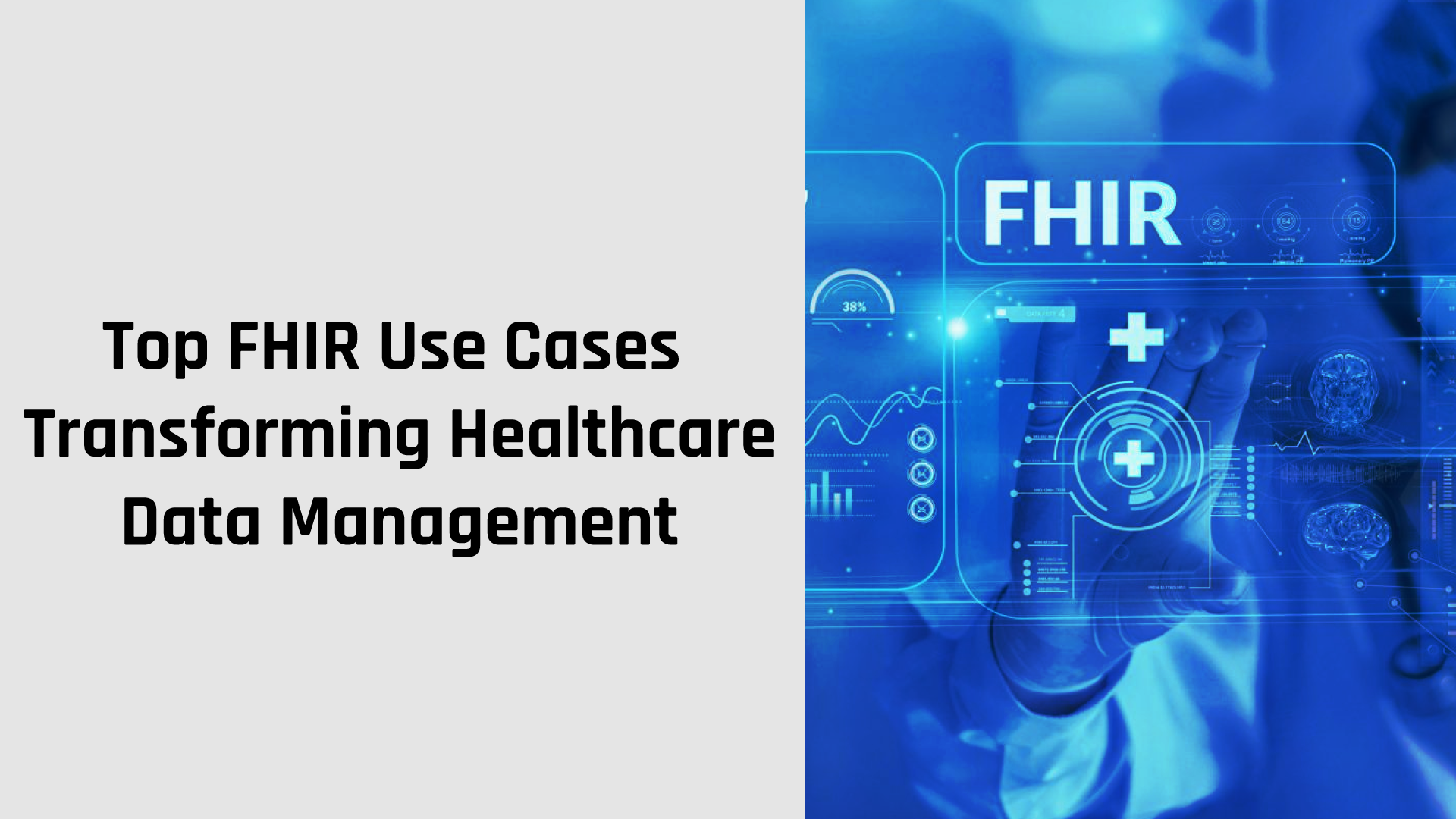
In the era of digital healthcare, seamless data exchange is essential for improving patient outcomes, optimizing workflows, and ensuring regulatory compliance. FHIR use cases are revolutionizing how healthcare organizations manage and share critical data. Developed by HL7, Fast Healthcare Interoperability Resources (FHIR) is now the gold standard for healthcare data interoperability, enabling secure, standardized communication between disparate systems.
With the growing adoption of electronic health record standards, healthcare providers, insurers, and developers are leveraging FHIR to build more efficient and patient-centric applications. Implementing FHIR in healthcare is no longer a technical challenge, thanks to no-code platforms like DrapCode, which simplify FHIR integration and deployment.
In this blog, we’ll explore the top FHIR use cases that are transforming healthcare data management, improving accessibility, and driving innovation.
Why FHIR is Crucial for Healthcare Data Management
FHIR was designed to address the longstanding issues of fragmented healthcare data. Traditional systems store patient records in siloed databases, making it difficult for different providers, insurers, and patients to access and share medical information efficiently.
Key benefits of FHIR data exchange include:
- Standardized Data Format: Ensures consistent structuring of healthcare data for seamless communication.
- API-Driven Architecture: Allows real-time data sharing between EMRs, patient portals, and third-party applications.
- Interoperability Compliance: Meets government regulations and electronic health record standards for secure data exchange.
- Enhanced Patient Access: Empowers individuals to access and control their health data easily.
With these advantages, implementing FHIR in healthcare is essential for improving care coordination, reducing administrative burdens, and fostering innovation.
Top FHIR Use Cases Transforming Healthcare
1. Electronic Health Record (EHR) Integration
One of the most significant FHIR use cases is integrating EHR systems across different healthcare providers. FHIR enables standardized data exchange between hospitals, clinics, and telehealth providers, ensuring that patient records are always up to date and accessible.
With FHIR data exchange benefits, healthcare organizations can:
- Reduce duplicate data entry and errors.
- Enable real-time access to patient medical histories.
- Ensure compliance with electronic health record standards such as HIPAA and ONC regulations.
2. Patient Portals and Personal Health Records
FHIR makes it easier for healthcare providers to develop patient portals that give individuals direct access to their medical records, lab results, and treatment plans. Patients can also share their data with specialists, insurers, or family caregivers.
The key advantages of implementing FHIR in healthcare for patient portals include:
- Secure access to health records via mobile apps.
- Easy integration with wearables and remote monitoring devices.
- Improved patient engagement and self-care management.
3. Interoperability for Telemedicine and Virtual Care
Telemedicine has grown rapidly, and FHIR plays a crucial role in enabling remote patient consultations. With FHIR data exchange benefits, telehealth providers can:
- Retrieve patient histories from multiple sources before consultations.
- Share prescriptions and treatment plans with pharmacies in real-time.
- Enable smooth communication between telehealth platforms and primary care physicians.
4. AI-Powered Clinical Decision Support
FHIR enables AI-driven clinical decision support systems (CDSS) to access and analyze real-time patient data, helping doctors make better treatment decisions. By leveraging healthcare data interoperability, AI models can:
- Identify patterns in patient conditions.
- Predict disease risks based on historical data.
- Recommend personalized treatment plans.
5. Integration with Medical Devices and IoT Sensors
Connected medical devices generate vast amounts of health data, but without interoperability, this data is often underutilized. FHIR use cases in IoT healthcare include:
- Continuous glucose monitoring for diabetic patients.
- Smartwatches tracking heart rate and blood pressure.
- Remote patient monitoring for post-surgical care.
With FHIR data exchange benefits, this data can be securely transmitted to healthcare providers in real-time, ensuring timely interventions.
6. Efficient Insurance and Billing Automation
FHIR simplifies claims processing and insurance data exchange by enabling seamless connectivity between healthcare providers and insurers. Key benefits include:
- Automated claims submission using standardized data formats.
- Faster insurance approvals and reduced processing delays.
- Real-time verification of patient eligibility and coverage.
By implementing FHIR in healthcare, administrative workflows become more efficient, reducing paperwork and operational costs.
7. Population Health Management and Research
FHIR’s standardized data structure makes it easier to aggregate and analyze healthcare data for public health research and policy-making. Government agencies and research institutions can use FHIR to:
- Monitor disease outbreaks using real-time data.
- Conduct large-scale epidemiological studies.
- Improve vaccination tracking and distribution strategies.
8. Healthcare Data Exchange with Third-Party Applications
FHIR is widely used by third-party health apps, including fitness trackers, medication reminders, and mental health apps. These apps can securely access a patient’s FHIR-enabled records, providing personalized insights and recommendations.
The key benefits of FHIR data exchange with third-party apps include:
- Secure API-driven access to health data.
- Custom health insights and analytics.
- Improved patient engagement in wellness programs.
9. Lab and Imaging Data Standardization
FHIR facilitates seamless integration of laboratory test results and imaging reports with EHR systems. Healthcare providers can:
- Retrieve lab results in real-time.
- Share imaging data with specialists instantly.
- Ensure accurate and consistent diagnostic reporting.
How to Implement FHIR in Healthcare Using No-Code Platforms
With the increasing demand for healthcare data interoperability, many organizations are turning to no-code platforms like DrapCode to simplify FHIR adoption. No-code solutions provide an intuitive, drag-and-drop interface that enables healthcare providers to:
- Select Pre-Built FHIR Modules – No-code platforms offer ready-to-use FHIR templates for patient records, billing, and lab data.
- Connect with APIs – Easily integrate with existing EMRs, insurance providers, and third-party applications.
- Automate Workflows Visually – Design custom workflows for patient data management without writing a single line of code.
- Ensure Compliance and Security – No-code tools come with built-in security measures to meet regulatory requirements.
- Test, Deploy, and Optimize – Continuously improve healthcare applications by monitoring performance and making adjustments.
By leveraging no-code platforms for FHIR implementation, healthcare organizations can accelerate deployment while reducing costs and IT dependencies.
The Future of FHIR Use Cases in Healthcare
As the healthcare industry continues to embrace electronic health record standards, the role of FHIR use cases will expand. With advancements in AI, blockchain, and cloud computing, FHIR will play a vital role in driving healthcare data interoperability to new levels. Future developments in FHIR data exchange benefits may include:
- AI-Driven Predictive Analytics – Advanced machine learning models will use FHIR-enabled datasets to predict disease outbreaks, optimize treatments, and improve clinical workflows.
- Blockchain for Secure Data Sharing – Decentralized ledgers will enhance the security and privacy of patient data, preventing unauthorized access while ensuring seamless data exchange.
- Expanded IoT and Wearable Integration – More healthcare devices, from smart inhalers to ECG monitors, will integrate with FHIR to provide real-time health insights.
- Cross-Border Healthcare Data Exchange – Standardized FHIR protocols will allow medical records to be shared globally, facilitating better patient care across countries.
With these advancements, implementing FHIR in healthcare will continue to enhance patient outcomes, optimize medical workflows, and drive industry-wide digital transformation.
Final Thoughts
FHIR is revolutionizing healthcare data management by enabling seamless healthcare data interoperability across electronic health records, insurance systems, medical devices, and third-party applications. The growing adoption of FHIR use cases is transforming patient care, telemedicine, insurance processing, and population health management.
For healthcare organizations looking to implement FHIR efficiently, no-code platforms for FHIR integration like DrapCode offer an intuitive, cost-effective solution. By eliminating the complexities of manual coding, no-code development enables faster deployment, better scalability, and improved compliance with electronic health record standards.