Is Claude Code HIPAA-Compliant?
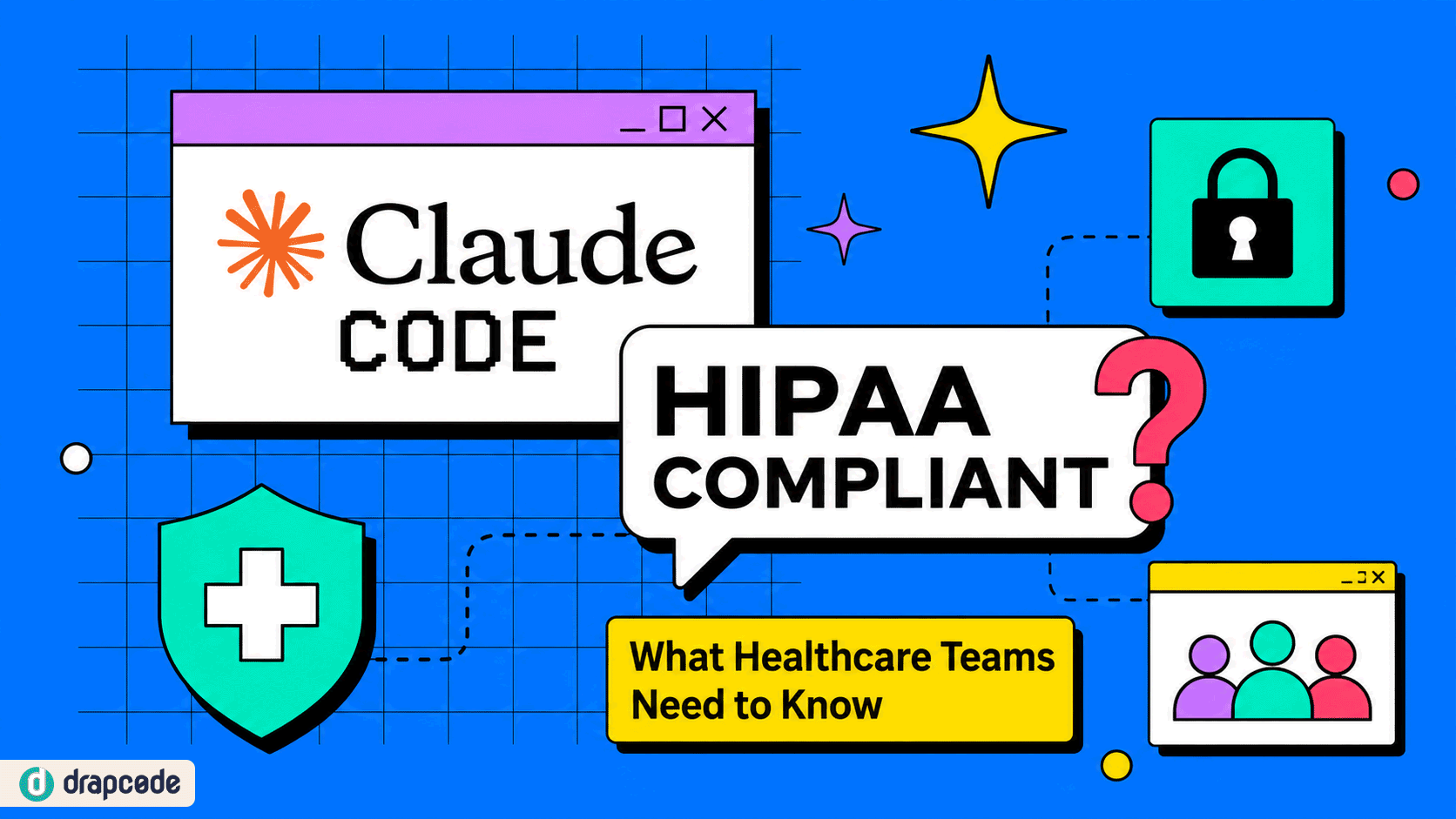
No, Claude Code itself should not be considered HIPAA-compliant for handling PHI. Anthropic offers HIPAA-eligible products under specific configurations and agreements, but Claude Code requires an appropriate HIPAA-ready setup and a BAA, rather than being compliant by default.
AI coding assistants are becoming a standard part of modern software development.
From generating APIs and debugging code to explaining complex logic and refactoring applications, these tools are helping engineering teams deliver software faster than ever before.
One of the newest and most capable options is Claude Code from Anthropic.
Unlike traditional AI chatbots, Claude Code works directly within the developer's workflow, allowing engineers to write, edit, and understand code without constantly switching between their terminal, documentation, and browser.
As healthcare organizations begin adopting AI-assisted development, one question is becoming increasingly common:
Can Claude Code be used to build HIPAA-compliant healthcare applications?
The answer isn't a simple yes or no.
Based on Anthropic's publicly available documentation at the time of writing, Claude Code can be used within Anthropic's HIPAA-ready Enterprise offering, which includes support for a Business Associate Agreement (BAA) and Zero Data Retention (ZDR) when configured appropriately.
However, that doesn't mean every healthcare application built with Claude Code is automatically HIPAA-compliant.
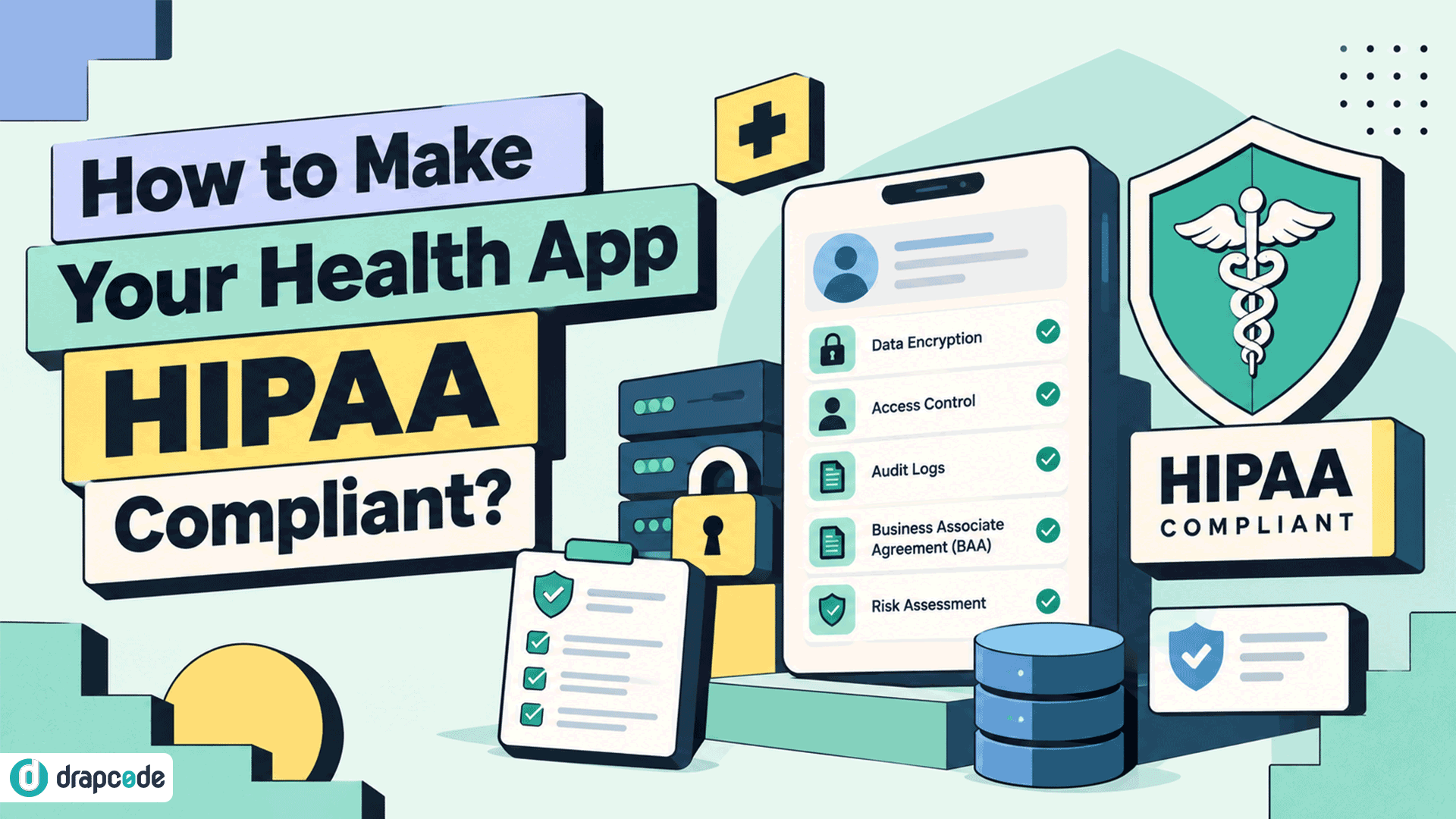
HIPAA compliance depends on much more than the development tool you choose. It requires secure infrastructure, appropriate access controls, encryption, audit logging, operational policies, workforce training, and careful handling of Protected Health Information (PHI).
Understanding that distinction is essential before introducing any AI coding assistant into a healthcare development workflow.
Why So Many Healthcare Teams Are Asking This Question
Healthcare organizations are under increasing pressure to deliver digital products faster.
Patients expect intuitive portals.
Providers want streamlined workflows.
Startups need to launch products before competitors.
Engineering teams are expected to deliver all of this without compromising security or compliance.
AI coding assistants promise exactly what many development teams need: faster software delivery.
It's easy to see why healthcare organizations are interested.
But healthcare isn't like most industries.
A productivity tool that's perfectly suitable for a retail website or internal business application may require additional evaluation before it's used in projects involving Protected Health Information.
That's why questions about HIPAA, privacy, and enterprise governance naturally arise when teams evaluate AI-assisted development tools.
The Short Answer: Is Claude Code HIPAA Compliant?
If you're looking for a simple answer, here's the most accurate one.
Claude Code is not automatically HIPAA compliant simply because you're using it.
According to Anthropic's publicly available documentation, organizations can use Claude Code within HIPAA-ready Enterprise plans that support:
- Business Associate Agreements (BAAs)
- Zero Data Retention (ZDR)
- Enterprise administration
- Organizational security controls
These capabilities help organizations adopt AI in regulated environments.
However, they don't transfer HIPAA compliance to the software being developed.
Think of it this way.
A secure code editor doesn't make your application secure.
Likewise, a HIPAA-ready AI coding environment doesn't make your healthcare application HIPAA-compliant.
Your engineering team is still responsible for how patient information is collected, stored, transmitted, accessed, monitored, and protected throughout the application's lifecycle.
Why "HIPAA-Ready" and "HIPAA-Compliant" Aren't the Same Thing
This is where much of the confusion begins.
Developers often come across terms like:
- HIPAA-ready
- Enterprise security
- Business Associate Agreement
- Zero Data Retention
These are important capabilities.
But they don't mean the entire healthcare application automatically satisfies HIPAA requirements.
For example, imagine your development team uses Claude Code under a HIPAA-ready Enterprise plan.
That addresses one part of the development environment.
You still need to answer questions such as:
- Where is patient data stored?
- Who can access production systems?
- Are user permissions properly enforced?
- Is every interaction with PHI recorded?
- How are encryption keys managed?
- Can healthcare records be exchanged securely using FHIR?
- What happens if a security incident occurs?
These questions have nothing to do with how code is generated.
They're part of building and operating a secure healthcare platform.
That's why compliance should always be viewed as an organizational responsibility, not a feature of a single development tool.
What Claude Code Does Exceptionally Well
Understanding Claude Code's strengths helps clarify where it fits into healthcare software development.
It can help engineering teams:
- Generate application code
- Explain unfamiliar codebases
- Refactor legacy systems
- Create automated tests
- Build backend services
- Accelerate debugging
- Improve developer productivity
These capabilities allow developers to spend less time on repetitive coding tasks and more time solving healthcare-specific problems.
For example, an engineering team could use Claude Code to:
- Build authentication services
- Generate API endpoints
- Create FHIR integration logic
- Improve existing healthcare applications
- Refactor older code for better maintainability
These are valuable use cases.
The important point is that Claude Code accelerates development; it doesn't replace healthcare engineering.
Where Healthcare Compliance Begins
Writing code is only one phase of building healthcare software.
Before an application can safely process Protected Health Information, organizations need to establish a much broader foundation.
That includes:
- Identity and access management
- Role-based permissions
- Encryption of sensitive data
- Audit logging
- Secure cloud infrastructure
- Healthcare interoperability
- Disaster recovery planning
- Security monitoring
- Vendor risk management
- Compliance documentation
These controls exist regardless of whether developers write code manually or with the assistance of AI.
Claude Code can help engineers move faster.
Healthcare compliance depends on everything surrounding that code.
That's the perspective every healthcare team should maintain when evaluating AI-assisted development tools.
Can Healthcare Developers Safely Use Claude Code?
Yes, but only when it's used thoughtfully and within a well-defined security and compliance framework.
For many healthcare engineering teams, Claude Code can become a valuable development assistant. It can help developers write cleaner code, speed up repetitive tasks, generate documentation, and reduce the time needed to build new features.
The key is understanding where AI fits into the development lifecycle.
For example, Claude Code can be useful for:
- Creating backend APIs
- Building integration logic
- Refactoring existing healthcare applications
- Writing unit and integration tests
- Generating technical documentation
- Improving code quality through reviews and suggestions
These activities don't automatically involve Protected Health Information (PHI).
However, once developers begin working with real patient data, organizations should ensure their use of Claude Code aligns with their enterprise configuration, contractual agreements, internal security policies, and applicable regulatory requirements.
Many healthcare teams minimize risk by developing with:
- Synthetic patient records
- De-identified datasets
- Mock FHIR resources
- Test environments
These approaches allow developers to benefit from AI-assisted coding without unnecessarily exposing sensitive healthcare information during development.
Before You Put PHI Into Any AI Tool
One of the biggest mistakes organizations make is assuming that every AI tool should be treated the same way.
Before developers include Protected Health Information in prompts or development workflows, healthcare organizations should pause and ask a few critical questions.
1. Are We Using the Right Plan?
Not every account offers the same privacy and compliance capabilities.
Healthcare teams should verify whether they're using the appropriate Enterprise offering and understand the protections included in that environment.
2. Do We Have the Required Agreements?
If an AI service provider will process Protected Health Information, organizations should determine whether a Business Associate Agreement (BAA) is required and whether one is available for their deployment.
3. What Data Are Developers Sharing?
Even experienced engineers sometimes copy application logs, API responses, or database records into AI tools while troubleshooting.
Healthcare organizations should establish clear internal policies that define what information can and cannot be shared during development.
4. Is AI Part of Our Security Governance?
AI adoption shouldn't happen in isolation.
Development teams, security teams, compliance officers, and IT leaders should work together to establish governance for AI use, access permissions, prompt handling, and developer education.
The goal isn't to avoid AI.
The goal is to ensure AI is introduced responsibly into existing healthcare security and compliance processes.
Claude Code vs DrapCode: Different Tools for Different Healthcare Goals
Although both Claude Code and DrapCode help organizations build software faster, they address different challenges.
Claude Code is an AI coding assistant designed to improve developer productivity by helping engineers write, understand, and maintain code more efficiently.
DrapCode is a healthcare application development company that helps healthcare organizations build secure, scalable applications, including patient portals, EMRs, care management platforms, provider applications, and FHIR-enabled solutions.
Here's how they compare from a healthcare perspective.
Healthcare Requirement
Claude Code
DrapCode
AI-assisted development
✓ AI coding assistant
✓ AI-assisted visual development
HIPAA-ready capabilities
Available through qualifying Enterprise offerings
Healthcare-focused development approach
Business Associate Agreement (BAA)
Available for qualifying Enterprise customers
✓ Available for healthcare customers
Patient portal development
Custom engineering required
✓ Supported
EMR and EHR applications
Build from scratch
✓ Supported
FHIR interoperability
Custom implementation
✓ Native healthcare integration support
Healthcare workflow automation
Custom development
✓ Visual workflow development
Production-ready healthcare applications
Requires engineering, infrastructure, and compliance planning
✓ Designed for healthcare delivery
The choice isn't necessarily one platform or the other.
Many engineering teams may use AI coding assistants to improve developer productivity while partnering with a healthcare-focused platform or development company to accelerate delivery of production-ready healthcare applications.
The Biggest Misconception About AI and HIPAA
A common misunderstanding is that using a HIPAA-ready AI service automatically makes everything built with that service HIPAA compliant.
That's not how compliance works.
HIPAA doesn't certify applications based on the tools developers use.
Instead, it evaluates how organizations protect patient information throughout its lifecycle.
An application handling Protected Health Information must still address:
- Secure authentication
- Role-based access controls
- Encryption in transit and at rest
- Audit logging
- Infrastructure security
- Disaster recovery
- Risk assessments
- Ongoing monitoring
- Staff training
- Operational policies
AI can help generate code.
It cannot replace the organizational processes required to protect patient data.
Healthcare organizations that recognize this distinction are far better positioned to adopt AI responsibly.
Final Thoughts
Claude Code represents an important advancement in AI-assisted software development.
Its ability to help developers write, understand, and maintain code can significantly improve engineering productivity. For healthcare organizations, Anthropic's HIPAA-ready Enterprise offering provides additional safeguards that make Claude Code a viable option in regulated development environments when appropriately configured.
At the same time, healthcare teams should remember that HIPAA compliance is never delivered by a coding assistant alone.
Compliance is achieved through secure application architecture, robust infrastructure, operational governance, access controls, encryption, auditability, and organizational policies.
If your goal is to make your engineering team more productive, Claude Code is a compelling option to evaluate.
If your goal is to build production-ready patient portals, EMRs, telehealth platforms, care management systems, or FHIR-enabled healthcare applications, partnering with a healthcare application development company like DrapCode helps ensure your software is designed with healthcare workflows, interoperability, security, and long-term scalability in mind.
Frequently Asked Questions
Q1. Is Claude Code HIPAA compliant?
Based on Anthropic's publicly available documentation at the time of writing, Claude Code can be used within qualifying HIPAA-ready Enterprise offerings that include features such as a Business Associate Agreement (BAA) and Zero Data Retention (ZDR). However, using Claude Code alone does not make a healthcare application HIPAA-compliant.
Q2. Can healthcare developers use Claude Code?
Yes. Claude Code can help developers generate code, refactor applications, write tests, and improve productivity. Organizations should establish appropriate governance around AI usage, particularly when healthcare data is involved.
Q3. Should developers use real patient data with AI coding assistants?
Healthcare organizations should evaluate their enterprise configuration, contractual obligations, and internal security policies before exposing Protected Health Information to any AI service. Many teams choose to use synthetic or de-identified data during development.
Q4. Does Claude Code replace healthcare security controls?
No. AI coding assistants help accelerate software development but do not replace access controls, encryption, audit logging, infrastructure security, risk management, or compliance processes.
Q5. When is DrapCode a better fit?
If you're building production-ready healthcare applications, including patient portals, EMRs, telehealth platforms, care management solutions, or FHIR-enabled systems, DrapCode provides healthcare-focused development expertise that goes beyond AI-assisted coding.
Build Healthcare Software with Confidence
AI can accelerate software development, but healthcare success depends on much more than writing code faster.
DrapCode is a healthcare application development company that helps healthcare organizations build secure, scalable applications with AI-assisted development, healthcare workflows, FHIR interoperability, and enterprise-grade security.
Whether you're launching a new digital health product or modernizing an existing platform, DrapCode helps you move from idea to production with confidence.