What is FHIR? A Beginner’s Guide to the Future of Healthcare Data
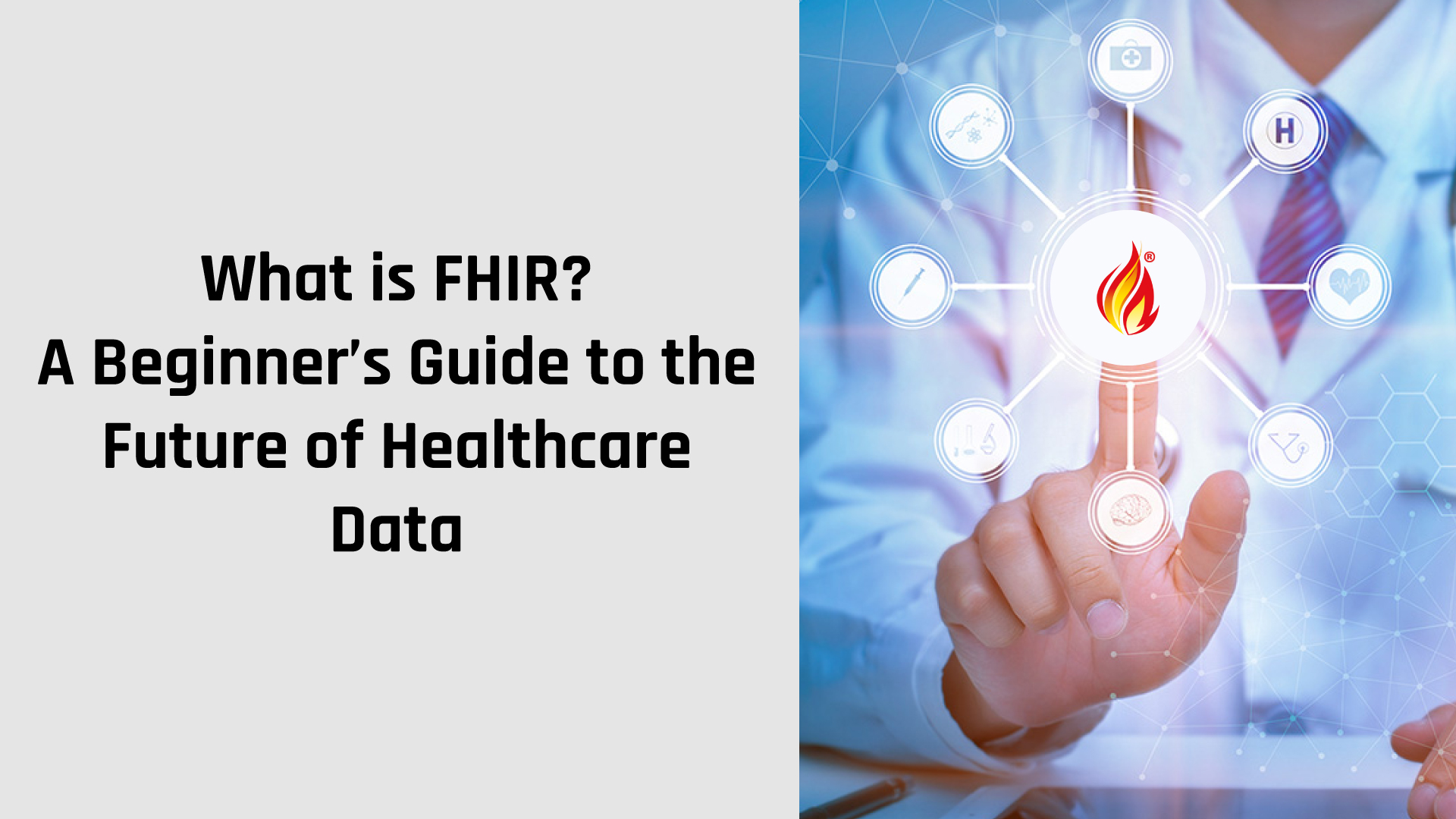
Healthcare is undergoing a transformation with digital innovation driving the need for seamless and secure data exchange. FHIR (Fast Healthcare Interoperability Resources) is a standard developed by HL7 (Health Level Seven International) that enables healthcare systems to share and access patient data efficiently. This guide explores what FHIR is, how it works, and why it is crucial for modern healthcare.
Introduction to FHIR
FHIR is an interoperability standard designed to facilitate healthcare data exchange between electronic health records (EHRs), applications, and other digital health systems. Developed by HL7 International, it leverages modern web-based technologies like RESTful APIs, JSON, and XML, making data integration simpler and more scalable.

With FHIR, healthcare providers, insurers, and patients can securely access and exchange clinical, financial, and administrative data without being locked into proprietary systems. It enhances interoperability—the ability of different systems to communicate and use shared data.
Why FHIR Matters in Healthcare
Interoperability has been a major challenge in healthcare, leading to fragmented patient records, inefficiencies, and increased costs. FHIR addresses these challenges by providing a standardized framework that enables:
- Data Exchange – Different EHR systems can communicate without compatibility issues.
- Improved Patient Care – Clinicians get access to complete and up-to-date patient data.
- Cost Savings – Reduces duplication of tests and administrative burdens.
- Faster Integration – Modern web-based technologies make implementation easier.
As governments and healthcare organizations prioritize data accessibility and interoperability, FHIR is becoming the go-to standard for health IT solutions.
How FHIR Works
FHIR structures healthcare data into resources, which are modular, reusable components. These resources include:

- Patient – Personal details, medical history, demographics.
- Observation – Lab results, vital signs, imaging reports.
- MedicationRequest – Prescriptions and medication history.
- Encounter – Records of hospital visits, treatments.
Each resource is assigned a unique URL, allowing different systems to retrieve and share information through FHIR APIs. This API-based approach is what enables real-time data exchange across platforms.
Core Components of FHIR
FHIR consists of several key components that ensure efficient data handling:
- Resources – Fundamental building blocks of FHIR, representing different healthcare data types.
- RESTful APIs – Enable systems to interact and exchange data using web-based communication.
- Terminology Services – Standardized coding systems like SNOMED CT, LOINC, and ICD-10 ensure consistency in medical terms.
- Security and Authentication – Uses OAuth 2.0 and OpenID Connect for secure access and data protection.
FHIR Data Exchange and Interoperability
FHIR allows different systems to share data using standardized APIs. For example, a hospital’s EHR can send lab test results to a primary care physician’s system in real-time without manual intervention.
By replacing outdated HL7 V2 and HL7 V3 messaging protocols, FHIR makes healthcare data exchange faster, more accurate, and patient-centric.
What is SMART on FHIR?
SMART (Substitutable Medical Applications, Reusable Technologies) on FHIR is an extension of FHIR that enhances its capabilities. It enables developers to create plug-and-play applications that can integrate with different EHRs without custom coding.
With SMART on FHIR, patients can use health apps that work across multiple healthcare systems, ensuring better accessibility and engagement.
Key benefits include:
- EHR Integration – Apps work across different healthcare platforms.
- Patient Empowerment – Patients can manage their health data securely.
- Developer Flexibility – Simplifies app development and deployment.
SMART on FHIR is widely adopted by hospitals, research institutions, and health-tech startups to create next-gen healthcare applications.
What is HL7 FHIR?
FHIR was developed by HL7 International, a global authority on healthcare data exchange standards. HL7 FHIR is the latest iteration of HL7 standards, replacing older HL7 V2 and V3 models.
Compared to previous HL7 versions, FHIR is:
- More Modern – Uses web-friendly formats like JSON, XML, and REST APIs.
- More Scalable – Works across mobile, cloud, and traditional health IT systems.
- More User-Friendly – Easier for developers to implement and integrate.
Because of its flexibility and efficiency, HL7 FHIR is now widely adopted by government agencies, healthcare providers, and insurers.
Benefits of FHIR in Modern Healthcare
FHIR offers several advantages that improve healthcare data exchange and system efficiency.
- Interoperability – Ensures smooth data sharing between EHRs and third-party applications.
- Faster Data Access – Clinicians can retrieve patient data instantly.
- Security – Supports modern authentication standards like OAuth 2.0.
- Patient-Centric Care – Patients can access and manage their health records easily.
- Cost-Effective Integration – Reduces costs associated with custom data exchange solutions.
Governments, including the U.S. The Department of Health and Human Services (HHS), are mandating the adoption of FHIR-based solutions to improve healthcare transparency and accessibility.
Challenges of Implementing FHIR
Despite its advantages, adopting FHIR comes with challenges:
- Legacy System Integration – Older EHRs may not fully support FHIR.
- Data Security Risks – API-based access requires strong security protocols.
- Implementation Costs – Healthcare providers need investment in training and infrastructure.
- Compliance Complexity – Adhering to regulations like HIPAA and GDPR can be challenging.
However, these challenges are being addressed through government initiatives, improved technology, and industry collaboration.
The Future of FHIR and Healthcare Data
FHIR is continuously evolving to meet the changing needs of healthcare. Emerging trends include:

- Artificial Intelligence (AI) Integration – AI-powered analytics leveraging FHIR data.
- Blockchain for Secure Data Exchange – Enhancing security and traceability of patient records.
- FHIR-Based Patient Portals – Improving direct patient access to health information.
- Expanded Government Regulations – Pushing for broader FHIR adoption in national healthcare systems.
As FHIR adoption grows, it will enable seamless, secure, and patient-centered healthcare ecosystems worldwide.
How DrapCode Helps with FHIR-Based Healthcare Applications
Building healthcare applications that comply with FHIR standards can be complex. DrapCode, a no-code platform, simplifies this process by allowing healthcare providers and developers to create FHIR-compliant applications without coding.
With DrapCode, you can:
- Integrate FHIR APIs seamlessly into your app.
- Build SMART on FHIR-compatible applications for patient engagement.
- Ensure data security with built-in authentication and encryption.
- Accelerate development without traditional software engineering costs.
By leveraging no-code technology, DrapCode helps healthcare organizations streamline app development, enhance interoperability, and improve patient care with minimal effort.
Winding Up - What is FHIR?
FHIR is transforming healthcare data exchange by enabling seamless interoperability between EHRs, apps, and healthcare systems. With its modern web-based approach, security features, and flexibility, FHIR is setting the stage for a connected, patient-centric future in healthcare.
For healthcare providers and developers looking to leverage FHIR without the technical complexity, DrapCode provides an easy-to-use, no-code solution to build FHIR-compliant applications efficiently.