DrapCode vs Zite
DrapCode and Zite solve different application development problems. DrapCode focuses on building specialized healthcare software, while Zite focuses on AI-generated business apps, internal tools, portals, databases, and workflows.
What does DrapCode offer?
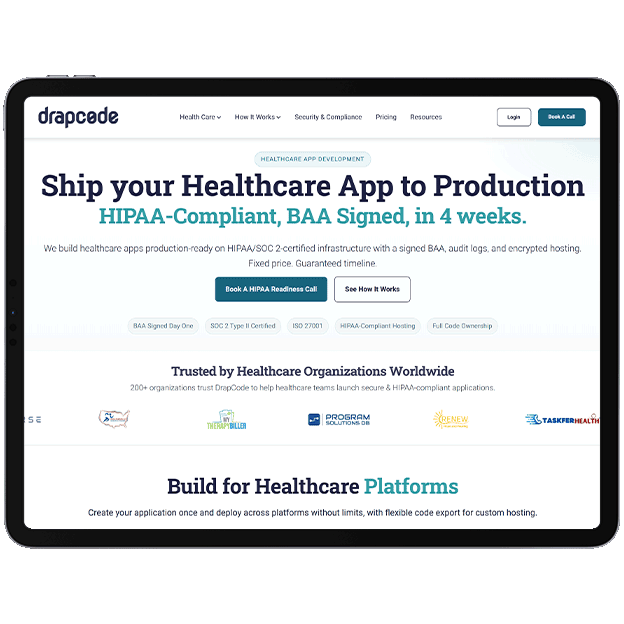
DrapCode is a Healthcare App Development Platform for healthcare organizations, providers, and digital health businesses. It helps teams build secure, HIPAA-compliant applications around patient, clinical, and operational requirements. From patient portals and care management platforms to FHIR-connected applications and remote patient monitoring systems, DrapCode supports healthcare software that requires specialized workflows, interoperability, and long-term application control.
What Zite Offers?
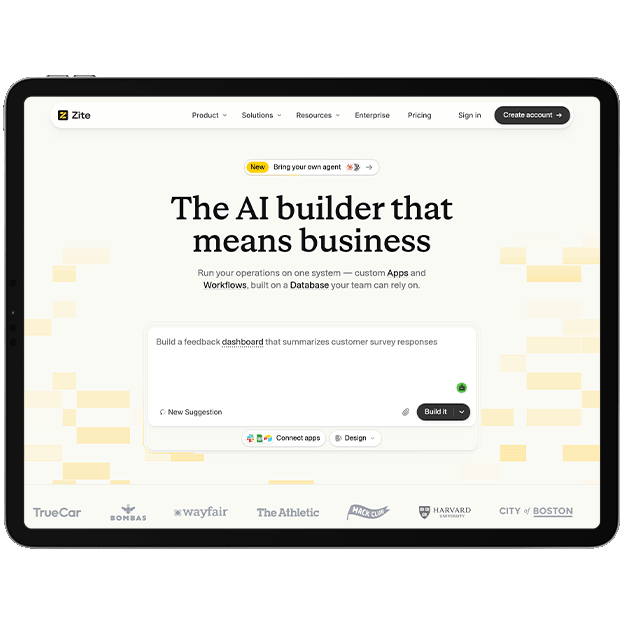
Zite is an AI app builder designed primarily for business software. Users can describe an application and generate apps, workflows, databases, dashboards, portals, and internal tools for their teams. A major part of Zite's approach is to make generated applications understandable and maintainable for business teams through visual workflows, editable databases, and granular access controls.
Healthcare Software vs Business Apps
Compare how DrapCode and Zite approach data, workflows, users, integrations, and the specialized requirements of healthcare applications.
| Healthcare Capability | DrapCode | Zite |
|---|---|---|
| Platform Purpose | Builds specialized applications for healthcare organizations and digital health businesses. | Builds business apps, internal tools, portals, databases, and team workflows. |
| Primary Users | Healthcare providers, organizations, care teams, and digital health companies. | Business teams creating operational software for internal and external users. |
| Healthcare Focus | Healthcare application development is the platform's primary focus. | Healthcare is not a primary use case in Zite's positioning. |
| HIPAA Requirements | Supports HIPAA-compliant application development for healthcare workloads. | Publicly highlights SOC 2 Type II security; HIPAA requirements require separate verification. |
| Healthcare Data | Supports application architectures designed around healthcare data and workflows. | Uses a built-in database designed for general business applications. |
| FHIR Connectivity | Supports FHIR-based healthcare interoperability and application integrations. | Provides APIs and integrations but no primary FHIR-specific positioning. |
| Workflow Model | Supports customized workflows for clinical, patient, provider, and care operations. | Uses visual backend workflows for automating business processes and data actions. |
| Application Logic | Configure complex healthcare business logic around specific product requirements. | View, trace, and modify generated backend workflows visually. |
| User Access | Configure access around healthcare roles and application-specific requirements. | Provides groups, workspaces, roles, granular permissions, and authentication. |
| Database Approach | Build data models around healthcare applications and external healthcare systems. | Provides a spreadsheet-style built-in database, along with external data connections. |
| Code Ownership | Export and maintain the application source code. | Zite's managed platform is not positioned around self-hosting the underlying codebase. |
| Best Fit | Specialized healthcare products requiring interoperability and customized application architecture. | Business software that integrates apps, databases, portals, and workflows on a single platform. |
When to Choose DrapCode
Choose DrapCode if you are building healthcare software where patient data, interoperability, clinical workflows, and application requirements shape the product architecture.
Healthcare Product
Build software specifically for providers, patients, or healthcare organizations.
Connected Care
Connect applications with healthcare systems and external platforms.
Specialized Data
Build application data models designed around complex healthcare requirements.
Clinical Logic
Implement workflows involving care delivery, patient journeys, and provider-specific processes.
Long-Term Control
Maintain greater ownership and flexibility as your healthcare product evolves.
Production Growth
Build healthcare applications intended to scale beyond internal operations.
When to Choose Zite
Choose Zite if your main requirement is to quickly create business software that combines an application, database, workflows, and user access controls.
Internal Operations
Create custom tools for employees, departments, and operational processes.
Team Workflows
Automate approvals, requests, tasks, and general business processes.
Built-In Database
Manage application data through an integrated spreadsheet-style database.
Visual Logic
Inspect and modify backend workflows without needing to read application code.
Business Portals
Build client, employee, or partner portals with controlled data access.
Unlimited Users
Deploy applications across teams without per-user pricing.
Why Healthcare Organizations Choose DrapCode
Build healthcare applications around interoperability, customization, security, specialized workflows, and production requirements.
Patient Portals
Create secure patient experiences for communication, records, services, and ongoing engagement.
Care Coordination
Build applications that support coordination between patients, providers, and care teams.
Interoperable Data
Connect healthcare applications with external systems using modern interoperability standards.
Provider Tools
Develop specialized applications for providers, administrators, and healthcare operations teams.
Remote Care
Build applications supporting remote patient monitoring and connected care programs.
Custom Architecture
Shape workflows, data models, permissions, and application behavior around healthcare requirements.
Frequently Asked Questions
Is Zite designed specifically for healthcare applications?
What makes Zite different from other AI app builders?
Is Zite HIPAA compliant?
Does Zite include a built-in database?
Can healthcare teams use Zite as an internal tool?
Why choose a healthcare-focused platform instead of a general business app builder?
Built your healthcare app with Zite?
Build patient-facing, provider-facing, and operational healthcare applications with the interoperability, customization, and production flexibility your product requires.