DrapCode vs Emergent
DrapCode and Emergent both accelerate application development, but their healthcare strategies differ. Compare healthcare specialization, HIPAA requirements, interoperability, customization, deployment, and scalability for production healthcare software.
What does DrapCode offer?
DrapCode is a Healthcare App Development Platform built for healthcare organizations, providers, and digital health businesses. It supports secure application development around patient data, clinical workflows, interoperability, and production requirements. Healthcare teams can build patient portals, care management platforms, remote patient monitoring applications, EHR-connected software, provider applications, and custom healthcare workflows.
What Emergent Offers?
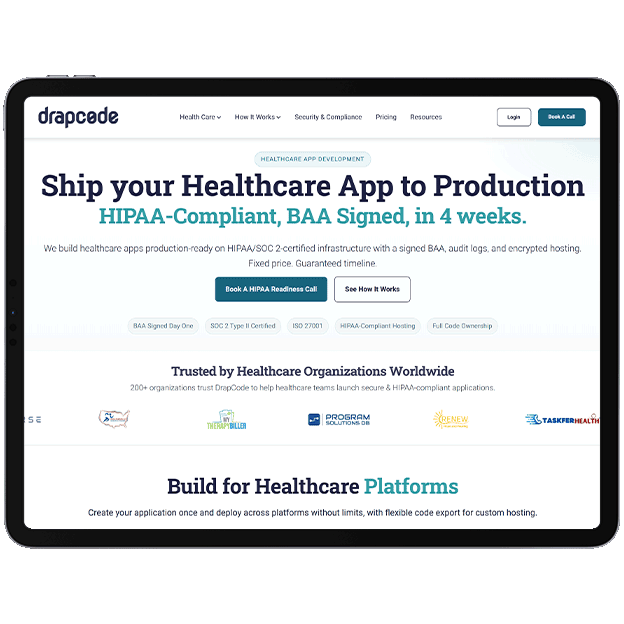
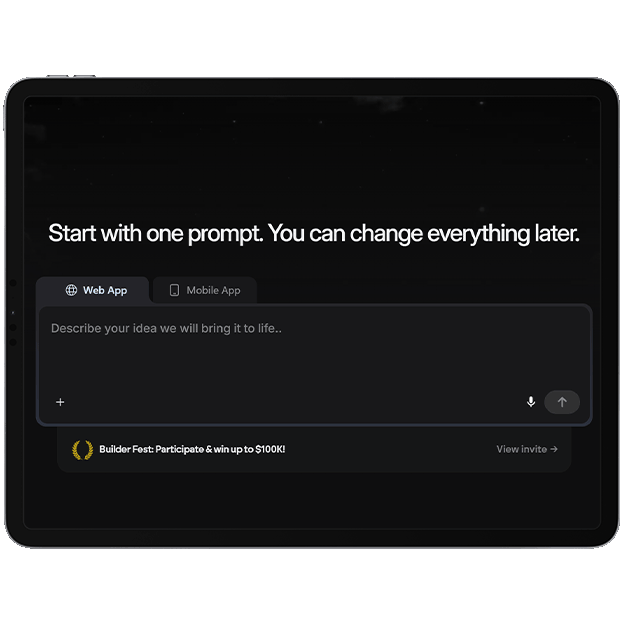
Emergent is an AI-powered application builder that turns natural-language prompts into full-stack web and mobile applications. Its platform generates frontend interfaces, backend logic, databases, authentication, and deployment workflows. Emergent has a dedicated healthcare app offering that covers appointment scheduling, telehealth, medication reminders, secure health records, EHR integration, and patient communication.
Healthcare App Development Platform Comparison
Compare DrapCode and Emergent across healthcare compliance, interoperability, application control, deployment, and production requirements.
| Healthcare Capability | DrapCode | Emergent |
|---|---|---|
| Healthcare Focus | Built specifically for healthcare organizations and digital health businesses. | Dedicated healthcare use cases within a broader AI app platform. |
| Development Model | Healthcare-focused application development with extensive customization. | Agentic AI development through natural-language prompts. |
| HIPAA Requirements | Designed for HIPAA-compliant healthcare application development. | Healthcare offering supports secure health-record use cases; compliance requirements depend on configuration. |
| BAA | BAA available for healthcare projects. | Verify applicable healthcare agreements and service terms before processing PHI. |
| FHIR Interoperability | Supports FHIR-based healthcare interoperability and integrations. | Healthcare systems can be connected through APIs and integrations. |
| EHR Connectivity | Build applications connected to EHR and EMR systems. | Provides EHR connections as part of its healthcare integration approach. |
| Healthcare Workflows | Build specialized clinical, patient, provider, and operational workflows. | Generate scheduling, telehealth, reminders, records, and practice workflows through prompts. |
| Customization | Customize interfaces, workflows, permissions, data, and business logic. | Refine generated applications through prompts and code access. |
| Deployment | Supports cloud and self-hosted deployment options. | Provides managed hosting and enterprise VPC deployment options. |
| Code Ownership | Export and maintain the application codebase. | Code syncs with GitHub and can be exported or deployed elsewhere. |
| Production Scaling | Designed specifically for scalable production healthcare software. | Supports production applications across healthcare and other industries. |
When to Choose DrapCode
Choose DrapCode if healthcare requirements, interoperability, compliance, and application control need to shape the platform from the beginning.
Healthcare Architecture
Build applications in a development environment centered around healthcare application requirements.
FHIR Integration
Connect applications with structured healthcare interoperability and FHIR-based systems.
EHR Connectivity
Build healthcare software integrated with existing EHR and EMR infrastructure.
Clinical Workflows
Implement specialized workflows for patients, providers, care teams, and healthcare operations.
Compliance Foundation
Build applications with healthcare compliance considerations integrated into the development process.
Long-Term Product
Develop healthcare software intended to support ongoing production operations and growth.
When to Choose Emergent
Choose Emergent if autonomous AI development, fast iteration, and end-to-end application generation are your main priorities.
Agentic Building
Use AI agents to handle application creation across frontend and backend layers.
Rapid Launch
Move from an application concept to a working product quickly.
Telehealth Apps
Generate applications combining virtual visits with patient workflows.
Practice Tools
Create scheduling, reminders, records, and practice-management functionality quickly.
Mobile Development
Create web and mobile applications from the same development environment.
Prompt Iteration
Continuously change application features through natural-language instructions.
Why Healthcare Organizations Choose DrapCode
Build healthcare applications around interoperability, security, customized workflows, controlled access, and production requirements.
Patient Portals
Build patient-facing applications for records, appointments, and access to care.
EHR Integration
Connect applications with EHR, EMR, and other healthcare information systems.
FHIR Connectivity
Support structured healthcare data exchange.
Care Management
Create workflows for coordinating patients, providers, treatments, and ongoing care.
Remote Monitoring
Develop applications for remote patient monitoring and connected care programs.
Secure Access
Manage access across patients, providers, administrators, and healthcare teams.
Frequently Asked Questions
What's the main difference between DrapCode and Emergent?
Can Emergent build healthcare applications?
Is Emergent HIPAA compliant?
Does DrapCode support FHIR and EHR integrations?
Which platform is better for custom healthcare software?
Can Emergent applications be exported?
Built your healthcare app with Emergent?
Develop healthcare applications around interoperability, security, customized workflows, and production requirements with DrapCode.