DrapCode vs Bolt.new
DrapCode and Bolt.new offer different paths to building healthcare software. Compare their healthcare capabilities, HIPAA requirements, interoperability, customization, deployment, and ownership before choosing a platform.
What does DrapCode offer?
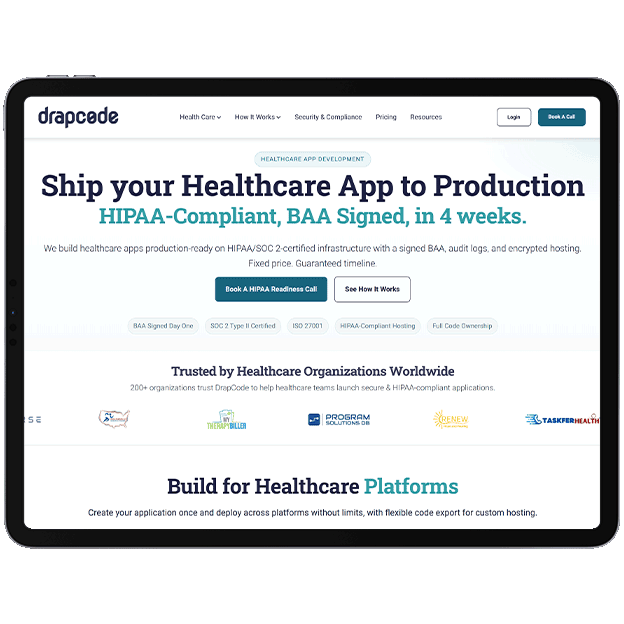
DrapCode is a Healthcare App Development Platform for healthcare organizations, providers, and digital health businesses building production software. It supports patient portals, care management platforms, remote patient monitoring, EHR-connected applications, and custom healthcare workflows with healthcare-focused security and interoperability.
What Bolt.new Offers?
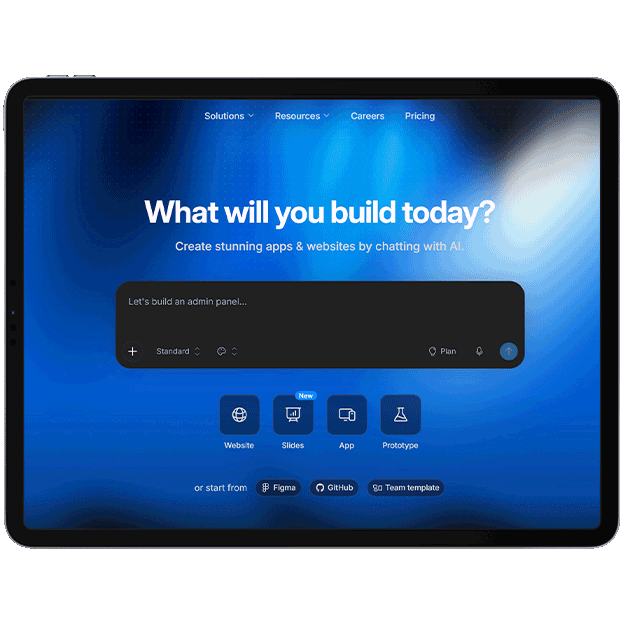
Bolt.new lets users create full-stack applications by describing requirements in natural language. It generates application code, interfaces, backend functionality, databases, and integrations from prompts. Bolt.new supports healthcare use cases such as hospital management, clinic booking, and pharmacy management applications, making it useful for rapidly developing and validating application concepts.
Healthcare App Development Platform Comparison
Compare DrapCode and Bolt.new across healthcare compliance, interoperability, application control, deployment, and production requirements.
| Healthcare Capability | DrapCode | Bolt.new |
|---|---|---|
| Core Platform | Healthcare-focused platform for building production applications. | General-purpose platform for prompt-driven application development. |
| Healthcare Development | Designed specifically for healthcare organizations and digital health businesses. | Supports healthcare use cases alongside broader software projects. |
| HIPAA Readiness | Built for developing HIPAA-compliant healthcare applications. | Supports HIPAA-oriented deployments through specific infrastructure configurations. |
| BAA | BAA available for healthcare projects. | Availability depends on applicable plan and deployment arrangement. |
| FHIR Support | Supports FHIR interoperability and healthcare system integrations. | Healthcare connectivity can be implemented through APIs and integrations. |
| EHR Connectivity | Build applications connected with EHR and healthcare data systems. | Connect external systems through APIs and generated application logic. |
| Workflow Control | Build detailed clinical, administrative, and operational workflows. | Generate workflows through prompts and customize resulting code. |
| Application Design | Customize interfaces, data models, permissions, and application behavior. | Generate interfaces and functionality, then modify the generated code. |
| Deployment | Supports cloud and self-hosted deployment requirements. | Supports managed hosting and deployment to external infrastructure. |
| Code Ownership | Export and maintain the application codebase. | Provides access to generated application code and GitHub workflows. |
| Production Focus | Designed for scalable healthcare software and production deployment. | Well-suited to rapid development, validation, and application delivery. |
When to Choose DrapCode
Choose DrapCode if your healthcare application requires specialized workflows, interoperability, compliance-focused infrastructure, and deployment control.
Healthcare Workflows
Build complex clinical and administrative workflows tailored to your organization.
FHIR Integration
Connect applications with FHIR-based healthcare systems and interoperability requirements.
EHR Connectivity
Build applications that connect directly with existing EHR infrastructure and healthcare data systems.
Patient Applications
Build patient portals, care platforms, remote patient monitoring systems, and provider applications.
Deployment Control
Maintain flexibility over application hosting and deployment environments.
Production Software
Develop healthcare software intended for long-term production use and organizational growth.
When to Choose Bolt.new
Choose Bolt.new if rapid AI-generated development and flexible full-stack application creation are your primary priorities.
Prompt Development
Describe application requirements and generate functionality through natural-language prompts.
Rapid Prototyping
Validate healthcare application concepts without lengthy initial development cycles.
Full-Stack Generation
Generate frontend, backend, database, and application functionality together through AI.
Code Access
Review and modify generated application code directly with a technical team.
Quick Iteration
Repeatedly change application functionality through conversational development.
Flexible Projects
Build healthcare applications where technical teams can manage infrastructure and production requirements.
Why Healthcare Organizations Choose DrapCode
Build healthcare applications around your clinical workflows, interoperability requirements, security controls, and production needs.
Patient Access
Create patient-facing applications for appointments, records, communication, and care engagement.
Clinical Workflows
Implement healthcare workflows tailored to providers, care teams, and clinical operations.
FHIR Interoperability
Connect applications with FHIR-based healthcare systems and exchange structured clinical data.
EHR Integration
Build connected applications that communicate with existing EHR and healthcare infrastructure.
Access Control
Configure application permissions around healthcare roles, users, and organizational requirements.
Production Deployment
Deploy healthcare applications with infrastructure and security requirements considered from development onward.
Frequently Asked Questions
What is the main difference between DrapCode and Bolt.new?
Can Bolt.new be used to build healthcare software?
Is Bolt.new suitable for HIPAA-compliant applications?
Does DrapCode support FHIR and EHR integrations?
Which is better for a production healthcare application?
Can I maintain the code generated by Bolt.new?
Built your healthcare app with Bolt.new?
Build healthcare software around your clinical workflows, interoperability requirements, security controls, and production needs with DrapCode.