Is Replit HIPAA-Compliant?
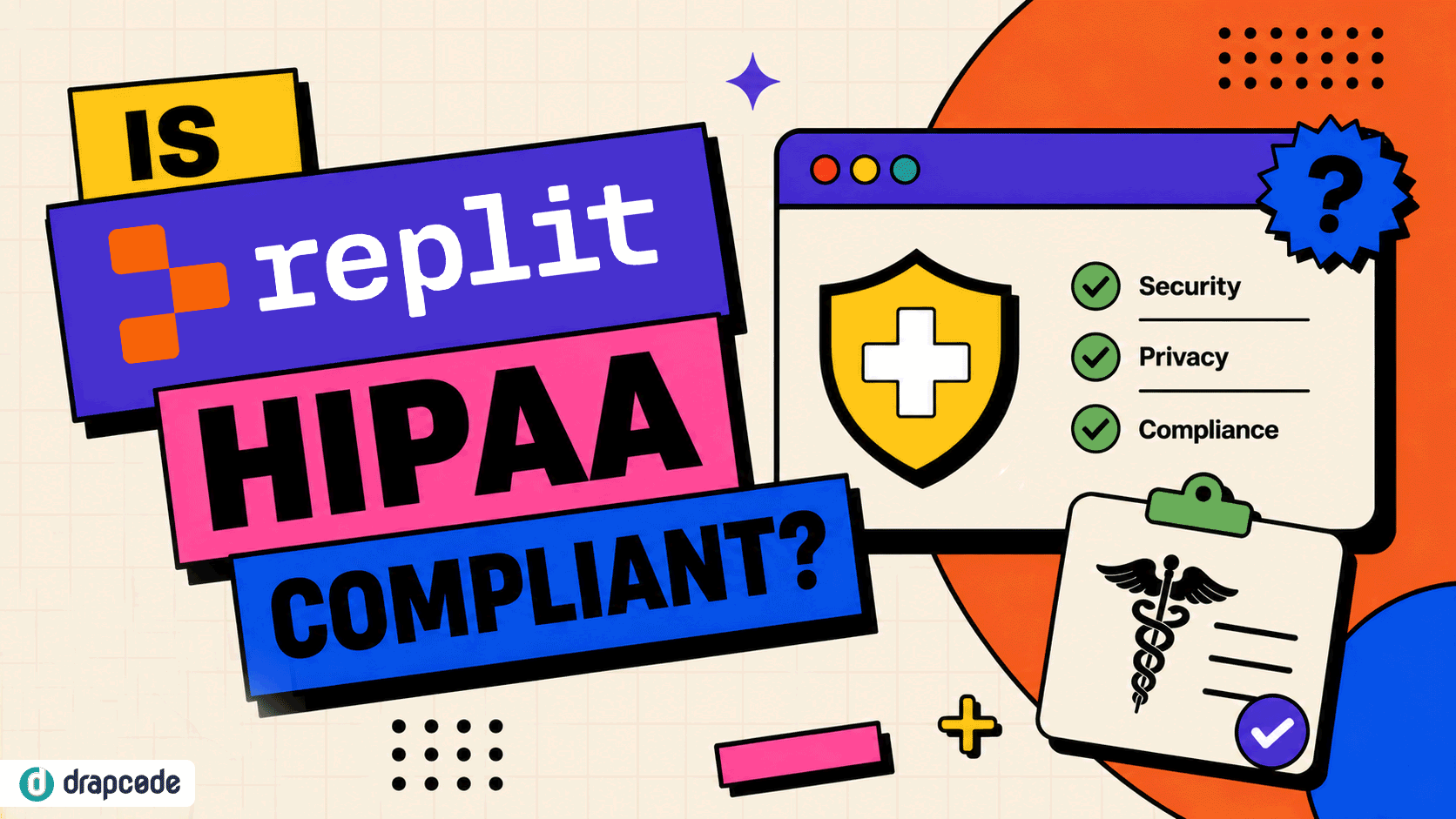
No, Replit is not HIPAA-compliant for handling PHI by default. Replit currently lists SOC 2 Type II but does not publicly indicate HIPAA compliance or a HIPAA-specific BAA for its platform.
Software development has changed dramatically over the past few years. Tasks that once took days to set up environments, write boilerplate code, deploy applications, or debug errors can now be completed in hours with AI-powered development platforms like Replit.
For startups and developers, that's a huge advantage.
You can go from an idea to a working application without managing complex infrastructure or spending weeks configuring development environments. Whether you're building an internal dashboard, a customer portal, or an MVP for investors, Replit helps you move fast.
Healthcare founders have noticed this too.
Imagine you're building a digital health startup. Within a few weeks, you've created a patient scheduling application, connected an AI chatbot, and deployed your prototype. Investors like what they see, and your first clinic wants to pilot the product.
Then comes the question almost every healthcare startup eventually hears:
"Can this application safely handle patient data?"
That's where the conversation shifts.
It's no longer about how quickly you can build software.
It's about whether your application can meet the security, privacy, and compliance expectations of the healthcare industry.
So, can you build a HIPAA-compliant healthcare app with Replit?
The answer isn't simply yes or no.
Based on publicly available information at the time of writing, Replit is designed as a collaborative AI-powered software development platform. Healthcare teams should not assume that using Replit alone makes an application HIPAA compliant. Instead, compliance depends on the overall system architecture, deployment environment, security controls, operational processes, and vendor agreements used throughout the application.
Understanding that difference is essential before building software that will process Protected Health Information (PHI).
Building an MVP Is Easy. Building Healthcare Software Is Different.
Every startup begins with the same goal.
Build something people can use.
For healthcare startups, AI development platforms have made that process significantly faster. Teams can prototype ideas, collect user feedback, and iterate without spending months building infrastructure from scratch.
That's exactly where Replit shines.
Its collaborative coding environment, AI assistance, and rapid deployment workflow make it an excellent platform for experimentation and early-stage development.
But healthcare products evolve differently from most SaaS applications.
A project management tool can launch with relatively few regulatory concerns.
A healthcare application cannot.
Once patient records, appointment histories, clinical notes, or medical images become part of the platform, security moves from being an engineering task to a business requirement.
Healthcare providers aren't simply evaluating your user interface.
They're evaluating whether they can trust your platform with some of the most sensitive information they manage.
The Moment Every Healthcare Startup Faces
Most healthcare founders don't begin by worrying about HIPAA.
They begin by solving a problem.
The typical journey often looks something like this:
Week 1
Build the first prototype.
Month 1
Show investors.
Month 2
Launch a beta.
Month 3
Sign your first healthcare customer.
Month 4
The customer asks about HIPAA compliance.
Suddenly, the questions become much more technical.
Where is patient data stored?
Who can access it?
Can every action be audited?
How are user permissions managed?
What happens if there's a security incident?
Can the application integrate with our Electronic Health Record (EHR) system?
These aren't questions that AI-generated code can answer.
They're questions about how the entire healthcare application is designed, deployed, and managed.
Can Replit Be Part of a HIPAA Strategy?
The better question isn't whether Replit itself is HIPAA compliant.
It's whether Replit can be one component of a healthcare application's development journey.
For many organizations, the answer is yes.
Replit is particularly useful during the early stages of development, including:
- Building proof-of-concept applications
- Developing MVPs
- Creating internal tools
- Testing workflows
- Demonstrating products to investors
- Experimenting with AI-assisted development
These projects benefit from speed, flexibility, and rapid iteration.
However, once an application begins processing real patient information, additional considerations become critical.
Based on publicly available information at the time of writing, healthcare organizations should independently evaluate Replit's deployment options, contractual terms, security responsibilities, and infrastructure before using it to build applications that handle PHI.
Ultimately, compliance isn't determined by the development platform alone.
It's achieved through the complete combination of infrastructure, security controls, governance, vendor management, and operational processes that surround the application.
"We'll Add HIPAA Later" Sounds Simple Until It Isn't
One of the most common assumptions healthcare startups make is that compliance can be added once the product gains traction.
- It sounds like a practical plan.
- Launch the MVP first.
- Find customers.
- Raise funding.
Then invest in security and compliance.
In reality, this approach often leads to more work, not less.
As your application grows, decisions made during the MVP stage begin affecting every part of the platform. Changing authentication, redesigning data storage, introducing audit logging, implementing role-based permissions, or migrating to a different infrastructure can become far more expensive than building with healthcare requirements in mind from the beginning.
That doesn't mean every startup should build a fully enterprise-ready platform on day one.
It does mean that healthcare teams should understand how today's technical decisions can influence tomorrow's compliance efforts.
Planning for healthcare early often reduces technical debt later.
Where Replit Works Well and Where Healthcare Demands More
Replit is a powerful development environment that helps teams build and collaborate quickly. For many software projects, that's exactly what's needed.
Healthcare projects, however, have unique requirements that extend beyond application development.
Here's where Replit can add value:
- Rapid application prototyping
- Internal administrative tools
- Product validation
- AI experimentation
- User interface development
- Startup MVPs using test or synthetic data
As projects mature, healthcare organizations often need additional capabilities such as:
- Patient identity management
- Fine-grained role-based permissions
- Comprehensive audit logging
- Healthcare interoperability
- FHIR-based data exchange
- Secure deployment strategies
- Enterprise governance
- Vendor risk management
These requirements don't necessarily prevent teams from using Replit, but they do require careful planning beyond the development environment itself.
Replit vs DrapCode: Different Starting Points for Healthcare Innovation
Replit and DrapCode both help teams build software faster, but they approach the problem from different directions.
Replit is a general-purpose AI-powered development platform built for developers who want flexibility, collaboration, and rapid iteration.
DrapCode is a healthcare application development company focused on helping healthcare organizations build secure, scalable software tailored to healthcare workflows and interoperability.
If you're deciding between the two, the choice depends on what you're trying to achieve.
If Your Goal Is...
Replit
DrapCode
Build a healthcare MVP
✓ Excellent for rapid development
✓ Excellent for rapid development
Collaborate with developers using AI
✓ Yes
✓ Yes
Validate product ideas quickly
✓ Strong choice
✓ Strong choice
Build production-ready patient portals
Requires significant additional engineering
✓ Purpose-built for healthcare
Develop EMRs or provider platforms
Custom architecture required
✓ Supported
Integrate with FHIR APIs
Custom implementation
✓ Native healthcare integration support
Build care management applications
Additional development effort
✓ Supported
Enterprise healthcare deployment
Depends on implementation and architecture
✓ Designed for healthcare organizations
Healthcare-focused expertise
General software development
✓ Healthcare application development company
The key difference isn't whether one platform is more capable than the other.
It's the problem each platform is designed to solve.
Replit helps developers build software efficiently across almost any industry.
DrapCode focuses specifically on helping healthcare organizations build secure, interoperable applications that are ready for the realities of clinical environments.
The Hidden Cost of Rebuilding for Healthcare
Many startups don't realize they're building technical debt until their first enterprise customer arrives.
Imagine this scenario.
A healthcare startup launches an MVP using test data.
Everything works as expected.
A regional clinic decides to pilot the platform.
The next email doesn't ask for new features.
Instead, it asks questions like:
- Can you complete our security questionnaire?
- How do you protect Protected Health Information?
- Do you support FHIR integrations?
- Can administrators control user permissions?
- Are user activities recorded through audit logs?
- What is your disaster recovery process?
None of these questions relate to your application's interface.
They're about whether your platform can operate safely inside a healthcare organization.
If those requirements weren't considered during the early stages of development, teams often find themselves redesigning parts of their application before they can move forward.
That's why many digital health companies begin thinking about healthcare-specific development much earlier than they originally planned.
Final Verdict: Replit Helps You Build Software. Healthcare Requires Much More.
Replit has become one of the most popular AI-powered development platforms for a reason.
It helps developers move faster, collaborate more effectively, and turn ideas into working software with remarkable speed.
For healthcare startups, that's incredibly valuable during the early stages of product development.
But launching healthcare software involves more than generating code.
Production applications must support secure data handling, interoperability, governance, long-term maintainability, and the operational requirements expected by healthcare providers.
Based on publicly available information at the time of writing, healthcare organizations should independently evaluate Replit's deployment options, security capabilities, contractual terms, and overall architecture before using it to process Protected Health Information.
If your goal is to validate an idea or build an MVP, Replit can be an excellent development platform.
If your goal is to launch patient portals, provider platforms, EMRs, telehealth applications, or care management software used by healthcare organizations, partnering with a healthcare application development company like DrapCode provides a stronger foundation for long-term success.
Frequently Asked Questions
Q1. Is Replit HIPAA compliant?
Based on publicly available information at the time of writing, Replit should not automatically be considered HIPAA compliant for handling Protected Health Information. Healthcare organizations should independently evaluate deployment options, security controls, contractual agreements, and compliance responsibilities.
Q2. Can I build a healthcare app using Replit?
Yes. Replit is well suited for prototypes, MVPs, internal tools, and early-stage healthcare applications. Production systems handling PHI require additional security, compliance planning, and healthcare-specific architecture.
Q3. Can Replit integrate with healthcare APIs?
Yes. Replit can be used to build applications that integrate with healthcare APIs such as FHIR, although these integrations typically require custom development.
Q4. Is Replit a good choice for healthcare startups?
For idea validation and rapid development, Replit is an excellent option. As products move toward production healthcare environments, teams should evaluate broader requirements such as interoperability, governance, enterprise security, and compliance.
Q5. When should healthcare teams consider a healthcare-focused development company?
If you're building patient portals, EMRs, telehealth platforms, provider applications, or care management software, working with a healthcare application development company can simplify development while supporting healthcare-specific security and interoperability requirements.
Build Healthcare Software That Grows with Your Business
Healthcare software should do more than launch quickly; it should support secure patient experiences, healthcare interoperability, and long-term growth.
DrapCode helps healthcare organizations, providers, and digital health businesses build secure applications including patient portals, EMRs, provider platforms, telehealth solutions, care management systems, and FHIR-enabled healthcare software using AI-assisted visual development.
Whether you're moving beyond an MVP or building a new healthcare product from the ground up, our healthcare-focused team helps you build with confidence.