DrapCode vs Replit (Agent 4)
DrapCode and Replit (Agent 4) take different approaches to healthcare software development. Compare their healthcare specialization, compliance requirements, interoperability, customization, deployment, and production capabilities.
What does DrapCode offer?
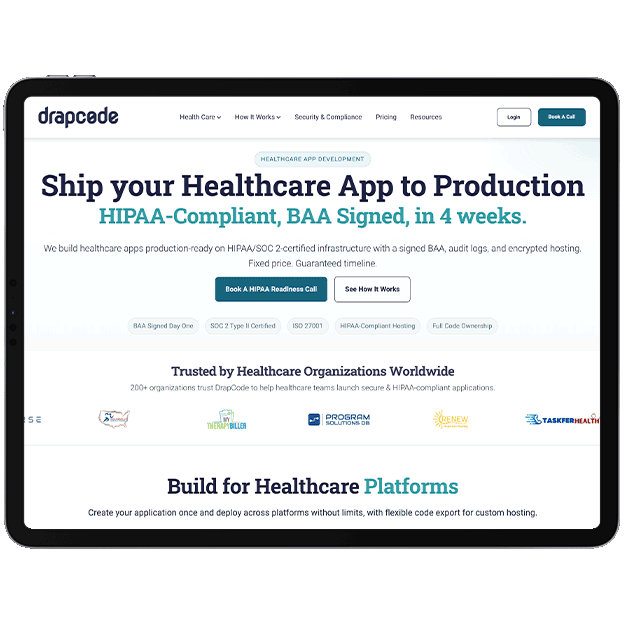
DrapCode is a Healthcare App Development Platform designed for healthcare organizations, providers, and digital health businesses. It provides a foundation for developing secure healthcare applications around patient, clinical, and operational workflows. Healthcare teams can build patient portals, EHR-connected applications, care management platforms, remote patient monitoring systems, provider applications, and custom healthcare solutions requiring interoperability and controlled access.
What Replit (Agent 4) Offers?
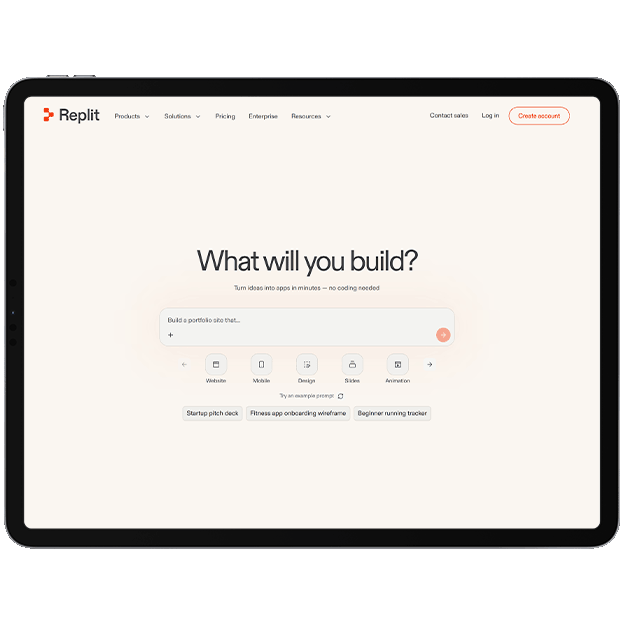
Replit (Agent 4) is Replit's latest AI development agent, designed to plan, build, test, debug, and iterate on applications from natural-language instructions. It can work on frontend design, authentication, databases, backend functionality, and multiple development tasks in parallel. Agent 4 also introduces a shared Design Canvas, parallel task execution, multi-artifact projects, and collaborative development. Its broad scope makes it suitable for creating web and mobile applications across industries rather than focusing specifically on healthcare.
Healthcare App Development Platform Comparison
Compare DrapCode and Replit (Agent 4) in terms of healthcare requirements that influence application architecture, compliance, interoperability, and production deployment.
| Healthcare Capability | DrapCode | Replit (Agent 4) |
|---|---|---|
| Platform Focus | Healthcare application development for production software. | General-purpose AI development and software creation. |
| Healthcare Specialization | Designed specifically for healthcare organizations and digital health businesses. | Supports healthcare projects alongside many other application types. |
| HIPAA Requirements | Built for HIPAA-compliant healthcare application development. | Requires appropriate architecture, configuration, and deployment controls for HIPAA workloads. |
| BAA | BAA available for healthcare projects. | Healthcare organizations must establish applicable contractual arrangements. |
| FHIR Integration | Supports FHIR interoperability and healthcare system integrations. | FHIR connectivity requires custom implementation through APIs and application code. |
| EHR Connectivity | Build applications connected with EHR and healthcare systems. | External healthcare systems can be integrated through APIs and generated code. |
| Clinical Workflows | Build customized workflows for patients, providers, clinical staff, and administrators. | Generate workflows through prompts and modify application code. |
| Application Control | Customize interfaces, data structures, permissions, workflows, and business logic. | Modify the generated code and application architecture directly. |
| Deployment | Supports cloud and self-hosted deployment options. | Provides integrated development and deployment through Replit infrastructure. |
| Code Ownership | Export and maintain the application codebase. | Source code remains accessible for developer modification and handoff. |
| Production Focus | Purpose-built for production healthcare software. | Designed to build and ship production software across industries. |
When to Choose DrapCode
Choose DrapCode if your healthcare product requires specialized healthcare architecture, interoperability, compliance-focused development, and controlled production deployment.
Healthcare Architecture
Build application architecture designed around healthcare data and operational requirements.
FHIR Interoperability
Connect healthcare applications through structured healthcare data exchange using FHIR.
EHR Integration
Build applications that connect with existing EHR and healthcare infrastructure.
Patient Workflows
Implement specialized patient, provider, clinical, and operational workflows.
Compliance Foundation
Consider healthcare compliance requirements throughout application development.
Deployment Flexibility
Maintain greater control over infrastructure and healthcare application deployment.
When to Choose Replit (Agent 4)
Choose Replit (Agent 4) if autonomous development, rapid iteration, and broad flexibility in building software are your priorities.
Autonomous Building
Use an AI agent to plan, build, test, and iterate on application features.
Parallel Development
Handle multiple development tasks simultaneously through separate agent workflows.
Rapid Prototyping
Turn application concepts into working products quickly.
Full-Stack Creation
Use one environment for frontend, backend, databases, authentication, and deployment.
Design Iteration
Visually refine application designs through an interactive development canvas.
Multi-Platform Apps
Create web and mobile applications within the same development environment.
Why Healthcare Organizations Choose DrapCode
Build healthcare applications around interoperability, security, specialized workflows, controlled access, and production requirements.
Patient Portals
Build secure applications for patient access, appointments, and healthcare services.
EHR Connectivity
Connect healthcare applications with EHR, EMR, and clinical information systems.
FHIR Integration
Support interoperability between applications and FHIR-enabled systems.
Care Management
Develop workflows for coordinating patients, treatments, and ongoing care.
Remote Monitoring
Create applications for remote patient monitoring and connected care programs.
Role-Based Access
Control access to applications across patients, administrators, and other users.
Frequently Asked Questions
What's the main difference between DrapCode and Replit (Agent 4)?
Can Replit (Agent 4) build healthcare applications?
Is Replit HIPAA compliant?
Does DrapCode support FHIR and EHR integrations?
Which platform is better for production healthcare software?
Can Replit (Agent 4) handle complex applications?
Built your healthcare app with Replit?
Develop patient-facing and clinical applications with healthcare-focused interoperability, security, workflows, and production deployment capabilities.